Custom Fabrication for Biomass Gasification Systems 31087
Biomass gasification looks simple on a whiteboard. Feedstock goes in, producer gas comes out, and a generator hums along happily. In reality, it is a cross-discipline tightrope walk that spans industrial design, thermodynamics, materials science, and the hard truths of fabrication. What separates a lab curiosity from a plant that can run 8,000 hours per year is the depth of the metalwork and the discipline behind it. When a system needs to handle abrasive char, sticky tars, hot syngas, corrosive condensate, and vibration from rotating machinery, off-the-shelf parts do not hold long. This is the territory where a custom metal fabrication shop and a capable CNC machine shop earn their keep.
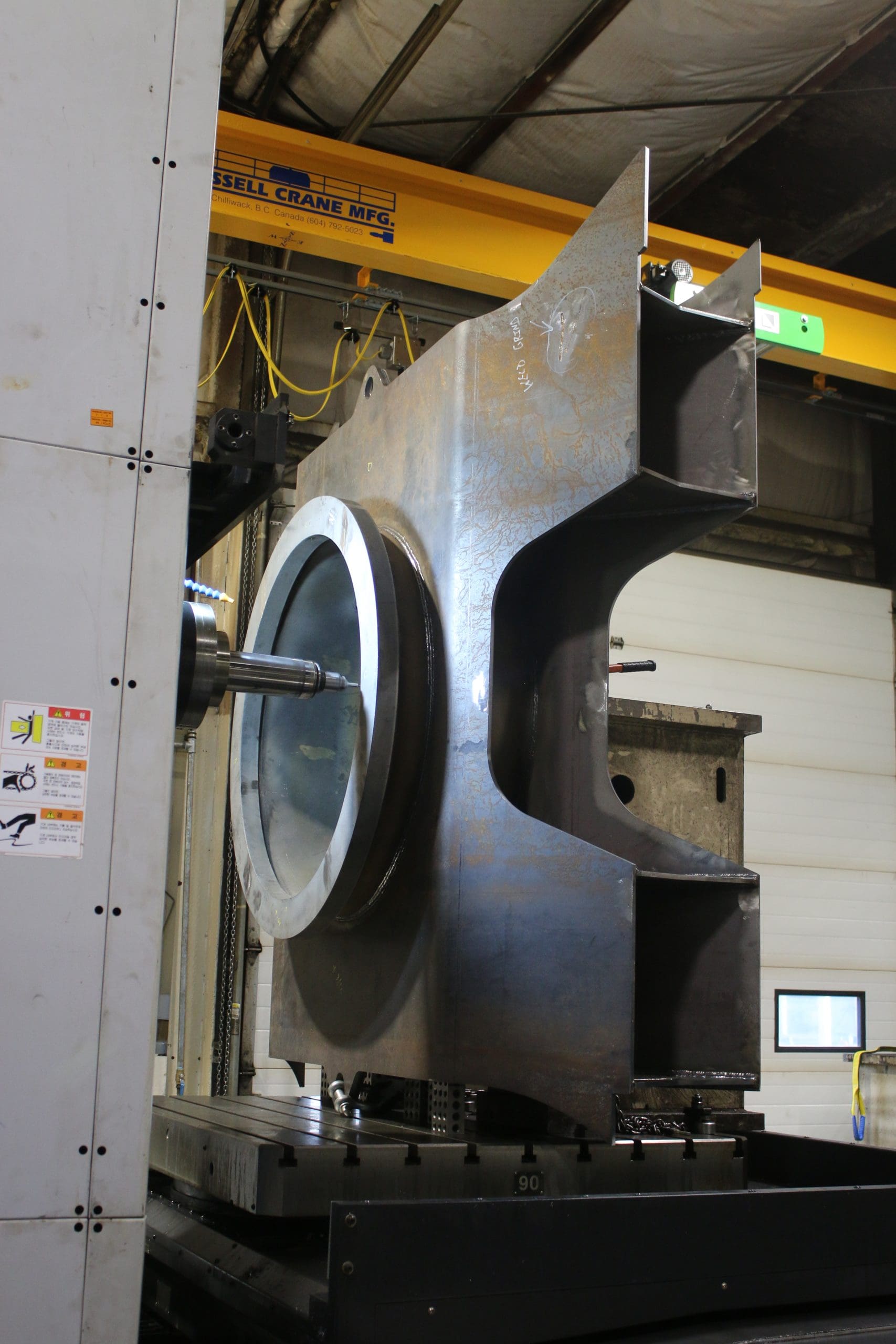
I have watched gasifier projects succeed or stall based on the quiet decisions made at the weld table and the machining center. A quarter millimeter in a flange face can be the difference between a clean syngas train and a downstream tar nightmare. The goal here is to lay out how custom fabrication supports biomass gasification from concept to commissioning, with the nuts and bolts that practitioners care about.
The design reality behind clean gas
A gasifier is a set of thermochemical zones with very different personalities. Drying hates uncontrolled air leaks. Pyrolysis punishes cold spots. Oxidation wants reliable nozzle geometry and refractory integrity. Reduction tolerates almost anything except channeling. Downstream, cyclones, coolers, and filters live or die by consistent flow and leak-tightness. Many projects fail because the build-to-print package treats these zones like generic vessels. A manufacturing shop that understands gasification asks better questions before metal is cut.
Consider air and oxygen nozzles. I have seen 1 percent variation in hole diameter produce visible asymmetry in the oxidation zone within days. Precision CNC machining for nozzle blocks, using a good steel like 310S or a nickel alloy for higher temperature work, pays back not only in life but in stability of the reactor core. Another example sits in the ash discharge. If the cone angle is off by a few degrees, bridging becomes a weekly ritual. This is not theory. You see it when you open the inspection port and find a glazed ring that tells the whole story.
Even details like flange flatness on raw gas piping matter. Producer gas carries condensable tars. Any micro-leak pulls air into the stream and sets the stage for auto-ignition in a baghouse or a ceramic filter. We specify 0.1 mm TIR on 8 to 12 inch flanges and insist on serrated finish to help gasket seating. That is the kind of spec that a serious metal fabrication shop accepts without drama.
Build-to-print only works when the print is honest
Many owners arrive with a build-to-print package created by an industrial design company. Some are excellent. Others are aspirational. If a drawing calls for 8 mm stainless plate in a radiant cooler that sees thermal cycling every 10 minutes, a Canadian manufacturer that has lived through a few winters will suggest thicker plate, a different reinforcement pattern, or expansion joints you never thought you needed. Build to print does not mean build to fail.
The best relationships I have seen between design firms and custom metal fabrication shops start with a short design-for-manufacture pass. We review weld access, tolerance stacks, material availability in the local market, and serviceability. You can save weeks simply by switching to commercially common pipe schedules or standard plate sizes in metal fabrication Canada suppliers actually stock, without changing function. When you do have to deviate from the drawing, document it and loop the designer in. Nobody likes surprises at startup.
Materials that survive heat, abrasion, and chemistry
A gasifier mixes all the bad actors: heat, thermal cycling, abrasion, chlorides, weak acids, and occasional alkali attack. Below are patterns that have aged well across projects.
-
Reactor shells and high-heat internals: Carbon steel shell with refractory lining is still the workhorse for downdraft and fluidized bed systems below about 1,050 C hot spots. When peak temperatures exceed that or alkali loading is high, consider a wafer of 253MA or 310S in wear zones. Full stainless shells look good on paper but add cost and can crack if the refractory bonding or expansion allowance is wrong.
-
Nozzles and tuyeres: Stainless 310S or heat-resistant cast alloys where budget allows. If erosion is severe, hardface overlays like Stellite on critical lips extend life. Precision CNC machining keeps exit geometry true after overlay, which matters for flame shaping.
-
Cyclones: Abrasion dominates here. Mild steel with replaceable ceramic tiles or AR400/AR500 plates on the cone and inlet works. The welders will complain about AR wear plate distortion, so plan fixturing and post-weld machining of flanges.
-
Piping in hot gas trains: Carbon steel with internal coatings near coolers, upgraded to 304L or 316L downstream of quench points where acids condense. Make sure the welding company uses pickling or at least passivation where required, and do not forget heat tint removal in sanitary or food-adjacent settings.
-
Condensate-handling: 316L or better, with solid design for drainability and cleanouts. Even food processing equipment manufacturers who live with CIP systems get humbled by tar condensate. Trap pockets for cleanouts, and be generous with threaded ports you can actually reach.
Materials are a place where mining equipment manufacturers and underground mining equipment suppliers have experience that transfers. They think in terms of abrasion liners, quick-change wear parts, and robust bolting patterns. Borrow that mindset for ash screws and grate frames.
Tolerances that keep the chemistry honest
People talk about temperature and residence time, but geometry keeps those parameters steady. A custom CNC machining shop can hold tight tolerances on ring segments, nozzle plates, and flange faces that directly influence gas quality.
I keep a short list of tolerance targets that rarely let me down:
-
Flange flatness on the raw gas train: 0.1 to 0.2 mm across the sealing face for diameters up to 300 mm, scaling reasonably for larger sizes. Surface finish around Ra 3.2 to 6.3 micrometers with serrations for spiral wound gaskets.
-
Nozzle orifice variation: Less than 0.02 mm on diameter for matched sets. Concentricity of the throat to the mounting OD within 0.03 mm helps keep vectoring consistent.
-
Circularity on grate shafts and bearing fits: H7/g6 class fits work. If the environment is dusty, bias toward looser fits with proper sealing and lubrication planning.
-
Cyclone cone and barrel roundness: Within 0.5 percent of diameter. I have seen asymmetric cones create split flow and re-entrainment that a better weld setup could have prevented.
These are the sort of details a precision CNC machining provider or a capable CNC metal fabrication team sets up in their job travelers and inspection plans. It is not exotic, just disciplined.
Welding practice that avoids future leaks
Gasification punishes welds with thermal cycling and vibration. Good welding is less about fancy processes than about joint design and cleanliness. If you only chase X-ray quality on pressure parts, you miss the hidden killers like lap joints that trap condensate and start crevice corrosion.
We prefer single-sided full-penetration butt welds with backing rings where access is limited, or open-root with purge for stainless. Stitch welding on outer jackets to reduce distortion and create expansion slits helps refractory stay bonded. Where tars are expected, never put a horizontal fillet where liquid can pool. Tilt the surface or design weeps.
On stainless, do not skip purge dams. Sugar on the root is a starter culture for corrosion, especially with chloride-laden feedstocks. In carbon steel, preheat and controlled cool-down reduce hardness in the heat-affected zone when welding to wear plate or high alloy. A shop that regularly builds manufacturing machines, logging equipment, or custom steel fabrication for harsh service learns these habits by necessity.
Cutting, bending, and how parts really fit
CNC metal cutting has sped up gasifier fabrication, but it hides traps. Plasma or laser cut edges look crisp, yet high heat input can leave micro-cracks or hardened edges that behave badly under vibration. Where parts will be cyclically loaded or serve as sealing surfaces, machine a final skim pass or grind to spec.
Roll bending for shells and cones seems routine until you try to match two cones at a tight angle. A custom metal fabrication shop that takes the time to trial fit in the fixture, scribe witness lines, and sequence welds will save you hours of flange alignment later. When tolerances are tight, tack and check frequency separates craftspeople from schedule chasers.
Modularization that respects maintenance
Gasifiers earn their keep by running, not by being clever. I have learned to push designs toward modules that can be removed with common shop tools and a 2-ton chain hoist. The custom machine may look slightly clunkier, but when a cyclone needs a liner replaced, the crew will not curse your name.
Think in terms of gasket classes, bolt sizes, and lifting points. Standardize on hardware across the system. Avoid proprietary seals where an off-the-shelf spiral wound gasket would work. Make space to swing a wrench. It is tempting to chase compactness, but hot gas trains crave breathing room. A good industrial machinery manufacturing partner will model bolt clearances and hand access, not just CAD aesthetics.
Instrumentation mounting that survives heat and tar
Thermocouples, pressure taps, and differential pressure lines are the eyes and ears of a gasifier. If they plug, lie, or break, you fly blind. We mount thermowells with stand-off spools and heat sinks on the nozzle bosses, keeping the probe tip in flow while protecting the head from radiant heat. For pressure taps, use 45-degree angled takeoffs and short, heated impulse lines where tar is likely. In cold climates, a Canadian manufacturer will heat trace anything that can plug and route to a small manifold with blowdown capability. It is not glamorous work, but it keeps data honest.
Tars, dust, and the art of easy cleaning
Every gasifier project makes friends with tar eventually. You cannot design it out completely, but you can plan for its moods. In coolers and filters, include real cleanouts with bolted covers and replaceable gaskets. Design drip legs that can be isolated and swabbed. Put slope on every horizontal pipe in the raw gas train, 1 to 2 percent minimum, and avoid dead legs. Refinements like quick-release clamps are tempting, but in sticky service, a proper flange with a robust bolt pattern wins.
Dust is simpler. Cyclones need good inlet geometry and smooth cones. A small mistake like a sharp step at a rolled seam can kick re-entrainment up by several percentage points. A CNC machining shop can turn a smooth transition spool that bolts between the cyclone and the next element, and it pays dividends.
Example: Upgrading a farm-scale downdraft reactor
A mid-sized agricultural client ran a 150 kW downdraft gasifier feeding a spark-ignition genset. The gas quality was erratic, and maintenance ate their weekends. The build came from a small overseas vendor with minimal documentation. We kept the reactor shell and the basic layout but replaced elements where fabrication flaws had crept in.
-
Nozzles: We machined new 310S nozzle blocks with 12 matched orifices, each lapped to tolerance. Flame symmetry stabilized, and the oxidation zone stopped wandering.
-
Grate and ash: A new grate shaft with proper bearing fits and a wear sleeve, plus a small gearmotor with a better torque curve. Bridging events dropped from weekly to quarterly.
-
Raw gas train: Rebuilt flanges to a tighter flatness spec. We switched to spiral wound gaskets and added alignment pins. Air leaks disappeared, and tar oxidation in the filter ceased.
-
Cyclone: Re-rolled the cone and added AR liners. The dust load to the filter fell by roughly 30 percent, measured by differential pressure trends.
-
Instrumentation: Installed stand-off thermowells and heated impulse lines. Reliable temperature measurement finally allowed tuning, not guesswork.
The parts were not exotic. The difference was consistency. The client moved from a daily adjustment ritual to weekly checks, advanced machining manufacturer and the genset ran smoother with fewer trips.
Prototyping versus production: where to spend
First articles will always surprise you. When we prototype, we deliberately overspec some components that are hard to change later, like nozzle blocks and grate drives, and underspec those we expect to evolve, like filter housings. We use modular flanges with generous face widths to allow a future bolt circle change without cutting into shells. It might look like overkill on a spreadsheet, but the first six months teach you what to simplify, not what to make fragile.
When you reach production, lean in. Simplify weldments, reduce part counts, integrate stiffeners into laser-cut blanks, and lock down the vendor list. A CNC machining services provider can then set up repeatable programs with in-process probing, and a welding company can build jigs that clamp once for multiple welds. That is how cost comes out without inviting quality drift.
Sourcing partners who speak gasification
You can build a gasifier with generic suppliers, but you will pay tuition. Partners who work in tough sectors bring habits you want. Mining equipment manufacturers, for example, understand how to design for abrasion, dirt ingress, and field repairs. Food processing equipment manufacturers know cleanability, gasket discipline, and documentation. A custom metal fabrication shop that serves both worlds is a good find.
If you are in or serving Canada, local metal fabrication shops with experience across energy, mining, and process equipment reduce logistics pain and help with certification. Metal fabrication Canada options run the gamut, but look for a shop that can show work in pressure boundaries, heat exchangers, and high-temperature alloys. Bonus points if they support NDE in-house and maintain welding procedures for stainless and wear plate. A shop that builds manufacturing machines can also help with custom machine automation around feed handling and ash removal.
Quality control that prevents expensive lessons
Quality for gasifiers is not a checkbox. Leak tests on raw gas piping should be routine, not occasional. We hydrotest where geometry allows, but more often we use a nitrogen pressure decay with soap solution on every flange and weld seam before insulation. Dye penetrant on stainless welds pays off, especially at thermowell bosses and nozzle penetrations.
Dimensional inspections catch fit issues before the lift. A CNC machine shop with a CMM can verify bolt circles, concentricity, and flange flatness. Where tolerances are tight, insist on inspection reports. The first time a module stacks cleanly without a come‑along, you will be glad you did.
Safety by design, not by signage
Producer gas is flammable, and a leak in the wrong spot becomes a flash fire. Design in isolation valves you can reach, double-block and vent on fuel lines near engines, and flame arrestors rated for the gas composition. Think about purging paths before you light off the first time. If you have ever heard the thump of a backfire in a filter house, you only need to hear it once.
Do not forget the mundane. Handrails near hot surfaces, non-slip grating, and lights where people work. Label the valves. Put the P&ID in a plastic sleeve on site. I have watched a skilled operator fly through a startup because the plant was laid out for human beings, not just for CAD.
Where CNC precision changes outcomes
Two places where precision quietly transforms gasifier performance are rotating assemblies and sealing surfaces. A small eccentricity in a rotary airlock bleeds air into the raw gas line and creates hotspots downstream. We moved a client’s airlock rotor from shop-made to a precision CNC machining supplier, held 0.02 mm on rotor-to-bore clearance with a proper coating, and the problem vanished. Similarly, machined knife-edges on manway doors transform maintenance from a hammer-and-prybar job into a fast, repeatable seal.
On a larger scale, CNC metal fabrication of tube sheets, burner tiles, and heat exchanger plates saves days in the field. Slotted holes might seem friendly, but they conceal misalignment. A well-made part lands where it should, every time.
Working within budgets without gutting reliability
Everyone has a budget. The trick is to know where a cheaper material or process is acceptable and where it becomes a false economy.
Spend on:
- Nozzles and refractory anchoring. Failures here ripple everywhere.
- Seals and gaskets in the raw gas path. Air leaks erode every downstream component.
- Bearings and gearmotors on grates and screws. A jammed ash system stops everything.
Save on:
- Cosmetic stainless where carbon steel with paint works.
- Overly tight cosmetic tolerances that do not influence sealing or fit.
- Proprietary fasteners or exotic coatings with marginal benefit.
These trade-offs look obvious, yet projects still stumble on them. Pull in your CNC machining shop and fabrication shop early, and ask them where they see risk. They will tell you, and it will be cheaper than finding out at 2 a.m.
Integration with balance-of-plant
A gasifier is only as good as its neighbors. Feed systems bridge, dryers scorch, engines sulk when gas drifts. When an industrial design company hands off P&IDs, sit down with the manufacturing shop and walk the interfaces. It is not enough that a flange matches. Think about thermal growth, maintenance clearance, and how skids land on a concrete slab that may be out by a few millimeters. A custom fabrication team can shim and align, but alignment budget needs to be in the schedule.
Control cabinets, cable trays, and conduit routing should respect heat zones. If you need to run cable near the reactor, specify insulation and standoff brackets. Field wiring that melts becomes a reliability story nobody wants to tell.
Field lessons from cold starts and dirty feedstocks
Startups in cold weather expose weaknesses fast. Condensate freezes in low points. Gaskets shrink. Instruments read nonsense. For clients in northern latitudes, we insulate impulse lines, heat trace vulnerable runs, and select elastomers rated for the minimum site temperature. A Canadian manufacturer that builds for minus 30 C thinks differently about clearance and handles.
Dirty feedstocks, like mixed ag residues, push tar up and ash down. That combination wrecks lazy design. You need cyclones with the right cut size, filters that can be cleaned without dismantling a room, and ash screws that can handle glassy clinkers. Borrow ideas from logging equipment and sawmill handling gear, where tramp metal and fiber bundles are normal. Over-torque protection on screws and simple shear pins save gearboxes.
Documentation that matches reality
Keep your prints tied to what ships, not what was imagined. As-built drawings that reflect field changes become gold when a plant needs a replacement part two years later and the original engineer has moved on. Tag every component, not just the big ones. Your CNC machining services vendor can engrave part numbers on flanges and brackets with a small tool path. It takes minutes and saves hours later.
Write the maintenance book like someone will actually use it. Exploded views of wear parts, torque specs, gasket lists, and lubrication intervals matter more than glossy renders. If your metal fabrication shop also builds manufacturing machines, they likely have a template worth adopting.
When to bring in third-party testing
You do not need a lab for everything, but a few tests earn their cost. Coupons for refractory bonding and anchor selection, abrasion testing for cyclone liners, corrosion coupons in condensate lines, and leak tests documented with calibrated gauges. For code-bound vessels or when insurers demand it, nondestructive examination like RT or UT on critical welds settles arguments before they start.
The role of local supply chains
Supply matters when a plant goes down and needs parts fast. Metal fabrication shops within a day’s drive can roll a cone, face a flange, or turn a shaft in time to salvage a week. If you build a system in Canada for Canadian sites, lean on metal fabrication Canada suppliers for standard materials, and pick components that local CNC machine shops can reproduce with your drawings. Importing a fancy valve that requires a six-week lead for seals is a choice you only make once.
Final note: make it buildable, serviceable, and boring
Gasification should feel boring when it is working. That boredom comes from disciplined design, straightforward fabrication, and ruthless attention to the little things that make leaks and misalignment go away. The glamour sits with the chemistry, yet the wins live in the welds, the machined faces, and the access covers that open without a fight.
If you are selecting partners, look for a custom metal fabrication shop and a CNC machining shop that ask hard questions, push back respectfully, and bring experience from tough industries. Whether they came up building underground mining equipment, food-grade process skids, or heavy logging equipment, the habits are what matter. Build to print when the print is honest. When it is not, fix the print, then build it right.
