Survey to Slab: Converting Site Plans to Concrete Foundation Accuracy
Concrete foundations do not fail by accident. They fail by a hundred small imprecisions that layer up between the surveyor’s stake and the finisher’s trowel. If you have ever watched a crew scramble to chase a drifting grid or a missing benchmark, you know how quickly a clean set of drawings becomes guesswork. Accuracy is not one heroic step. It is a chain from site control to final curing, each link verified, documented, and owned.
I have poured slabs that nailed the spec within a quarter inch over 120 feet, and I have remediated jobs where a misread control point cost a week and a five-figure rework. The difference is rarely about talent. It usually comes down to process, tools, and discipline in the handoff between survey, layout, excavation, forming, and placement. This is a walk through that chain, with the details that keep survey intent alive all the way to a finished Concrete building foundation.
Start with control that people can see and trust
Everything starts with survey control, and not all control is equal. A single hub in loose fill is a promise waiting to be broken. The survey should establish at least two, preferably three, durable control points tied to a known datum and protected from traffic. On constrained sites we often set stainless discs in concrete or drill-set anchors in immovable structures. Paint marks on temporary stakes do not survive a week of equipment.
Teams get in trouble when they treat the survey as a one-time event. A good PM schedules control checks at three moments: after bulk cut or fill, after utility trenching, and before formwork starts. Heavy equipment shifts the ground. A control point that was tight on Monday can be off by half an inch by Friday, not because the survey was wrong but because the cut slope raveled or a trench backfilled soft. If the surveyor is not on site, assign layout leads to run their own checks with a robotic total station and log deltas against the original points. Tracking drift in a simple spreadsheet forces the conversation early.
A note on datums: vertical control needs the same respect as horizontal. If you have both a project benchmark and a municipal benchmark, document which one controls the slab elevation and how you derived your working elevation. We insist on a one-page control narrative pinned in the site office that states the basis of bearing, benchmark descriptions, and backup references. Everyone uses the same language, and we reduce “I thought” to zero.
Read the plans like a builder, not a drafter
Translating site plans into forms begins with clarity on what is fixed and what is flexible. The drawings usually show a clean outline, offsets, gridlines, elevations, and sections. They rarely show where the excavator will stage spoils or how the rebar crew will move bundles without crushing layout stakes. Read the set for conflicts rather than only dimensions: underslab utilities crossing thickened edges, embed locations coinciding with rebar congestion, or slab recesses that will compromise form bracing if not preplanned.
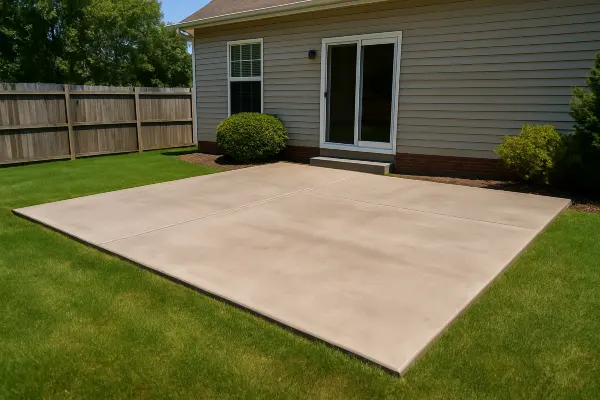
I like to print a large plan with the foundation outline and overlay color codes: red for structural edges and thickened beams, blue for utilities, green for embeds and anchor bolts, orange for elevation breaks. Then walk the site with the superintendent and foreman and lay out a sequence, not just a shape. Which areas can we proof-roll first, which form lines carry the most load, where are the soft spots, and what will rain do to this slope? The sequence often determines whether you break the pour into two placements or push for one.
Details that deserve early attention:

- Slab thickness transitions. A 6 inch slab stepping to 12 inches at a shear wall line needs depth control and rebar chairs that can handle the change without sag.
- Vapor retarder and capillary break. If the geotech calls for a 4 inch open-graded base and the spec references ACI 302’s recommendations, confirm the moisture management approach before you place a single load of base rock.
- Tolerances. The project may cite ACI 117 tolerances, but owners and equipment vendors sometimes tighten these. If you hear “FF 50, FL 35” or “anchor bolts to within 1/16 inch,” you need to plan laser-guided placement and jigs.
When plans are silent or conflicting, do not improvise in the dirt. Issue a request for information with a proposed resolution, then capture the decision in the control narrative. The field remembers notes pinned to the wall.
From lines on paper to lines on ground
Modern concrete tools change speed and accuracy, but they do not replace judgment. A robotic total station and a data collector, when set to a solid control network, let one person lay out a complex foundation with high repeatability. A GPS rover helps with bulk staking and rough grading, but for concrete edges and bolt patterns, optical instruments still rule on tight jobs. Many crews now pair a total station with a laser level and digital levels for elevation transfer. The combination gives you speed across the site and precision where it matters.
Practical layout habits supported by experience:
- Keep layout off sacrificial stakes. Use offset hubs outside the work zone with clear ties. For example, stake a control line 10 feet off the slab edge with two or three points, then pull back to the actual form line each morning before work starts. If a skid steer wipes out the form, you still have your offsets to reestablish.
- Document stake language. A stake that reads “B.O.S. 5’ off Grid B” means something to the person who wrote it and may confuse the night crew. Use consistent codes: EOS for edge of slab, BFW for back of form, B.O.C. for back of curb, EL for elevation to top of slab or to subgrade. Paint cap color matches the code.
- Elevation checks every 20 to 25 feet along critical edges, closer at steps or at footings. A handheld receiver on a grade rod tied to your benchmark, with readings recorded, becomes your “trust but verify” log.
If you are on a flatwork-heavy job, consider a 3D layout model. Many concrete companies use total stations to import a simplified foundation model extracted from BIM. This reduces plan-reading errors and keeps complex embed patterns honest. It does add a step: someone has to police the model against the latest set and revisions. We assign a single point of responsibility, typically the project engineer, to own model fidelity.
Dirt, drainage, and density
Your foundation is only as accurate as the ground under it. Subgrade preparation is where deviations become permanent. The geotechnical report should rule this stage: required compaction, proof-rolling criteria, moisture content ranges, and base course gradations. A common failure path is to treat the subgrade as a shape achievement rather than a soil system. You can hit your elevations and still build over a sponge.
Moisture conditioning on clayey sites often dictates the sequence as much as the layout. If the report specifies a target of plus or minus 2 percent of optimum moisture, bake that into your schedule. The fastest way I have lost time on a foundation is fighting wet subgrade. You can proof-roll in the afternoon and wake up to pumping tracks the next morning if you ignored the forecast and the drainage plan.
Base rock deserves the same attention. For a Concrete slabs foundation with a vapor retarder above the base, choose a gradation that compacts well and minimizes sharp edges that could puncture the membrane. If the spec calls for 3/4 inch minus, do not let value engineering push you to cheap, unwashed material that carries fines. Fines migrate and trap moisture. ACI and PCA guidance favor an even, dense base with tight tolerances for levelness: I aim for plus or minus 1/4 inch over 10 feet at this stage, tighter if the slab requires high flatness.
Check compaction with a mix of methods. Nuclear density tests give you numbers, dynamic cone penetrometer gives you feel, and proof-rolling with a loaded tandem gives you the reality check. If you see deflection or pumping, remediate immediately, not after vapor barrier installation. Patchwork fixes under plastic become long-term slab performance problems.
Vapor, barriers, and rebar that sits where the engineer intended
The eternal debate around vapor retarders under slabs hinges on moisture-sensitive floor finishes versus slab curling. On projects with resilient flooring, wood, or strict moisture emission limits, a Class A vapor retarder is the norm. Tight seams, taped penetrations, and protection from punctures matter more than the brand name. Crews often walk the same path, drop mesh, and drag rebar chairs during placement. Use path boards or recycled plywood sheets to spread loads and train the crew: if you puncture, you patch immediately.
Rebar placement accuracy influences not just strength but also cover and long-term concrete durability. Chairs and bolsters are not an afterthought. On a 6 inch slab, a one inch placement error is glaring. I like to prebuild sample mats on the ground, lay them over the base, and measure cover with bar locators before full installation. Label bundles by zone. When the inspector arrives, show a clean set of tags and heat numbers that match submittals, then demonstrate cover checks at random points. It builds confidence and cuts the second-visit risk.
For thickened edges and grade beams under slabs, mark the form sides with elevation lines and rebar placement paint marks. During the pour, everyone knows what “full” looks like and where the top mat should land. Small touches like that keep a fast slab pour from turning into a buried mystery.
Forms that hold the truth
Forms are the physical translation of your layout. Good formwork speaks geometry in a language concrete respects: plumb, straight, tight, and braced to resist both lateral pressure and field creativity. A 3/4 inch gap under a form becomes a honeycomb, a dog-eared panel telegraphs into the finish, and a loose splice at a corner turns square into trapezoid.
Spending a few extra hours on form bracing is cheaper than chasing blowouts. We brace corners with both kickers and horizontal walers, then put opposing stakes at high-pressure zones like thickened edges and deep recesses. Check plumb and line with a stringline or laser, then mark “hold lines” on the mudsills. During the pour, one person’s job is to watch these marks. If the line moves, pour rate slows until we correct.
Most mistakes I have seen around form elevations come from poor reference. Set screed plates or ledgers at planned intervals and confirm their elevation against the benchmark. If you are using a laser screed, verify slab elevation at the edge of the pour where the machine cannot reach. For steps and blockouts, template the shapes and confirm with the site superintendent against the drawing callouts before you pour. A one inch error in a doorway recess invites expensive finish carpentry acrobatics later.
Embedded items and anchor bolts: the unforgiving details
Nothing tests a concrete contractor’s process like embedded steel and anchor bolt patterns. Steel does not forgive. The best method is to treat embeds as a separate scope within the pour, with dedicated checks and fixtures. For repetitive anchor patterns, build steel jigs that hold bolt spacing and plumb. Tag each jig with its drawing reference and elevation. If the structural steel fabricator can deliver base plates early, use them as templates. When that is not possible, confirm against shop drawings, not just the structural plans.
I insist on a pre-pour embed walk with the erector or mechanical lead, and a layout verification sheet we sign in the field. The checklist is short and brutal: count of embeds per grid line, orientation marks, projection heights, and interference with rebar. If a conflict forces a move, we record the exact offset and alert the designer the same day. When bolts move without a record, steel crews eat hours chasing holes.
For post-installed anchors planned by design, do not let the team assume “we will drill later.” Drilling close to rebar after the pour invites concrete spalling and bar damage. Mark these zones ahead of time and keep photographs of rebar layout for the future driller.
Mix design and the slump myth
Slump is not a quality metric by itself. Treat it as placement behavior. A slab mix for interior use that targets a water-cement ratio of 0.45 to 0.50, with mid-range water reducer and well-graded aggregates, can deliver finishability and strength without drowning the batch in water. The dispatch ticket likely shows a range. The field must own water additions. On a 10 yard load, every added gallon raises slump roughly an inch and increases the water-cement ratio. That undermines concrete durability, increases shrinkage, and risks curling.
Work with the ready-mix supplier, not against them. Good concrete companies have mix designs tuned to local aggregates and weather. For hot days, request retarder and chilled water, and plan your placements earlier. For cold mornings, warm water and set accelerators keep you on schedule, but watch finishing windows. The mix that finished beautifully in April can skin over too fast in August with a breeze and low humidity.
If the specification calls for shrinkage limits or elevated floors that demand tighter control, discuss cement content and supplementary cementitious materials early. Fly ash, slag, or silica fume can help with pumpability and long-term performance, but they change setting time. Align placement manpower with the mix behavior. A crew that is too small to keep up will chase the slump with water. That is where problems begin.
Placement, flatness, and the art of moving fast without losing the line
A slab pour builds its own momentum. Once the concrete hits the deck, the decisions speed up. The foreman’s control of the rate, the screed operator’s eye, and the finishers’ timing become the difference between a surface that reads like glass and a map of dips and chatter.
Laser screeds changed what is achievable in flatness. If you have room to operate, a good operator can target FF 50, FL 35 or better with a tuned mix and tight base. Edges, around columns, and near blockouts still rely on handwork or a smaller walk-behind screed. That handwork determines whether the transitions keep the same flatness or slump into dips. Establish a strike-off pattern that keeps the crew from painting themselves into a corner. Long, straight pulls and timely bull floating keep aggregate near the surface in check and set up the finishers for success.
Do not neglect elevation verification during placement. We station a grade checker near the leading edge with a rod and laser, calling out any drift early so the screed adjusts immediately. Waiting until the next day to discover a low bay invites skim coats and grinding. You cannot grind your way to structural elevation, only to a smoother lie.
For high flatness jobs, avoid overworking the surface. The temptation to chase perfection with steel trowels early leads to blisters and delamination. Let bleed water evaporate. If you see sheen, you wait. Evaporation rates vary by wind, humidity, and temperature. Use an evaporation rate nomograph and keep evaporation retarder handy for borderline conditions. Cover sooner rather than later once you hit the final pass.
Curing is not optional
If you care about concrete best practices, you care about curing. Compressive strength, surface hardness, abrasion resistance, and long-term shrinkage performance all respond to early moisture retention. The easiest path is a spray-applied curing compound that meets ASTM C309 or C1315, applied at the right rate. Light coverage leaves pinholes that show up when flooring installers test moisture months later.
On projects with strict flooring requirements, we often use wet curing for 7 days with curing blankets or soaker hoses and polyethylene. It sounds old fashioned until you read the data. Wet curing reduces curling and shrinkage, and it https://go.bubbl.us/ef5e9b/e450?/Bookmarks costs less than crack repair later. If the schedule cannot accommodate full wet cure, hybrid methods work: blankets for the first 48 hours, then a high-solids curing compound.
Protect the slab from trades who think of it as a platform the moment you cut joints. Wheel loads from scissor lifts can crush green concrete. Set load limits by day and communicate them. I have seen a brand-new slab spiderweb from a single ill-timed materials delivery.
Joints: timing, layout, and long-term behavior
Control joints guide cracking. They do not eliminate it. If the spec calls for sawcut joints at 12 to 15 feet spacing on a 6 inch slab, that reflects a rule of thumb: keep panels roughly square with the joint spacing no more than 24 to 36 times the slab depth. Warm, dry days shrink the timing window for sawcutting. Cut too late and the slab will crack randomly. Cut too early and the saw ravels the surface. Use early-entry saws where specified, but confirm depth. A shallow cut is a line, not a joint.
Joint layout lives in the plan. If you wait until pour day to mark joints, you are reacting. Lay them out on the base before plastic goes down, mark transitions carefully, and confirm with the architect if joints coincide with exposed patterns or will be hidden under finishes. Seal joints where liquids or debris would harm the slab or the use. Sawcut dust is not a finish. Clean and seal correctly.
Isolation joints around columns and walls avoid restraint. Fill them with compressible material that matches the specification and do not let concrete bridge over during placement. Those slivers of concrete will transmit stress and crack later when the building moves.
Tolerances and the quiet discipline of measurement
Contractors who consistently deliver accurate foundations build a culture of measurement. They do not assume a dimension because it looked right yesterday. They build a simple rhythm: verify, record, adjust. After strip, run a total station check of key edges and bolt patterns. Shoot slab elevations on a grid and map highs and lows. If you need to plane or fill, decide early while the surface is still fresh enough to handle bonded toppings or grinding without drama.
Share the results. The steel erector will work with you if you show that 98 percent of the bolts are within 1/16 inch and three patterns drifted 1/8 to 3/16 inch due to a documented field decision. Silence breeds blame. Data builds cooperation.
Tolerances are not just a contractual sport. They affect everything downstream: framing, storefronts, millwork, doors, equipment alignment. For a warehouse slab that will carry narrow-aisle forklifts, flatness is a safety specification, not an aesthetic one. For a high-end residence, a half inch out of plane at a kitchen island shows up in the cabinetry. Good concrete contractors keep the owner’s use in mind and choose their battles accordingly.
Weather: the unpredictable partner
Rain is not the only weather that bothers concrete. Wind and heat pull water off the surface. Cold slows hydration and pushes placement into dark hours. Plan mitigation, not heroics. On hot, windy days, pre-dampen the base without leaving ponded water, stage windbreaks if possible, and have evaporation retarders and curing blankets on site. On cold mornings, heat the mixing water at the plant, protect the subgrade from freezing, and tent high-risk areas. Finishing a slab under a tent with indirect heat is better than trying to rescue a crusty, wind-burned surface.
Lightning and pumps do not mix. If you run a boom pump, know the lightning policy and enforce it. An hour pause beats an accident. Pumps also change pressure regimes in forms. Watch for uplift at blockouts and along thin forms. Light steel form ties can pop under vibration and pump surge. Inspect as you pour, not after.
Safety walks hand in hand with quality
Accuracy suffers when the site is unsafe. If a crew cannot focus because they are dodging rebar trip hazards or fighting poor lighting on a pre-dawn pour, measurements slip. Keep egress paths clear, set rebar caps, light your work zones, and stage materials logically. A clean site reduces damage to vapor barriers and layout stakes, which in turn protects the foundation accuracy you worked to establish. The best concrete contractors fold safety into sequence planning, not as a bureaucratic overlay.
Lessons from a bad week and a good one
On one job, we poured a 15,000 square foot slab with a forest of anchor bolts for heavy equipment. The plan called for tighter than typical tolerances, 1/16 inch location over a 10 foot pattern. We built custom templates, triple-checked against shop drawings, and still ended up with two base plates that did not drop. Investigation showed a layout shift of 1/8 inch in one corner. The cause was not the total station. It was a control point set in backfill that settled 3/16 inch after water main trenching. We had not reverified vertical control after utilities. The fix involved slotting holes and epoxy dowels. It cost two days and damaged trust.
On another project, a flatwork-heavy tilt-up, we put the same energy into control but added a daily control check routine after each earthwork move. The slab had long runs, 240 feet, and we split the pour across two days to limit cold joints conflicts with panel pick points. We used a laser screed and walked edges with a smaller screed. The base was held within 3/16 inch, and sawcut joints went in four hours after finishing with early-entry saws. FF/FL came in at 62/45. Steel went in clean, panels picked without a hitch, and the owner never asked a question about the floor. The difference was not luck. It was rehearsed verification.
What this looks like as a repeatable practice
Accuracy is easier when it becomes habit. The best crews I have worked with keep a short, consistent playbook that everyone understands. It is not fancy, and it does not live in a binder no one reads. It is a living routine that turns plans into a reliable Concrete building foundation with long Concrete durability. Here is how that routine often reads on our whiteboard:
- Confirm survey control and write a control narrative. Reverify after earthwork, utilities, and before forming.
- Prepare subgrade to geotech spec, proof-roll, verify compaction, and set base to tight level tolerances. Protect from weather.
- Lay out with a total station using offsets outside work zones. Use consistent stake codes and maintain a layout log.
- Preinstall vapor retarder cleanly and protect it. Place rebar with proper chairs, check cover, and tag zones.
- Build and brace forms to resist pressure and movement. Mark elevations and rebar positions on forms. Dry run the pour sequence.
That list is a skeleton, not a script. The craft lives in the choices on site when reality pushes back.
Tools that help without running the job for you
Modern concrete tools cannot pour for you, but they can reduce variability. Robotic total stations and tablets with annotated plans keep your layout consistent. Laser screeds cut the average error and compress the finishing window. Rebar locators catch cover issues before you bury them forever. Digital levels remove the subjectivity of someone’s eye on a story pole. Cloud photo logs with geotagging make it easy to prove what you did when questions roll in months later.
Choose tools your team will use well. A state-of-the-art total station in the hands of a barely trained layout tech is less valuable than a well-used builder’s level in the hands of a seasoned foreman who logs every reading. Invest in training. Pair younger layout technicians with old-school superintendents for a few cycles. The blend produces fewer surprises.
The payoff: accuracy that survives the schedule
Owners remember the slabs that do not make noise later. Dry floors that take adhesive, forklifts that run smooth, walls that meet floors without shims every few feet, equipment that bolts down without torching holes. Those outcomes live upstream, in the discipline from survey to slab. Concrete contractors who deliver this consistency build reputations that outlast one project. Schedulers love them because they do not generate chaos. Inspectors respect them because they find fewer reasons to push back. And the crews feel the pride that comes from work that measures out tight.

The industry’s best concrete companies are not perfect. They still face bad soil, odd details, and weather that ignores the calendar. What sets them apart is how they manage risk, document decisions, and hold the line on standards. They translate site plans into finished foundations with fewer compromises because they know where the traps lie and how to steer around them.
If you build concrete slabs for a living, you already know the tug between speed and precision. The trick is refusing the false choice. With the right process and modern concrete tools used thoughtfully, you can move fast and land on the numbers. That is how a line of ink on a site plan becomes a foundation that supports everything to come.
Name: San Antonio Concrete Contractor
Address: 4814 West Ave, San Antonio, TX 78213
Phone: (210) 405-7125
This is the logo of San Antonio Concrete Contractor https://sanantonioconcretecontractor.net/assets/san-antonio-concrete-contractor-san-antonio-tx-logo.png
San Antonio Concrete Contractor is a local business located at 4814 West Ave, San Antonio, TX 78213
San Antonio Concrete Contractor serves consumers with residential and commercial concrete projects
San Antonio Concrete Contractor offers free quotes and assessment
San Antonio Concrete Contractor phone number is (210) 405-7125
San Antonio Concrete Contractor has the following website https://sanantonioconcretecontractor.net/
San Antonio Concrete Contractor has the following google map listing https://share.google/d8wsdJhNohh11Oyi5
San Antonio Concrete Contractor has this Facebook page https://www.facebook.com/profile.php?id=61581404267593
San Antonio Concrete Contractor has this twitter profile https://x.com/SanAntConcContr
San Antonio Concrete Contractor has this Pinterest profile https://www.pinterest.com/SanAntonioConcreteContractor/
San Antonio Concrete Contractor has the following Linkedin page https://www.linkedin.com/in/san-antonio-concrete-contractor-846606388/
San Antonio Concrete Contractor has this Youtube channel https://www.youtube.com/@SanAntonioConcreteContractor
San Antonio Concrete Contractor serves residents near Thomas Jefferson High School
San Antonio Concrete Contractor provides services near The Alamo.
San Antonio Concrete Contractor helps residents close to San Antonio Police Department at 3635 E Houston St, San Antonio, TX 78219