Bee and Wasp Control: Building a Sting-Safe Yard
Few things interrupt a summer afternoon faster than the thin, unmistakable buzz of a wasp orbiting the picnic table. A single sting may be a nuisance, but a nest tucked into a porch column or a void in the eaves can escalate from irritation to medical emergency in a heartbeat. Done well, bee and wasp control protects people, pets, and pollinators while keeping a yard pleasant to use. It also requires judgment. Not every flying insect needs removing, and not every nest warrants chemical treatment. Getting the balance right is the difference between a yard that works for your family and a yard that works for stinging insects.
Know your airborne neighbors
Bee and wasp is a catchall for several very different insects. Each species has its own habitat preferences, temperament, and seasonal rhythm. When I walk a property for the first time, I look for a few reliable tells.
Paper wasps build open, umbrella-shaped combs under eaves, inside fence rails, and on pergolas. You can spot the comb cells from below. They are relatively tolerant of people at a distance, but they defend within a couple of feet of the nest and can sting multiple times.
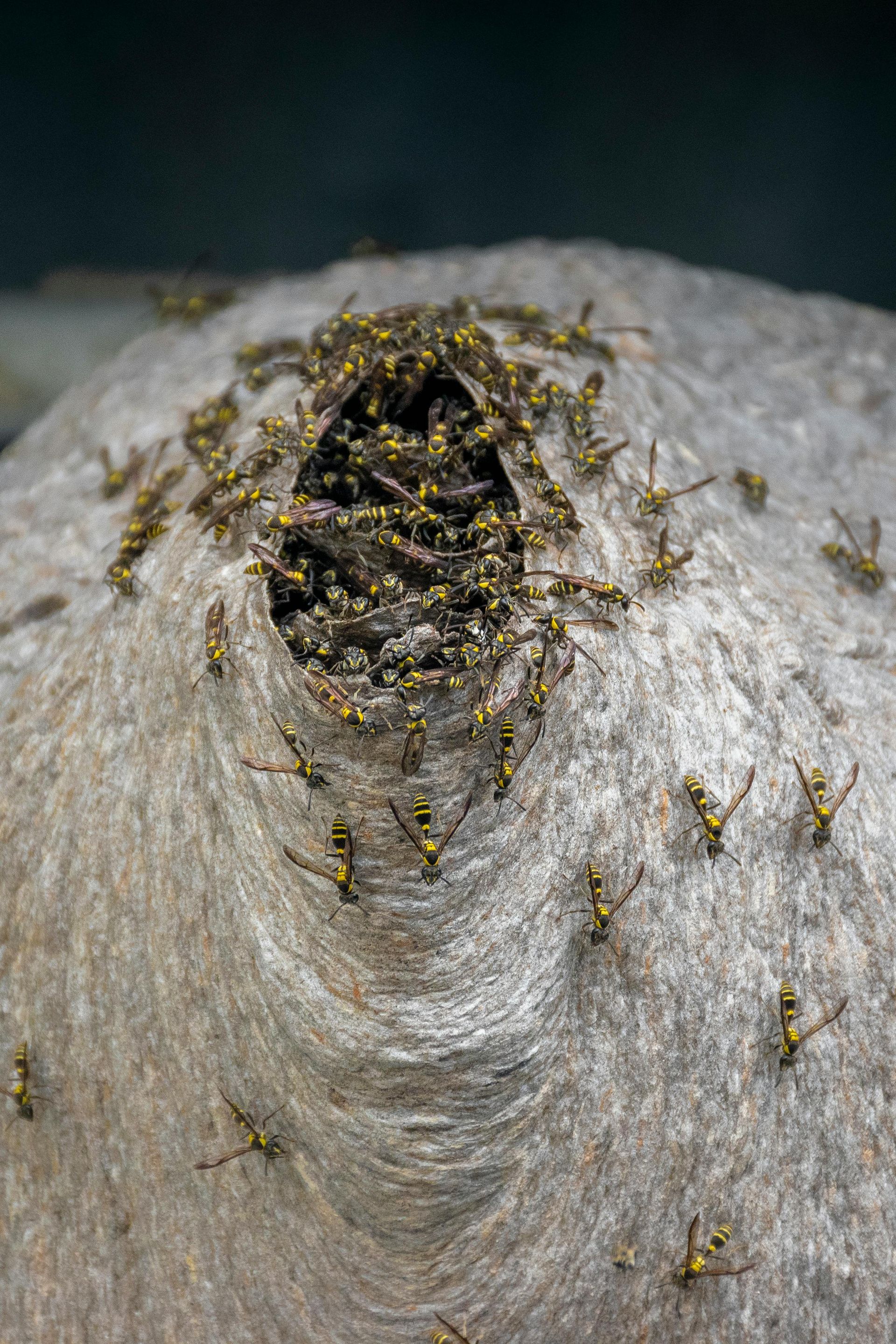
Yellowjackets take a different approach. They favor cavities, from underground vole burrows to wall voids, and they are intensely defensive of those spaces. In late summer, when colony numbers peak, a mower passing over an underground nest can trigger a surge of dozens of yellowjackets in seconds.
Hornets, particularly bald-faced hornets, build enclosed, football-shaped paper nests in trees and shrubs, usually shoulder height and higher. They patrol aggressively around the nest and respond rapidly to vibrations and movement.
Honey bees and native solitary bees sit apart. Honey bees form perennial colonies and, in residential settings, sometimes move into wall voids or soffits through a gap the width of a pencil. Solitary bees, including gentle mason bees and many ground-nesting species, rarely sting unless pressed against the skin. Their foraging benefits gardens and fruit trees. Protecting them, and removing them only when they present a genuine hazard, is fundamental to responsible bee and wasp control.
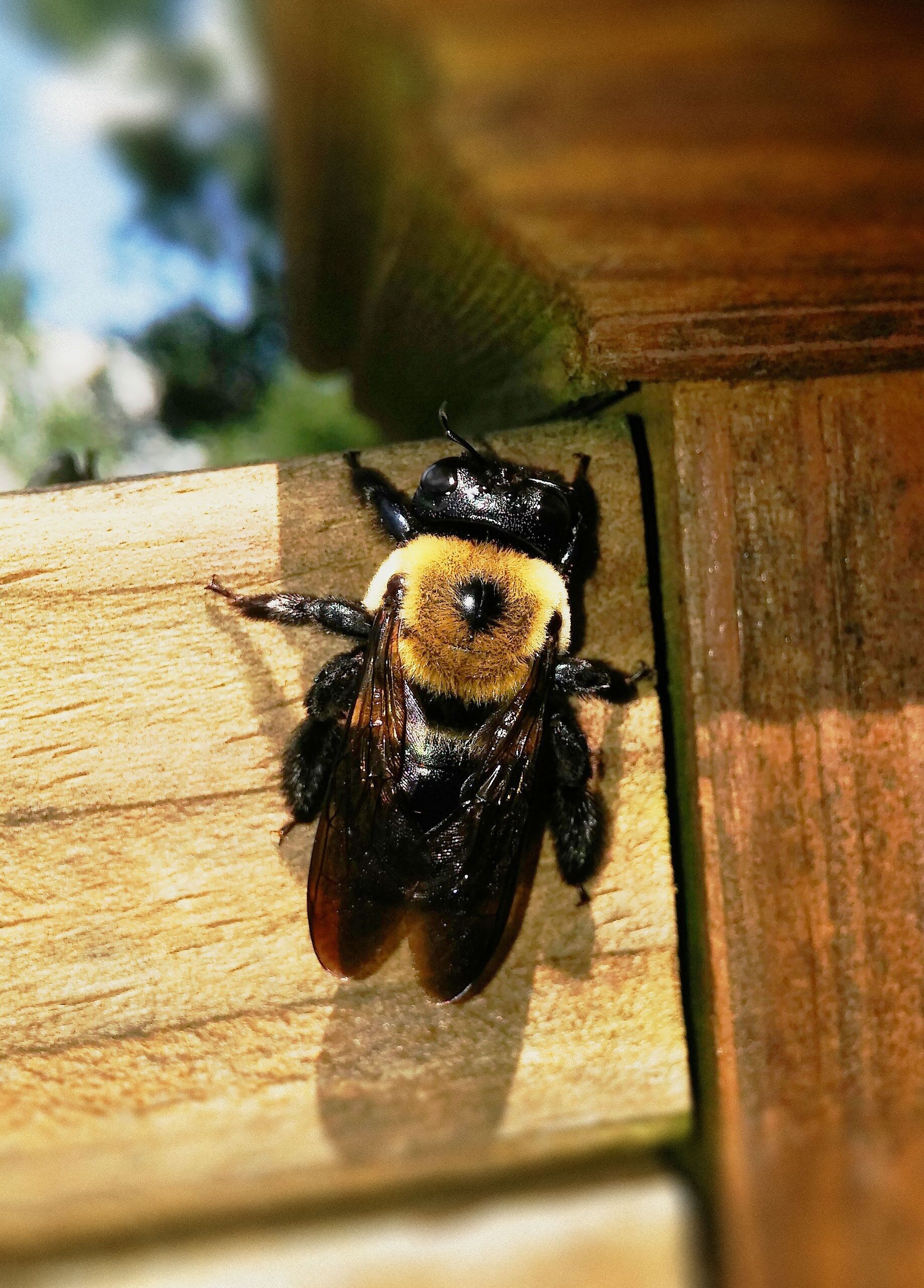
Carpenter bees complicate matters by drilling into exposed softwood fascia and railings. They do not eat wood, but their tunnels weaken trim over time and invite woodpeckers to excavate more damage. Males hover and bluff, but only females can sting and typically avoid it. Targeted carpenter bees control emphasizes wood repair, sealing, and selective treatments near active galleries rather than broad sprays.
Where stings begin: the small cues that predict big trouble
You rarely find a major nest without early signs. A steady flight path under a deck rail, a papery fleck on a porch ceiling in April, a faint scratchy rustle in a hollow fence post, all suggest a colony taking shape. In late spring I pay close attention to:
- Tiny starter combs under unpainted or rough soffits, especially on the leeward side of structures.
- Soil spots with repeated traffic, where yellowjackets enter and exit a burrow in a clean line.
- Circular holes, slightly larger than a pea, in fascia, beams, and play equipment that point to carpenter bee galleries.
Catch these early and simple measures can redirect, exclude, or remove nests before they become defensive threats. Miss them, and the conversation changes to personal protective equipment, evening treatments, and careful debris handling.
The safety lens: stings, sensitivities, and situational risk
Not all stings carry the same risk. For a healthy adult, a single paper wasp sting hurts but typically fades. For a toddler or for someone with a known allergy, any sting is serious. The yard layout also matters. A ground nest ten yards off the tree line poses less risk than a yellowjacket colony under the patio step where kids park their bikes. High foot traffic and confined spaces magnify danger. Outdoor pets, particularly curious dogs, get into trouble nosing at buzzing voids.
I keep a simple mental matrix: species temperament, colony size, nest location relative to people, and medical context. If two or more categories land in the high column, it is a removal priority. If only one does, consider mitigation that protects both humans and beneficial pollinators, such as absorbing a small paper wasp nest at a far corner of a garage where no one walks.
Building a sting-safe yard starts with design
Good bee and wasp control is less about what you spray and more about what you make unappealing. Smooth, well-painted soffits and fascia shed paper nest starts. Tight screening on gable vents and weep holes prevents honey bees and yellowjackets from discovering cavities. Mortar and caulk make poor building materials for paper nests to anchor, which is exactly what you want.
Plant selection drives traffic and nesting opportunities. Dense, hedge-like shrubs close to entryways create blind corners where hornets like to build. Moving those plantings back three to five feet from doors and footpaths increases visibility and reduces accidental encroachment. Flowering borders are a joy, but clustering the most attractive blossoms away from seating and grill areas reduces foraging overlaps with people. Timing matters too. If you prune major shrubs in late winter and early spring, you often remove the first footholds hornets and paper wasps would use later.
Water management plays a role. Stinging insects need water for cooling and for nest building. Fixing leaky spigots, eliminating saucers that hold water under planters, and maintaining pools and birdbaths reduces the need for wasps to forage on patios and decks. In mosquito control, we talk about the teaspoon of water that breeds a problem. For wasps, think in terms of a reliable source that keeps them returning to a single zone of your yard.
Lighting can change nighttime behavior. Bright, unshielded fixtures near doors attract moths, which in turn draw hunting wasps. Warmer temperature LEDs and shielded fixtures reduce insect draw at entries. That small change lowers the chance of a wasp circling at face level as you fumble for keys after dark.
How Domination Extermination approaches stinging insect risk
In my experience with Domination Extermination, the first visit often begins without a sprayer in hand. We walk the property, note airflow patterns around soffits, check fence cavities, and watch for predictable flight paths. If we spot an early paper wasp nest in a low-traffic area, we sometimes recommend monitoring rather than immediate removal. If a client has a child with a severe bee allergy, we tighten the threshold for action. That judgment call improves outcomes and reduces unnecessary pesticide use.
Our inspections borrow from broader pest control practices. The same construction gaps that let rodents into a crawlspace also admit yellowjackets into a wall void. A sill plate gap that telegraphs termite control needs doubles as a honey bee entry point in swarm season. Thinking across categories, from ant control to spider control, helps us map a structure’s weak points and rank them by risk.
The right tool for the right nest
There is no universal method that fits every wasp or bee scenario. Treatments divide loosely into physical removal, exclusion, and targeted application. For exposed paper wasp nests on a soffit, a quick, precise application in the cool of evening, followed by removal of the comb and a light wash to erase pheromone cues, is often sufficient. For an underground yellowjacket nest near a play area, you want a product and method that reach deep into the nest galleries, again timed for evening when most workers are home. Wall voids require extra caution to avoid pushing agitated insects into living spaces.
Honey bees in structures present a special case. If the colony is accessible to a humane beekeeper and not severely embedded, a live removal preserves pollinators and eliminates comb that would otherwise rot or attract other pests. Leaving comb behind is a mistake I have seen create secondary problems, from ants to rodents, as the honey and wax become a buffet. Even when live removal is not feasible, a careful cutout and seal, with materials resistant to future infiltration, prevents a revolving door effect.
For carpenter bees control, timing matters. Treating the entry hole lightly and allowing adults to contact the surface, then sealing after activity ends, prevents trapping bees inside and reduces the risk of staining from frass and resin. Fresh paint on previously attacked wood reduces new drilling more effectively than many people expect, particularly when combined with filling old galleries.
Seasons tell the story
Stinging insect pressure rises and falls with the calendar. In early spring, queen wasps scout and begin nests alone. Removing starter nests then is a low-risk, high-return task. By mid to late summer, colony populations surge and defensive behavior spikes. That is when mowing over a yellowjacket nest or brushing shrubs near a hidden hornet nest triggers incidents.
Swarm season for honey bees depends on weather, but late spring into early summer is common. A sudden ball of bees on a branch looks alarming but often indicates a temporary rest during the scouts’ search for a new home. Those clusters usually move on within a day or two. Spraying a swarm hanging in a tree is rarely necessary and often harms a beneficial colony that could be captured by a beekeeper.
When planning yard work, I remind clients to schedule fascia repairs or gutter work with sting risk in mind. If you felt uneasy near a particular corner in July, do not wait until peak season returns to open that void. Address it in late winter or early spring when activity is minimal.
Case notes from the field
A homeowner once called about “flies” swarming a mulch bed. On site, the pattern looked wrong for flies. Watching for a minute, I saw a repeated line of entry to a pencil-wide hole in the soil. The nest was a yellowjacket colony using a mouse burrow as a base. The walkway passed within two feet of the entrance. We treated after dusk, marked the area, and followed up to confirm no reactivation. The lesson was simple: when in doubt, watch the traffic. A straight, consistent in-and-out flight path spells a nest.
Another property, a rental with a broad deck, had paper wasps under nearly every railing section. The wood was rough-sawn and unpainted. We removed the nests, then helped the owner plan a sand-and-paint job. The next season, nest attempts fell by more than 80 percent. Surface texture and finish matter more than many realize.
A family with a child allergic to bee stings reported activity in a bedroom wall. In that case, honey bees had moved through a cable entry point. We coordinated a live removal, carefully opened the wall, transferred comb and brood to frames, and sealed the wall after cleanup. Six months later, we found ants trailing to the same spot, but no food source remained and the trail died out. That reinforced a broader truth: good bee and wasp control ties into ant control, rodent control, and even termite control in the way it addresses structure, sanitation, and moisture.
Practical steps you can handle safely
There are plenty of measures a homeowner can take that lower sting risk without specialized gear.
- Seal pencil-width gaps leading into voids, especially around soffits, meter bases, and cable entries, using quality exterior caulk and proper flashings.
- Keep vegetation trimmed back from structures by at least a foot, and thin dense shrubs near doors and play zones to increase visibility.
- Paint or seal raw wood on pergolas, fascia, and railings, paying attention to past carpenter bee activity and old galleries.
- Cover trash and recycling, rinse sugary residue, and clean grill drippings quickly to reduce protein and sugar attractants.
- Check under eaves and railings in early spring for starter nests and remove them before they grow, using protective eyewear and a long reach.
Protective eyewear deserves its own note. Even a non-aggressive paper wasp can bump into an eye during a startled flight, and a reflexive swat invites a sting. Simple safety glasses during outdoor chores help avoid that common mishap.
When to pause and call for help
If you suspect a yellowjacket nest near a child’s playspace or you hear persistent rustling in a wall, that is not a do-it-yourself scenario. Evening or early morning is safer for any inspection because more insects are home and temperatures are lower, but protective clothing and the right technique are still essential. Using the wrong product in a wall void can drive angry insects into living areas. On a medical note, if you or someone in your household has a history of severe reactions, treat any nest near frequent human activity as time sensitive.
Dogs complicate judgment calls. I have seen otherwise manageable situations escalate because a curious pet repeatedly noses the same deck step or landscaping gap. Pets cannot read the room. If a pet fixates on a buzzing area, containment and professional evaluation make more sense than attempting temporary barriers or scents.
Domination Extermination’s playbook for complex nests
Complex nests force careful planning. With Domination Extermination, we diagram the site, estimate colony size from traffic counts, and select timing that limits bystanders. For wall voids, we map interior rooms and place observers to watch for any push-through while we work. If honey bees are likely, we try to determine comb extent to evaluate whether a live removal partner is viable. With hornet nests in trees over footpaths, we decide whether temporary barriers and signage will hold until an evening treatment and removal.
Post-treatment, we do not just walk away. We look for the why. Was there a construction defect? A landscaping feature that invited recurrent nesting? A sanitation issue like open recycling bins that drew protein-seeking wasps in late summer? That wrap-up feeds into the homeowner’s plan to prevent a repeat, and it is where expertise from broader pest control categories helps. If we see rodent runways near a deck, we flag them. Rodent control intersects with sting prevention because abandoned burrows become perfect yellowjacket apartments. If we spot subterranean termite conducive conditions like wood-to-soil contact at a fence post near the house, we mention it. Good bee and wasp control lives inside a bigger picture.
Balancing pollinators and protection
It is possible to keep a yard sting-safe without treating every flying insect like a target. Most solitary bees want nothing to do with you. Encouraging them with a sunny patch of bare, well-drained soil and pesticide-free blooming plants away from living spaces keeps their valuable pollination service without adding risk. Reserve interventions for species and locations that intersect with human activity or create structural damage.
Avoid broad, repeated insecticide applications to flowers and lawns. Besides the environmental implications, they rarely fix the root causes of stinging insect conflicts, and they can harm non-target species. Precise, situation-specific treatments combined with physical changes deliver better results. This mirrors the logic in bed bug control, where indiscriminate spraying does little compared to targeted inspections, encasements, and heat. In cricket control and spider control, exclusion and habitat adjustment consistently outperform heavy chemical reliance. The principle carries across categories.
A calm response when stings happen
Even with good prevention, stings occur. A prepared response keeps a minor event from spiraling.
- Move everyone, especially children and pets, indoors or at least 30 feet from the area to break the insects’ defensive cycle.
- For a single sting, clean the site and apply a cold compress. For suspected multiple stings, assess for dizziness, swelling of the face or throat, or trouble breathing.
- If any signs of systemic reaction appear, use prescribed epinephrine and seek medical care promptly. Do not wait to see if it gets worse.
- Note where the incident started. If it appears to be from a specific spot, mark it from a safe distance to aid later removal.
- Avoid lawn equipment or heavy vibrations near the site until a professional evaluates it.
People often return to the scene to see whether the insects are “still there,” which risks a second round. Give it time and distance. Most colonies calm after a disturbance if left alone.
How a sting-safe plan fits with the rest of your home’s defenses
A yard that resists stinging insects tends to resist other pests too. Sealed utility penetrations deter ants and spiders from using wall void highways. Tight door sweeps reduce rodent foraging incursions as daylight fades. Correcting moisture problems under decks and at foundation grades removes the cooling and water sources that draw both wasps and mosquitoes. When mosquito control focuses on drainage and container management, it has a spillover effect on wasp traffic around patios where water once bee and wasp control pooled in planter trays.
Termite control and bee and wasp control intersect at wood care. Rotten fascia invites both termites and carpenter bees for different reasons, and both will cost you. Keeping wood dry, painted, and properly flashed blocks multiple problems at once. That is the logic I return to again and again: one well-placed repair solves three headaches.
What Domination Extermination recommends as the season turns
As late winter gives way to early spring, Domination Extermination advises a slow perimeter walk with an eye on soffits, railings, and fence posts. Note anything that changed, from a loose screen to a new gap around a cable. Touch up paint on exposed wood and swap out any rotting trim. Clean and store hummingbird feeders away from entries so sugar residues do not draw wasps where you least want them. Consider moving your most bee-attractive perennials to a bed farther from seating, then plant herbs like rosemary and lavender near high-traffic areas, which seem to draw fewer wasps than some ornamentals when properly maintained.
As summer peaks, adjust yard routines. Mow earlier or later when temperatures are cooler, which reduces the odds of triggering a yellowjacket surge from a hidden burrow. Carry a small flashlight for evening deck checks before gatherings, scanning under rails for fresh comb. Keep a pair of safety glasses by the back door. Simple habits, repeated, make a yard feel calm rather than tense.
The bottom line from the field
I have seen pristine yards become wasp factories because of two unpainted pergola beams. I have also seen homes next to wild meadows go years without an issue because their fascia is tight, shrubs are trimmed, and water sources are controlled. Bee and wasp control is not exotic. It is a blend of timing, building science, species knowledge, and steady housekeeping. When you approach it that way, you protect your family without turning the yard into a dead zone.
There is room for expert help, particularly when nests are entrenched or people in the household have medical vulnerabilities. Teams like Domination Extermination bring repetition and pattern recognition that shorten the path to a stable outcome. They also see connections across pests that individual events can hide. A hole in a soffit is not just a wasp problem. It is an ant highway, a mouse invitation, and a moisture pathway. Fix the hole and you prevent a string of future calls, from carpenter bees to spiders to rodents.
In the end, a sting-safe yard feels ordinary in the best sense. You grill, kids run, dogs nose the clover, and nobody thinks twice about buzzing in the hedge because it stays in the hedge. That normalcy is the mark of good work, the kind you notice only by the quiet it leaves behind.
Domination Extermination
10 Westwood Dr, Mantua Township, NJ 08051
(856) 633-0304
