Why Vice City Is the Perfect Setting for GTA 6
There are some game cities that feel useful, and then there are cities that feel inevitable. Vice City has always belonged in the second group. The moment Rockstar confirmed that GTA 6 would return to a modern version of Vice City, a lot of people had the same reaction, even if they phrased it differently: of course. Not because Rockstar is playing it safe, and not because nostalgia alone can carry a massive open-world game, but because this particular setting gives the series almost everything it needs at once.
Vice City is bright, chaotic, vain, humid, funny, dangerous, and deeply performative. It is a place built on reinvention and appearance, which makes it perfect for Grand Theft Auto. The series has always thrived in cities where image and reality are constantly fighting each other. Liberty City gave Rockstar density and pressure. Los Santos gave it sprawl, aspiration, and celebrity rot. Vice City offers a different cocktail. It is glamorous on the surface, strange underneath, and ridiculous in a way that feels believable rather than cartoonish.
That matters more than ever. A modern GTA has to do several things at once. It has to create a playground for vehicles, chases, and crime. It has to support satire without turning into a lecture. It has to feel alive for dozens, maybe hundreds, of hours. And it has to give players stories every time they simply turn a corner. Vice City is one of the few settings that can naturally do all of that.
A city built for excess
Grand Theft Auto works best when the world itself behaves like a character. Not just a backdrop, not just a collection of roads and mission markers, but a place with a personality so strong that players start reading scenes before anything happens. Vice City has that quality in abundance.
Even in its earlier incarnation, it was a city obsessed with surfaces. Neon signs, pastel hotels, ocean views, expensive cars, flashy clubs, beachfront vanity. The old version leaned heavily into an 1980s crime fantasy, and it did that well. But a modern Vice City can go much further, because the real inspiration behind it has become even more bizarre and theatrical over time. Florida, and especially Miami, has a reputation that almost writes side content for you. It is a place of tourism, wealth, fraud, nightlife, retirement, hustling, influencer culture, boating culture, and weather that can turn hostile in a hurry.
That blend is useful for game design. A city of excess gives Rockstar permission to move freely between tones. One minute the game can be absurd, with a social media celebrity making bad decisions on a yacht. The next minute it can become tense and ugly in a suburban strip mall parking lot at midnight. Vice City can hold both extremes without feeling stitched together.
A setting like this also helps the smaller moments. In many open-world games, random encounters blur together because the streets are interchangeable. Vice City has natural variety. A low-level deal gone wrong in a humid alley feels different from one outside a beachfront high-rise. A police chase through an art deco district tells a different story than one through industrial docks or swamp roads. The strongest game worlds are not just large. They are legible. They give each neighborhood a mood, and each mood changes how players behave.
Sunshine is one of the best disguises in crime fiction
There is a reason crime stories set in bright places often hit so hard. People expect darkness to be dangerous. Sunlight lowers the guard.
Vice City is ideal for that contrast. It looks like leisure, escape, indulgence. It sells paradise while quietly making room for predation. That tension is pure Grand Theft Auto. The series has never been interested in crime as a grim, procedural machine alone. It likes contradiction. It likes seeing how greed, vanity, incompetence, and ambition collide in public. A city that markets itself as pleasure makes that collision sharper.
This is where Vice City can do something Los Santos cannot quite do in the same way. Los Santos, at least in GTA 5, was often about scale and systems. It was about modern status, entertainment, and the machinery behind image-making. Vice City feels more intimate, more sweaty, more impulsive. It is less about the industry of fame and more about the personal hustle. Not everyone in Vice City is trying to become a star. Plenty are just trying to get rich fast, stay visible, or keep from sliding backward.
That emotional temperature fits a story like the one GTA 6 appears to be telling, especially with its Bonnie-and-Clyde-style pairing. A city that runs on temptation and improvisation is a very good home for two people trying to seize control of their lives through bad decisions and bold moves. Their story benefits from a place where romance, desperation, and criminal opportunity can all sit in the same frame without looking forced.
Vice City makes satire easy because the real world is already halfway there
Rockstar has always relied on exaggeration, but the best exaggeration starts with a place that already feels heightened. Vice City offers that in abundance. It is a setting where luxury condos can sit next to brittle scams, where nightlife and political absurdity can share a news cycle, where local identity is part performance and part defense mechanism.
That creates rich material without Rockstar needing to stretch credibility too far. A fake product ad feels right there. A morally bankrupt influencer feels right there. A corrupt businessman reinventing himself as a patriot feels right there. A local celebrity with a private security detail and a panic problem feels right there. Satire lands better when the player thinks, "yes, that tracks."
Modern open-world satire is tricky, though. The internet has made real life so aggressively strange that old forms of parody can feel blunt. Vice City gives Rockstar a way around that problem because the setting itself is already theatrical. The city is not just weird. It is weird with style. That means the jokes do not have to be louder than reality at every turn. Sometimes all Rockstar has to do is frame the world properly and let players notice the absurdity.
The social media angle shown in the trailers points directly at this strength. Vice City is the perfect stage for public self-invention. Everyone can be watched, performed, clipped, shared, and humiliated. In another setting, those ideas might feel tacked on, like a nod to contemporary life. In Vice City, they feel native. A city obsessed with image was always going to evolve naturally into a city obsessed with feed-ready spectacle.
Geography matters more than people admit
Players often talk about setting as if it is mainly visual, but geography may be the more important layer. A good GTA map has to support rhythm. It needs dense urban routes, open roads, shortcuts, chokepoints, scenic dead ends, and natural excuses for different kinds of vehicles. Vice City and the surrounding Leonida region look extremely promising on that front.
South Florida-inspired terrain offers a rare mix. You get city streets, causeways, beaches, canals, highways, suburbs, wetlands, backroads, marinas, and stretches of flatter land that make speed feel different from the mountain-heavy design of Los Santos. That matters for driving. Flat terrain can sound boring on paper, but in practice it changes the entire sensation of pursuit. Long sightlines make traffic reading more important. Waterways create escape routes and hazards. Bridges become tactical points rather than simple connectors.
It also broadens the fantasy of movement. In a Vice City setting, vehicles are not just cars and bikes. Boats matter. Personal watercraft matter. Airboats or swamp-capable vehicles make sense. Helicopters feel stylish there in a way that is distinct from the corporate feel of Los Santos. Even simply crossing from inland sprawl to coastal glamour changes the mood of travel.
A well-built Florida-inspired map can support several kinds of play at once:
- fast urban driving through dense nightlife zones
- long highway runs between cities, towns, and rural pockets
- boat escapes through coastal and canal-heavy routes
- off-road chaos in swampy or undeveloped terrain
- quieter exploration in places that feel abandoned, tacky, or half-forgotten
That range is important because people do not play GTA in only one mode. Some spend hours chasing missions. Others roleplay. Others just cruise, test the physics, and wait for something stupid to happen. Vice City can serve all of them because the region around it naturally creates contrasts without feeling artificially assembled.
The weather is not decoration
One underrated reason Vice City suits GTA 6 is weather. Florida-style weather is not background flavor. It can actively shape the mood and systems of the world.
Heavy rain changes visibility and handling. Storms make the ocean threatening. Humidity and haze give daylight a different texture than the cleaner, harder sun of Southern California. If Rockstar leans into dynamic weather, Vice City could become one of the first GTA settings where a storm feels like more than an aesthetic event. A heist planned for a clear evening plays differently if a downpour turns roads slick and pushes pedestrians indoors. A police chase becomes more dramatic when flashing lights reflect off wet pavement and standing water turns corners unpredictable.
There is also a psychological effect. Good open worlds need environmental variety, even in familiar locations. Weather is one of the cleanest ways to make a known route feel fresh. The same boulevard can feel luxurious at sunset, cheap at noon, and vaguely menacing in a midnight storm. In a setting like Vice City, those shifts feel especially natural.
I have always found that the best Rockstar worlds create memory through atmosphere, not just mission design. Players remember where they were when something went wrong. A rain-soaked intersection, a half-flooded lot, a marina at dusk, a convenience store glowing in awful fluorescent light. Vice City is rich with those kinds of spaces.
Nostalgia helps, but it is not doing the heavy lifting
It would be easy to say Vice City is perfect because people loved the original. That is true only up to a point. Nostalgia can spark excitement, but it cannot sustain a modern open-world game at the scale Rockstar is chasing. If all this setting offered was a familiar name, it would wear thin quickly.
What makes the return compelling is the gap between memory and present reality. The old Vice City was filtered through a highly stylized period fantasy. The new one can explore what that fantasy looks like after decades of cultural change, urban growth, digital life, and social fragmentation. That is much more interesting than a simple revival.
Returning to a known city also creates a subtle advantage for Rockstar. Familiarity gives players an entry point, but the modern reinterpretation gives the studio room to surprise them. Players arrive expecting postcards from memory. Instead, they may find a place that is broader, harsher, funnier, and more contemporary than they anticipated. That tension between recognition and discovery is gold in open-world design.
There is also an emotional payoff in seeing a city once associated with a stylized criminal fantasy become more textured and grounded. Not realistic in a dry sense, because Rockstar is not aiming for documentary realism, but grounded in social detail. The beach still sparkles. The clubs still thump. The rich still peacock. But now there is more connective tissue, more ordinary life, more friction between tourism and survival. That kind of evolution is exactly what a long-running series needs.
Vice City is a strong stage for character-driven crime
The setting of a GTA game should not only support chaos. It should support motive. Vice City seems especially well suited for that because it is the sort of place where aspiration is visible at all times. You do not need a long speech to explain why a character wants more when every skyline, billboard, boutique, and waterfront property is already doing the talking.
Ambition feels sharper in a city built around display. The poor and struggling are constantly near symbols of luxury. Small-time criminals are constantly brushing against bigger money. That proximity creates pressure. It can make characters reckless, romantic, territorial, insecure, or delusional. Those are useful emotions for a crime story.
The Lucia and Jason dynamic, based on what Rockstar has shown so far, also fits Vice City unusually well. A pair of leads can either feel like a gimmick or like a way of seeing a setting from two angles at once. Here, it has the potential to work beautifully. Vice City is a place where partnerships can feel passionate and unstable. A couple navigating crime in a city that rewards confidence and punishes weakness writes itself more naturally there than it might in a colder or more anonymous location.
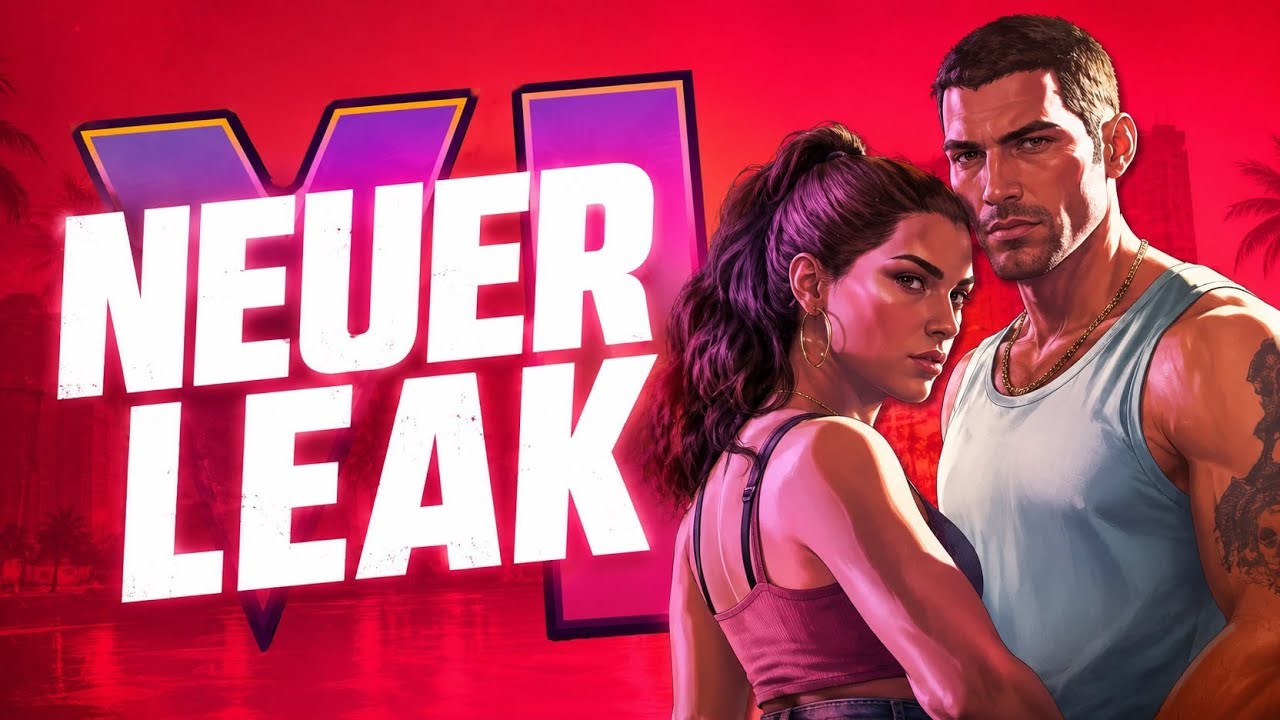
A city like this is also perfect for stories about reinvention. People move to places like Vice City to start over, hide, scam, sell, perform, or chase a fantasy. Some arrive rich, some arrive desperate, some arrive pretending to be one while they are actually the other. That gives Rockstar endless room to populate the world with people who feel like they belong.
It can be funny without losing its bite
One thing Rockstar has to balance carefully is tone. If the satire is too soft, the game loses its edge. If it is too broad, the world starts to feel like a string of skits. Vice City helps because the environment itself carries some of the humor. The joke is often already in the juxtaposition.
A luxury wellness ad playing near a pawn shop. A flashy supercar idling beside a collapsing motel. A wannabe mogul taking a call in a boat slip he does not own. Humor thrives in those frictions. You do not need every character to shout punchlines when the setting is constantly undercutting itself.
That is one reason Vice City may be the best place for Rockstar's current writing instincts. The studio no longer needs to lean as heavily on caricature when the world can do some of the work. A city famous for outrageous headlines, bizarre public behavior, and sunlit dysfunction lets the comedy arrive sideways. It can be observational instead of relentless.
And when the game wants to get darker, the setting can handle that too. Vice City is not all leisure and glitter. Places that depend heavily on tourism and image often conceal sharp divisions and ugly economies. That gives the story room to deal with class, exploitation, and opportunism without drifting into something preachy. The best GTA stories are rarely moral. They are diagnostic. They show what kind of people a system rewards. Vice City is full of those systems.
The map can feel alive at every hour
Some cities in games look best at one time of day and merely functional at others. Vice City has the potential to be one of those rare spaces where morning, afternoon, sunset, and late night all produce distinct versions of the world.

Morning can belong to workers, joggers, tourists stumbling home, delivery traffic, and that harsh post-party clarity. Midday can feel commercial and exposed, all heat and impatience. Sunset, obviously, suits the city's vanity, with water, glass, and neon beginning to trade shifts. Late night is when GTA usually comes alive, and Vice City should be exceptional there. The city's architecture, nightlife, and coastal glow are built for nocturnal energy.
That variation matters because open-world repetition usually sets in through sameness of mood. If a city always feels like itself in the same way, players start tuning it out. Vice City, by nature, gta vi apk encourages different rhythms across the day. It is one of the few settings where simply waiting for evening can feel like changing the game rather than changing the lighting.
There is room beyond the postcard
A weaker version of this setting would focus too much on the famous visual shorthand, palm trees, neon, beaches, convertibles, and not enough on the surrounding ecosystems of life. The good news is that Rockstar seems unlikely to make that mistake. What we have seen suggests a broader Leonida, which is smart. Vice City is strongest when it is not isolated as a theme park.
The surrounding regions are what give the city its shape. Small towns, wetlands, roadside businesses, industrial zones, and weird local pockets make the glamour feel earned rather than generic. You need the cheap edges for the expensive center to mean something. You need the places where dreams go stale. You need dead-end neighborhoods, bait shops, fenced lots, gas stations, and half-empty developments. Those are the spaces that make a crime world breathe.
If Rockstar gets that balance right, Vice City will not just be memorable because it looks good in screenshots. It will be memorable because it supports the whole spectrum of Grand Theft Auto play, spectacle, satire, exploration, storytelling, and that peculiar joy of getting lost while causing trouble.
Why this choice feels right for Rockstar right now
Rockstar is in a different position than it was during earlier GTA eras. The expectations are much higher, the audience is broader, and the culture it is trying to satirize is much more fragmented. Choosing the right setting is not just about style. It is about finding a place where all those pressures can be turned into strengths.
Vice City offers exactly that. It is familiar but not exhausted. It is exaggerated but believable. It is funny without needing constant jokes. It is geographically flexible. It is visually distinct in every weather condition and at every hour. Most important, it suits both the fantasy and the critique at the heart of GTA.
That is why this setting feels less like a fan-service return and more like the logical next move. GTA 6 needs a world that can hold absurdity, danger, romance, failure, and spectacle all at once. Vice City was built for that long before the game arrived. Rockstar just had to come back at the right moment to use it fully.
