AIO Peptides Explained: What You Need to Know
The phrase AIO Peptides sounds straightforward at first glance, but it often causes more confusion than clarity. In practice, people use it in a few different ways. Some mean an "all in one" peptide product, usually a blend marketed for broad goals such as recovery, body composition, skin support, or wellness. Others use the term loosely to describe peptide stacks, meaning several peptides combined into one routine. And in some online discussions, "AIO Peptides" is treated almost like a brand category rather than a precise scientific term.
That matters, because peptides themselves are a real and serious topic, while marketing language around them can be loose, inconsistent, and sometimes misleading. If you are trying to understand what AIO Peptides are, whether they are different from standard peptides, and what to watch for before buying or using them, the key is to separate the biology from the branding.
At the biological level, a peptide is simply a short chain of amino acids. Amino acids are the building blocks used by the body to make proteins and signaling molecules. Some peptides occur naturally in the body and help regulate processes such as hormone signaling, tissue repair, inflammation, appetite, and immune activity. Others are made synthetically to mimic or influence these functions. The basic science is legitimate. The problem is that once peptides enter the supplement, wellness, or gray market space, the terminology tends to get sloppy.
What people usually mean by AIO Peptides
Most of the time, when someone says AIO Peptides, they are referring to one of three things.
First, they may be talking about a multi ingredient formula built around more than one peptide, promoted as a convenient "all in one" option. This is the most common use. Instead of buying separate products, the consumer is offered a single vial, blend, or program.
Second, they may mean a curated stack of individual peptides used together for a single goal. For example, someone focused on training recovery might combine one peptide associated with tissue support and another associated with growth hormone signaling. In everyday conversation, that stack gets shortened into an AIO approach, even if the compounds are sold separately.
Third, they may be using AIO Peptides as a catchall term for peptide based wellness products, even when the item itself is not truly all in one. This is especially common on forums, reseller sites, and social media, where naming conventions are rarely standardized.
The first practical takeaway is simple: AIO Peptides is not a formal pharmacological category. It is a convenience term. That does not make every product using the label bad, but it does mean you should read past the headline and ask what is actually inside, what the intended mechanism is, and whether the seller is describing a legitimate compound, a blend, or a vague wellness concept.
A quick grounding in what peptides actually do
Peptides are not magic. They are not automatically safer than drugs simply because they are made from amino acids. They are biologically active substances, and some are quite potent.
In clinical medicine and research, certain peptides are studied or prescribed because they can interact with specific receptors or pathways. Some influence growth hormone release. Some are involved in glucose regulation. Some affect pigmentation, gastrointestinal function, fertility, or inflammatory signaling. Each peptide has its own profile, and that profile matters far more than the fact that it belongs to the broad peptide family.
This is where buyers often get tripped up. Marketing tends to collapse very different compounds into a single promise. A sales page might imply that peptides support recovery, fat loss, anti aging, muscle growth, and better sleep all at once. Biologically, those are very different endpoints. One peptide may have some evidence around one of those areas, weak evidence around another, and no meaningful evidence around the rest. A blended product does not automatically solve that problem. It may just pile several uncertain claims into one package.
Experienced clinicians and researchers tend to ask narrower questions. What is the compound? What receptor or system does it target? What is the evidence in humans? What dose has actually been studied? What route of administration was used? What risks were observed? Those questions are less exciting than ad copy, but they are the ones that protect people.
Why the "all in one" idea appeals to buyers
The appeal is easy to understand. Convenience sells, especially in areas where people feel overwhelmed by technical language. Someone new to peptides can spend a few hours reading and still come away unsure of the difference between a signaling peptide, a growth hormone AIO Peptides secretagogue, and a cosmetic peptide. A blended or stacked product appears to simplify the decision.
There is also a psychological advantage to AIO branding. It suggests synergy. Buyers often assume that if one ingredient may help a little, several together must help more. Sometimes combinations do make sense. In medicine, combination therapies are common. But effective combinations are not created by wishful thinking. They are built around pharmacology, dosing logic, compatibility, and safety data. In the peptide marketplace, especially outside tightly regulated channels, that level of rigor is often missing.
A practical example makes the point. Imagine two compounds that each carry a theoretical recovery benefit. If they work through overlapping pathways, combining them may add very little. If they have different half lives, one may clear quickly while the other lingers, making the advertised blend less balanced than it sounds. If each has its own adverse effect profile, the combination may widen the uncertainty rather than reduce it. AIO packaging can hide those trade offs behind simplicity.
The biggest difference between clinical peptides and commercial peptide products
One of the most important distinctions is the difference between a peptide studied in a clinical or laboratory setting and a peptide product sold to consumers online. Those are not interchangeable categories.
A compound can have interesting published research and still be poorly manufactured, inaccurately labeled, contaminated, or sold in a form that has never been validated for the claimed use. This gap between the molecule on paper and the product in a vial is where much of the real risk sits.
That is especially relevant for AIO Peptides, because multi ingredient products are harder AIO Peptides to evaluate than single ingredient products. If a user experiences a benefit, it is difficult to know which compound mattered. If a user experiences a side effect, it is difficult to know what caused it. If the label is inaccurate, the complexity only compounds the problem.
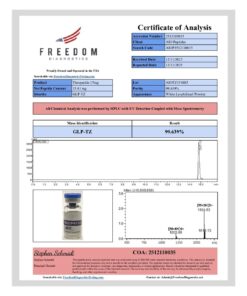
Purity, storage, and handling also matter more than many first time buyers realize. Peptides can be sensitive to heat, light, moisture, and reconstitution errors. Even when the chemistry is sound, poor logistics can compromise the end product. A supplier may emphasize benefits while saying very little about batch testing, chain of custody, storage conditions, or analytical verification. That silence should not be ignored.
Claims worth treating cautiously
The peptide space attracts a lot of oversized promises. Some are based on preliminary animal data. Some are extrapolated from narrow research settings. Some are simply recycled from forum culture until they begin to sound established.
A careful reader should slow down when a product is promoted as doing all of the following at once: accelerating healing, melting fat, building muscle, improving skin quality, balancing hormones, boosting libido, and supporting longevity. Biology is not that neat. Human evidence is rarely that broad. And when a seller leans heavily on anecdotal transformations while being vague about compound identity, dosage, and sourcing, the risk rises.
There is another common issue with AIO Peptides. A product may use scientific sounding descriptions that blur the line between cosmetic support, supplement style wellness claims, and drug like physiological effects. That can create false reassurance. If a peptide is active enough to materially alter signaling pathways, it deserves the same level of caution you would give any other biologically active compound.
How to read a product page without getting misled
The fastest way to improve your judgment is to stop asking whether the sales pitch sounds exciting and start asking whether the information is specific.
A useful product page should tell you exactly which peptide or peptides are included, how much of each is present, what form the product takes, how it is meant to be used, and what testing supports identity and purity. It should not rely on vague phrases such as "advanced regenerative matrix" or "research grade wellness blend" without disclosing details.
Here are the questions that tend to matter most:
- What are the exact peptide names and amounts?
- Is there independent third party testing for identity and purity?
- Are the claims based on human data, animal data, or anecdotes?
- Is the product being sold for research, medical, cosmetic, or general wellness use?
- Does the seller clearly state storage, handling, and reconstitution requirements?
If a seller cannot answer those questions plainly, the odds are good that the marketing is stronger than the substance behind it.
Safety is not a side issue
A surprisingly persistent myth is that peptides are automatically gentle because they resemble natural molecules. In real use, that is too simplistic. Whether a peptide is "natural" says little about whether it is appropriate, effective, or safe in a given dose and setting.
Potential concerns vary by compound, but can include injection site irritation, swelling, headaches, nausea, changes in appetite, shifts in water retention, altered glucose handling, changes in sleep, flushing, or unwanted effects on hormonal pathways. That list is not universal. It depends on the peptide. It also depends on product quality, coexisting conditions, and whether the user is combining multiple substances.
Another concern is medical oversight. Many people who explore AIO Peptides are trying to solve a real problem, slower recovery, poor sleep, body composition frustration, age related decline, or chronic training wear and tear. Those are understandable motives. But self treating through loosely regulated channels can delay proper evaluation. I have seen cases where someone assumed a peptide stack would fix fatigue or stalled recovery, when the actual issue turned out to be underfueling, iron deficiency, sleep apnea, thyroid dysfunction, or simply a training plan with no real deload structure. Biology tends to punish shortcuts.
Pregnancy, active cancer, endocrine disorders, uncontrolled metabolic disease, and use of other hormone active compounds are all situations where unsupervised peptide use deserves extra caution. Even in otherwise healthy adults, the threshold for care should be higher than the internet often suggests.
Why dosing and delivery matter more than branding
A peptide does not act the same way in every form. Some peptides are unstable in the digestive tract, which is one reason many are studied or used through injection rather than oral delivery. Others may be formulated for topical or other routes depending on their properties. If a product claims strong systemic effects through a route that does not match the known limitations of peptides, that deserves skepticism.
Dose is another place where AIO products can become muddy. In a blend, each individual component may be present in amounts too small to reflect whatever limited research exists on that compound. That does not always make the product useless, but it does weaken the logic behind bold claims. Consumers often focus on the total milligram count without realizing that distribution across several ingredients may make the headline number look more impressive than the formula actually is.
There is also the issue of frequency. Some peptides are discussed as if taking more is merely a faster path to results. That is not a safe assumption. Biological signaling is often non linear. Higher dosing can increase side effects without producing proportional benefit. More is not automatically better, especially when the compound, context, and evidence base are uncertain.
The legal and regulatory gray areas
The regulatory picture around peptides varies by country and by product category. Some peptides are used in legitimate medical contexts under prescription control. Others are sold as research chemicals, which does not mean they are approved for personal use. Some are folded into cosmetic or wellness marketing in ways that blur legal boundaries. This is part of why the market feels confusing.
AIO Peptides can sit right in the middle of that ambiguity. One seller may frame a product as a research material. Another may imply health outcomes without formally stating them. Another may present the same or a similar compound as part of a lifestyle routine. The average buyer is left trying to decode a language that is deliberately imprecise.
That ambiguity should not be mistaken for safety or endorsement. If anything, it is a signal to be more careful. Regulatory gaps tend to attract both innovation and opportunism. In real markets, those two often show up together.
What sensible buyers look for
People who approach this area carefully tend to share a few habits. They narrow the question before they buy anything. They do not start with "Which peptide should I take?" They start with "What specific problem am I trying to solve, and what evidence supports any peptide for that problem?"
They also respect the boring fundamentals. If sleep, protein intake, caloric balance, resistance training, cardiovascular fitness, and basic medical screening are out of order, peptides are unlikely to rescue the situation. This sounds obvious, but it is where many expensive experiments go wrong. A compound gets blamed for failing when the surrounding system was never strong enough to support the claimed result.
The buyers who fare best are usually the ones willing to move slowly. They verify the compound, they check whether there is credible human evidence, they avoid stacking multiple variables at once, and they pay attention to adverse effects rather than rationalizing them away.
Questions to settle before using any AIO peptide product
Before someone spends money on an AIO Peptides product, there are a few questions worth settling in plain language. What exactly is the target outcome? If the goal is better recovery after lifting, that is a different conversation than trying to address chronic tendon pain or improve body composition. What evidence, if any, supports the included peptides for that outcome in humans? What is known about the dosing range? Is the product from a supplier that provides meaningful quality documentation? And is there a qualified medical professional who can help interpret risks in the context of personal health history?
That last point is easy to dismiss until something feels off. If a person develops persistent swelling, unusual fatigue, blood sugar shifts, headaches, or any other concerning change, internet reassurance is not a substitute for medical evaluation. The strongest communities in this space are often the quickest to say, "Get checked."
The bottom line on AIO Peptides
If you strip away the branding, AIO Peptides are usually best understood as a convenience label for blended peptide products or stacked peptide approaches. The term is useful in a casual sense, but it is not a scientific category with a uniform definition. That means the real work is not in memorizing the label. It is in evaluating the actual compounds, the evidence behind them, the manufacturing quality, the delivery method, and the risk profile.
For some buyers, the all in one idea will remain appealing, and there is nothing inherently irrational about wanting simplicity. The problem starts when simplicity replaces precision. In a field where small molecular differences can matter a great deal, broad labels are never enough.
A cautious, informed approach usually looks less glamorous than the marketing. It involves reading labels closely, asking narrow questions, distrusting universal claims, and being honest about what is known versus what is being sold on confidence. That approach does not eliminate uncertainty, but it does reduce the chance of confusing hopeful branding with sound decision making.

If the phrase AIO Peptides keeps showing up in your research, treat it as a prompt to dig deeper, not as an answer in itself. The label tells you almost nothing on its own. The details tell you everything that matters.
