Repeated breaker resetting and electrical risks
Repeated resetting of a circuit breaker that continues to trip is a sign of an underlying electrical problem. A circuit breaker is a protective device designed to interrupt the flow of electricity when it detects an overload, a short circuit, or a ground fault. Each time it trips, it performs its intended safety function. Resetting the same breaker over and over without first diagnosing and correcting the cause can turn a manageable fault into a more serious hazard, including fire or damage to the electrical panel.
The practice is common in homes and small commercial buildings when a breaker shuts off power to a branch circuit. A person may flip the switch back on quickly, hoping the problem has cleared on its own. In many cases the breaker trips again immediately or after a short period. This cycle can repeat many times, especially when the circuit powers essential appliances or equipment. What may appear as a nuisance or a temporary glitch often points to a condition that grows worse with each reset.
How breakers work and why they trip
A circuit breaker monitors the current flowing through its connected wires. When the current exceeds the breaker's rated capacity, the internal mechanism opens the circuit and stops the flow. This can happen for three main reasons. An overload occurs when too many devices draw power from the same circuit, pushing the total current above the breaker's rating. A short circuit happens when a hot wire touches a neutral or another hot wire, creating a low-resistance path that allows a surge of current. A ground fault is similar but involves a hot wire contacting a grounded surface or a ground wire.
In each scenario the breaker acts as a safety gate. Tripping is its job. The breaker is not the problem; it is responding to a problem elsewhere in the circuit. Resetting it without addressing the underlying condition simply subjects the breaker and the wiring to the same stress again. Over time the repeated stress can weaken the breaker's internal components, making it less reliable or causing it to fail in a closed position that no longer trips when needed.
Risks of repeated resetting
Damage to the breaker itself
A circuit breaker is a mechanical device with moving parts and thermal elements. Each trip creates heat and mechanical wear. Frequent cycling, especially under a high fault current, can degrade the contacts inside the breaker. The contacts may become pitted or welded together. A breaker that has been reset many times may still appear to function, but its ability to interrupt a future fault may be compromised. If it fails to trip during a real overload or short circuit, the wiring can overheat and start a fire.
Worsening of the original fault
When a breaker trips because of a short circuit or ground fault, the fault itself may be small or intermittent at first. A loose connection, a frayed wire, or a damaged appliance can cause a brief fault that clears on its own. Resetting the breaker may bring power back to the circuit, but each time the fault reoccurs, the arc or heat at the fault point can grow. A small arc can carbonize nearby insulation, turning a minor issue into a permanent short. What started as a simple repair may escalate into a full rewiring job.

Electrical panel damage
The electrical panel houses all the breakers for a building. Repeated trips on one circuit can cause heat to build up in the bus bar or the breaker slot. In some cases the heat can warp the panel's internal components or damage adjacent breakers. A panel that has sustained such damage may need to be replaced entirely, a costly and invasive repair. The risk is higher in older panels where the insulation on internal wires may already be brittle.
Fire risk
The most serious consequence of repeated breaker resetting is fire. A circuit that is repeatedly overloaded will heat the wires each time it runs. If the breaker begins to fail and no longer trips at the correct threshold, the wires can reach temperatures high enough to ignite wood framing or insulation. Even if the breaker continues to trip, the repeated heating and cooling cycles can weaken the wire connections at outlets, switches, and the panel itself. Loose connections create resistance, which generates more heat and increases the chance of arcing.
Signs that a circuit needs professional attention
Certain signs indicate that a tripping breaker should not be reset without an inspection. These include a breaker that feels hot to the touch, a breaker that trips immediately after being reset, a breaker that trips under a light load that it previously handled, or a breaker that makes a buzzing or crackling sound. Discoloration around the breaker slot or a burning smell from the panel are urgent warnings. Any of these conditions means the circuit or the breaker has a fault that requires diagnosis by a qualified electrician.
Another sign is a breaker that trips only when a specific appliance is running. That appliance may have an internal short, a failing motor, or a damaged cord. Unplugging the appliance and resetting the breaker is a temporary test, but the appliance should be inspected or replaced before it is used again on that circuit.
Proper response when a breaker trips
The first step after a breaker trips is to identify what was running on that circuit. Reducing the load by unplugging some devices and resetting the breaker is a reasonable test. If the breaker stays on, the original trip was likely an overload. If it trips again under a normal load, the cause is probably a short circuit or ground fault. At that point the circuit should be left off until a professional can examine it.
Resetting a breaker more than two or three times in a short period is generally not advised. If the problem is not obvious, a qualified electrician can measure the circuit's current, inspect the wiring, and test the breaker itself. They can also determine whether the breaker has reached the end of its service life and needs replacement. Companies such as Wooding Electric provide residential and commercial electrical troubleshooting and repairs in the San Jose area and can assess circuits that repeatedly trip.
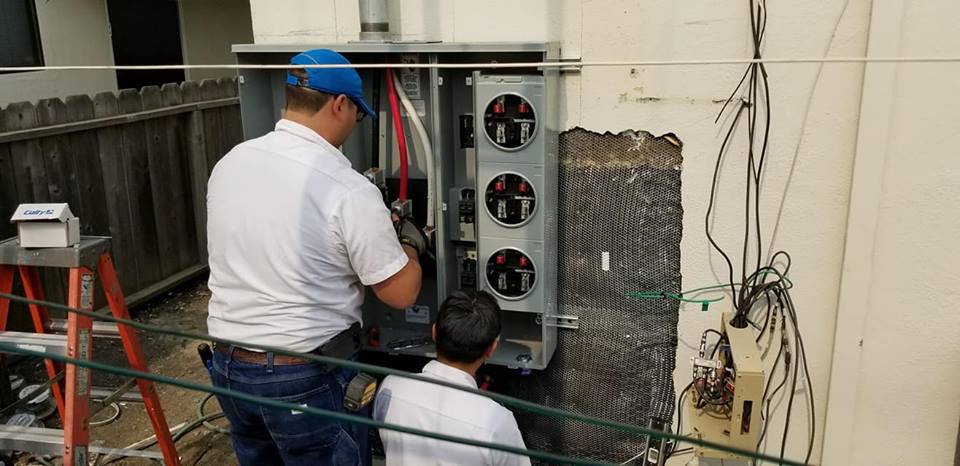
Common causes that require wiring repair
Many tripping problems trace back to wiring faults rather than the breaker. A loose connection at a receptacle or switch can create intermittent arcing that trips the breaker. A nail or screw that has penetrated a wall cable can cause a short that appears only when the wire moves slightly. Rodents sometimes chew through insulation, creating a ground fault that comes and goes. These conditions are not solved by resetting the breaker. They require locating the damaged section of wire and making a proper repair.
Older homes with outdated wiring are especially prone to such faults. The insulation on cloth-covered wire can crack and fall away, leaving bare conductors that contact each other or the junction box. In these cases the repeated tripping is a symptom of a system that has become unsafe. A thorough inspection by an electrician can identify the specific circuits that need rewiring.
Breaker replacement as a repair
Sometimes the breaker itself is the problem. Breakers wear out over time, especially if they have been subjected to many trips or to high fault currents. A breaker that has become weak may trip at a current lower than its rating, causing nuisance tripping. One that has been damaged may not trip at all. Replacing a breaker is a straightforward job for an electrician, but it is important to use the correct type and rating for the panel. Mixing breaker brands or using a higher-amp breaker than the circuit wiring can handle is dangerous and violates electrical code.
Breaker repair services from a licensed electrician include testing the breaker, verifying that the panel is safe, and replacing any defective units. In some cases the entire panel may need an upgrade, especially if the building has an older fuse box or a panel that cannot accept modern breakers. Upgrading the panel also allows for additional circuits, which can reduce the load on existing ones and prevent future tripping.
Wooding Electric offers electrical services that cover breaker troubleshooting and replacement for both residential and commercial properties. Their electricians can diagnose why a breaker is tripping and recommend the appropriate repair, whether that involves fixing a wiring fault, replacing a damaged breaker, or upgrading an outdated panel. The goal is to restore safe operation of the circuit without relying on repeated resets that mask a deeper problem.
Prevention through proper circuit design
Many cases of repeated tripping can be avoided by ensuring that circuits are properly sized for the loads they serve. A circuit that powers a kitchen with multiple high-wattage appliances may need a dedicated circuit for the refrigerator or microwave. In a workshop, large tools such as table saws and air compressors often require their own circuits. An electrician can calculate the total load on each branch circuit and recommend additions or upgrades.

Ground fault circuit interrupters (GFCIs) are another layer of protection. These devices trip when they detect a small leakage current that could shock a person. A GFCI that trips repeatedly may indicate a ground fault in an appliance or in wiring near water. Resetting a GFCI without fixing the fault leaves the shock hazard in place. GFCIs are required in bathrooms, kitchens, garages, and outdoor areas, and any persistent tripping should be investigated promptly.
Repeated breaker resetting is not a solution. It is a sign that something in the electrical system needs attention. Ignoring that sign can lead to equipment damage, electrical fires, and costly repairs. A circuit that trips often should be examined by a professional who can find the root cause and make the necessary repairs. That approach is safer and more reliable than hoping the breaker will eventually stay on.
