Cold Storage Near Me: Understanding Contracts, Insurance, and Liability
Finding a cold storage facility is rarely just a matter of picking the closest warehouse. Temperature control, handling protocols, and regulatory oversight all matter, but the real test comes when something goes wrong. A pallet warms on the dock during a power blip. A lot gets rejected for high ATP readings. A forklift punctures a drum of concentrate. When you sign a storage agreement, you are assigning who pays for what, and on what terms. That is why contracts, insurance, and liability deserve as much attention as location and price, whether you are searching for a cold storage facility near me or evaluating refrigerated storage San Antonio TX.
I have spent years reviewing these agreements, working through claims, and walking facilities from the compressor room to the blast freezer. The patterns are predictable. Contracts are written to cap the warehouse’s exposure. Insurance programs have gaps large enough to drive a reefer through if you are not watching. And liability often hinges on dull details like setpoint logs, trailer seal integrity, and whether you declared the true value of your goods. If you want to protect your product and your balance sheet, start by understanding the paper.
What you are actually buying
Most buyers imagine they are purchasing space and temperature control. Legally, you are contracting for a defined service with a standard of care, and you are agreeing to the limits that apply when the service fails. A modern cold storage facility, whether an independent warehouse or a 3PL with frozen and refrigerated storage, is careful to tell you what they will do, not what you might assume they will do. The key provisions usually hide in plain sight:
-
Scope of services. This defines storage, handling, cross-docking, case picking, blast freezing, labeling, tempering, and value-added work. If it is not listed, it is not included. If you need specialized handling, such as allergen segregation, pharma GDP protocols, or continuous temperature monitoring with calibrated devices, it must be explicit.
-
Temperature parameters. You will see bands like 0 to 10 degrees Fahrenheit for frozen, 34 to 38 for chilled, and 50 to 55 for produce ripening. The contract may require you to specify the setpoint per SKU and hold the facility harmless for drifts within the band. Pay attention to how they measure: ambient room sensors, product probes, or data loggers. Make sure you know what proof will exist if a dispute arises.
-
Limitations of liability. Nearly every warehouse uses language drawn from the Uniform Commercial Code or industry forms like the Standard Warehouse Receipt. It will cap the warehouse’s liability per lot or per pound, often in the range of 50 cents to a few dollars per pound unless you declare a higher value and pay an excess valuation fee. If you skip the declaration, you may be stuck with a fraction of the true loss.
-
Exclusions and force majeure. Spoilage due to events outside the facility’s reasonable control is often excluded. That can include utility outages, natural disasters, cyber incidents that hit control systems, labor strikes, or government impoundments. Some contracts even carve out losses from packaging failures or latent defects in the goods.
-
Claims procedures and time limits. You will be required to inspect on pickup or delivery, document losses promptly, and file written claims within very short windows, sometimes 10 to 30 days. Miss the deadline and the claim vanishes.
The reality is simple: your leverage is highest before you sign. If you need higher liability limits, tighter temperature control, or carve-backs to exclusions, negotiate them into the master services agreement and the warehouse receipt up front.
Insurance basics that prevent expensive surprises
A cold storage facility’s insurance is for the warehouse’s protection, not yours. This is the single most persistent misunderstanding. A prudent 3PL carries commercial general liability, warehouse legal liability, property coverage, and sometimes stock throughput for inventory they own. Your goods are not their property. Unless they are negligent and you can prove it under the contract, their policies will not make you whole.
You need a program that fits your risk profile:
-
Cargo or stock throughput insurance. Manufacturers and importers often rely on cargo policies for goods in transit, then find an uncomfortable gap when the product is stationary in storage. Stock throughput policies bridge that gap, covering inventory from the time it leaves the supplier through transit, storage, and distribution, with fewer handoffs in coverage and usually better terms than standalone inland marine placements.
-
Declared value or increased valuation with the warehouse. Most facilities allow you to declare a higher value for your goods in storage for an added fee, which increases their liability cap. This does not replace your own insurance, but it closes the distance between a capped warehouse payout and your actual loss.
-
Spoilage and consequential loss. Traditional policies often exclude temperature spoilage unless you buy it. Even when included, consequential losses like lost sales, expedited freight, and retailer fines may be excluded. If you sell to major grocers or QSR chains, ask your broker to model these exposures and add coverage where available.
-
Contingent business interruption. If your primary cold storage site suffers a catastrophic failure, can you move to an alternate site quickly? Business interruption extensions that rely on a named supplier list can cover the margin loss during the period of restoration. Keep that list current if you operate across multiple facilities or regions.
-
Product recall and contamination. A narrowly defined spoilage policy does little for a microbial contamination event. If your risk includes raw meat, dairy, frozen meals, or RTE foods, a recall policy with crisis management support can be the difference between survival and insolvency. Verify how coverage responds to government-ordered recalls versus voluntary withdrawals.
Coordinate your policies with the contract you sign. If the warehouse limits liability to 1 dollar per pound and you store 100,000 pounds of product with a $6 per pound landed cost, you have a $500,000 gap on a full-loss scenario. Either negotiate higher warehouse limits, buy declared value, or carry stock throughput that fills the hole. Document the approach so no one assumes protection that is not there.
Where liability actually lands
The law and contract split responsibility based on control and negligence. The warehouse is a bailee: they hold your goods and have a duty of reasonable care. That duty does not make them insurers of your product. To recover, you often need to show that the warehouse breached the standard of care and that the breach caused the loss.
Common loss scenarios illustrate how this plays out:
-
Power outage and temperature excursion. If a facility has backup generators sized for critical systems and written procedures for monitoring and recovery, they will argue they exercised reasonable care. If logs show the room never left the specified band, claims falter even if your logger shows a spike in a single pallet. If the warehouse skipped maintenance on compressors or ran out of diesel for generators, the calculus changes.
-
Handling damage. Forklift punctures and dropped pallets are straightforward. Photo evidence and incident reports make negligence clear. The fight usually shifts to valuation and caps. If you did not declare a higher value, you will be bound by the contract cap even when the warehouse admits fault.
-
Packaging failure and dehydration. If cases were not shrink-wrapped properly, lids were not sealed, or cartons wicked moisture, the warehouse will assert the problem is inherent vice or packaging defect, not storage negligence. The more you can show you shipped sound goods and the failure occurred during storage conditions outside the agreed parameters, the stronger your position.
-
Sanitation and pest contamination. Here the facility’s HACCP plan, sanitation logs, third-party audit scores, and pest control records matter. If you can link contamination to a sanitation lapse or commingling in a zone that should have been segregated, liability attaches. If audits are clean and contamination appears on a single lot with unclear origin, the burden on the claimant increases.
-
Temperature drift during cross-dock. Grey areas arise when a facility provides short-term refrigerated storage or cross-docking. If the contract does not cover pre-cooling of trailers or maximum door-open time, expect disputes. Getting this into the scope and SOPs helps.
Two practical notes. First, value drives everything. If you sell premium cuts or pharma-grade intermediates, small losses yield large claims. Negotiate caps that match your risk. Second, evidence wins. Temperature logs, probe placement photos, seal numbers, and inbound inspection notes matter more than opinions. Make sure your team collects them consistently.
The San Antonio angle: regional factors that influence risk
If you are searching for a cold storage facility San Antonio TX, a few regional realities shape your due diligence. Heat and humidity are higher and more persistent than in northern markets, which puts steady stress on compressors, door seals, and dock equipment. You want to see maintenance programs with scheduled coil cleanings, gasket replacements, and door curtain upkeep, not just reactive service calls. Ask about peak-summer amperage draw and whether their electrical service and backup generation have headroom.
Storm risk is another factor. While San Antonio sits inland, grid reliability can wobble during extreme heat or rare cold snaps. The winter storm of 2021 is a case study. Facilities that maintained operations either had priority utility feeds, on-site fuel stores, or redundant generators. When you evaluate refrigerated storage San Antonio TX, ask to see the emergency power plan. Look for fuel vendor contracts, tested load transfer procedures, and run logs.
Labor and access matter, too. The region serves both the I-35 and I-10 corridors, so proximity to those lanes saves hours of dwell and reduces temp risk from yard waits. If the warehouse runs tight labor in peak seasons, dock times slip and door-open durations rise. Clarify service levels for appointment windows, palletization standards, and yard management so product does not idle on a hot apron.
Finally, the customer mix. Facilities that handle a heavy volume of produce and proteins have robust sanitation and allergen controls by necessity. If your product is more sensitive, like ice cream with strict heat-shock tolerances, ask how they segregate high-turn doors from deep-frozen rooms. The details of door cycles, vestibules, and air curtains count.
Negotiating a contract that matches your risk
Walk into contract talks with three numbers in mind: your maximum credible loss per lot, your tolerance for uninsured loss, and the premium you would pay to raise limits. With those anchors, push on provisions that matter most in cold storage:
-
Liability cap and declared value. Raise the per-pound cap or set a per-occurrence limit that fits your product. If the warehouse cannot move the cap broadly, use declared value per SKU or lot and agree to a fee that tracks real exposure.
-
Temperature definitions and proof. Replace vague terms like “commercially reasonable” with specific setpoints, tolerance bands, and sampling methods. Require the facility to maintain calibrated sensors and to retain logs for a defined period, preferably 24 months. If you run independent loggers, agree on placement and reconcile methods upfront.
-
Handling and dwell. Define maximum door-open times for frozen rooms, dock dwell limits for temperature-controlled receiving, and procedures for staging near air curtains or in cooled vestibules. Spell out responsibilities when carrier appointments slip.
-
Claims process. Extend notice periods to realistic time frames, especially if your product undergoes downstream testing. Agree on joint inspections, chain-of-custody for samples, and acceptance criteria.
-
Indemnities and exclusions. Narrow exclusions that swallow the promise of care. For example, carve out negligence from force majeure when the facility fails to maintain generators or ignores weather advisories. Add mutual indemnities where appropriate for third-party claims.
-
Audit rights. Reserve the right to review key records, including maintenance logs, calibration certificates, pest control reports, and third-party audit results. Schedule annual walk-throughs with your quality team.
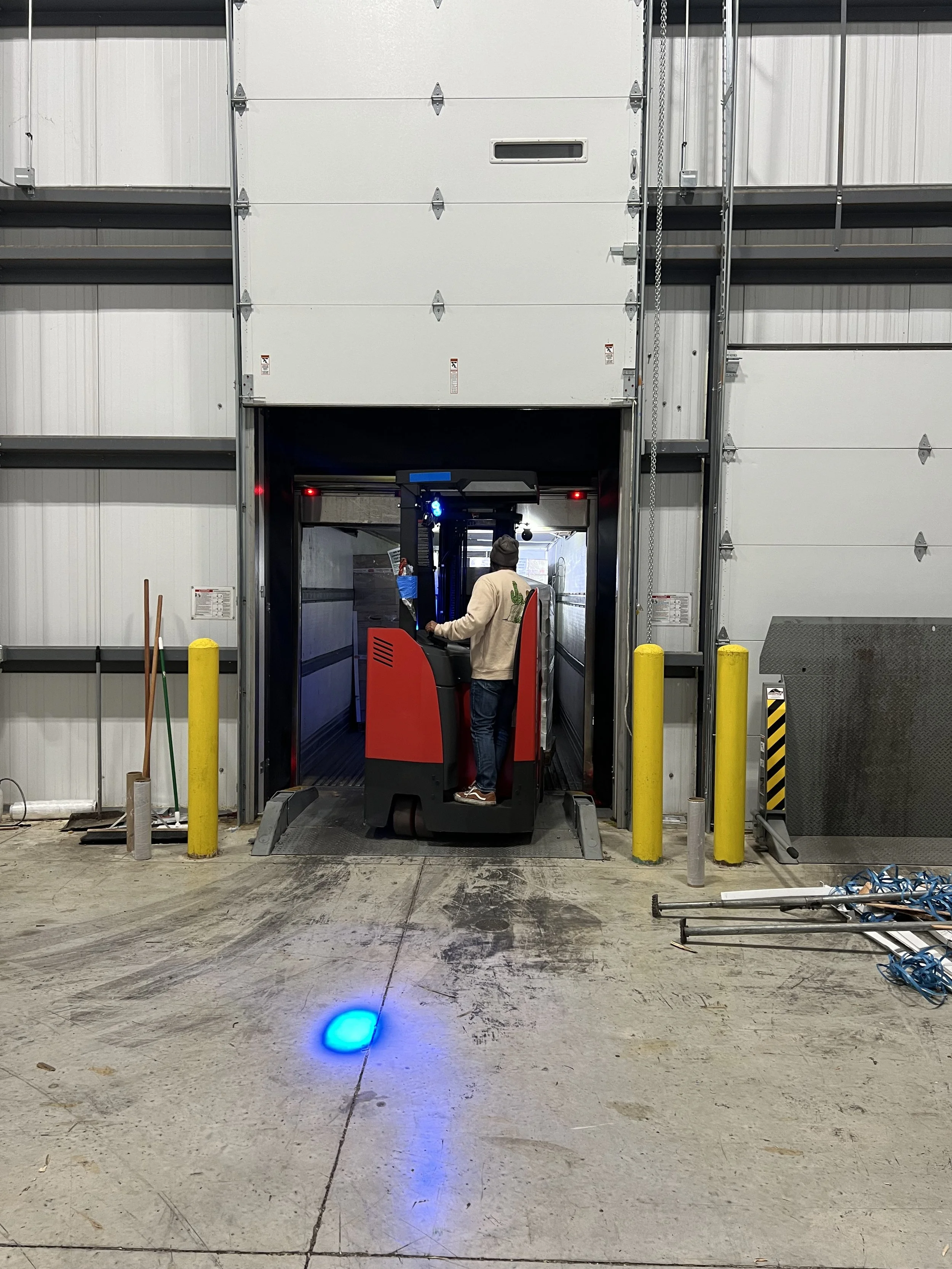
The best agreements read like operating manuals. They set the rules people follow on cold storage facility the floor. When you see provisions that feel abstract, translate them into a scenario. If a trailer misses its slot and arrives at 2 p.m. in August, where does the product sit, who logs temperatures, and how long until it hits the rack? If the answer is not obvious, the contract needs work.
Documentation that resolves disputes before they start
Good records can shorten arguments and accelerate payouts. In my experience, three classes of documents settle most cold storage disputes without lawyers:

-
Inbound acceptance evidence. Photos of pallet condition, core temperatures when appropriate, seal verification, and any visible damage. If a load arrives warm, get it into quarantine and document readings at intervals. Decide jointly whether to reject or accept under protest.
-
Continuous temperature and handling records. Room temperature logs, door cycle counts in high-traffic bays, and work orders showing preventive maintenance can prove that storage conditions stayed within spec. For sensitive goods, add product-level data loggers and agree where to place them.
-
Traceability and inventory movements. WMS snapshots showing lot locations, pick history, and case counts. If a shortage pops up, this closes the gap between inbound and outbound with fewer accusations.
Ask your cold storage provider to describe their digital systems. Many facilities can share read-only dashboards or periodic exports. Even if you never need them, knowing the data exists changes the tone of risk discussions.
When a claim happens
Despite best efforts, losses occur. A calm, procedural approach limits the damage.
-
First, isolate the product. Quarantine the affected lot physically and in the WMS. Do not destroy anything until both parties agree or a third-party inspector weighs in. If you need to preserve cold chain during an investigation, move pallets to a segregated zone and document the move.
-
Second, collect evidence fast. Photos, core temperatures, ambient readings, probe calibration certificates, and receiving or pick logs. If the loss involves contamination, secure samples under a chain-of-custody form and send to an accredited lab. For temperature claims, retrieve the last 30 days of room logs.
-
Third, notify in writing within the contractual window. State the facts, the suspected cause, the lot identifiers, and your preliminary valuation method. Ask to preserve all related records.
-
Fourth, involve your broker early. They can align your stock throughput or spoilage coverage with the claim and advise on subrogation against the warehouse if warranted.
-
Finally, stay practical. If product can be repurposed or downgraded with an agreed salvage value, capture that mitigation to reduce the net loss and move on. Draw the lessons into SOPs so the same failure does not repeat.
The best warehouses share this mindset and have claims coordinators who deal in facts. You can feel the difference in the first phone call.
Cold storage facility near me: what to look for on a site visit
Websites and proposals tell one story. The floor tells another. Whether you are vetting a refrigerated storage near me option for a seasonal surge or building a long-term program in cold storage San Antonio TX, a disciplined walk-through pays off.
Start outside. Count dock doors and look at canopies. If trucks sit in the sun while doors wait, your product warms before it even hits the dock. Look for dock leveler seals, inflatable or foam, and ask how often they are replaced. Step into the vestibules. Are there air curtains or fast-acting doors that reduce moisture and heat ingress?
In refrigerated rooms, focus on airflow and product spacing. Pallets pressed against evaporators are a red flag. Ice build-up on coils suggests defrost cycles or door practices are off. In deep-frozen zones, ask about door cycle counts and whether they stage picks in a chilled anteroom to minimize time in the main space. Check thermometers against a handheld calibrated device if you carry one, and ask to see calibration certificates.
Visit the compressor room if they will allow it. Cleanliness, labeled piping, and organized spare parts tell you how they run the plant. Ask about maintenance intervals, oil analysis, and vibration monitoring. If they run ammonia, ask about PSM programs and recent audits. If they run freon alternatives, ask about charge management and leak detection.
Quality and sanitation show up in small things. Floor drains without slime, documented cleaning schedules, and pest traps with dates and signatures are good signs. Look for allergen maps and physical segregation if that matters to your product. Ask how they train lift drivers on handling fragile or liquid loads.
Finally, talk to the people who will handle your product. Supervisors know when the schedule gets tight and where shortcuts tempt. Ask them how they keep doors closed in summer without slowing throughput. Ask what they do when a load comes in warm. The answers reveal the culture.
Pricing, accessorials, and the hidden cost of “cheap”
Storage rates look simple: dollars per pallet per month. The real money sits in accessorials and minimums. If your velocity is high, handling fees and case-pick charges may dominate. If you turn slowly, long-term storage and shrink-wrap or re-palletization fees matter more.
Scrutinize these items closely:
-
Handling definitions. Clarify what counts as in and out, what rates apply to full pallet versus case picks, and how partial pallets are billed after picks.
-
Temperature transitions. Tempering, blast freezing, and pre-cooling often have separate fees. If your product needs a blast freezer, make sure capacity exists and is priced clearly.
-
Appointment and after-hours charges. If you serve retailers with strict windows, you may need weekend and early morning access. Those fees add up if not negotiated.
-
Minimum monthly charges. A low per-pallet rate with a high minimum can punish seasonal businesses. Match minimums to your true base load.
-
Damage and repack. Understand how the facility handles damaged pallets, who supplies packaging materials, and how repack is billed.
Comparing proposals across multiple providers, including a cold storage facility San Antonio TX if that is your market, requires normalizing these terms. Build a model with realistic inbound and outbound volumes, pick patterns, and seasonality. Ask for a not-to-exceed schedule for the first six months while you calibrate.
How regulation and audits intersect with liability
Food and pharma products live under regulatory eyes. The FDA’s FSMA rules, USDA inspection regimes, and for pharma, GDP and sometimes cGMP expectations, shape what a refrigerated storage provider must do. When regulators step in, the warehouse’s documentation becomes your lifeline.
Check that your provider maintains:
-
A current HACCP or HARPC plan that specifically addresses temperature controls, sanitation, allergen management, and supplier verification where relevant.
-
Calibration schedules and certificates for temperature probes and data systems.
-
Corrective action records that show how they respond to deviations, not just that deviations are logged.
-
Third-party audit reports, like SQF or BRCGS, and closure of nonconformances.
Alignment matters. If your brand promises are tighter than regulatory minimums, write that into the SOPs with the facility. For example, if you sell premium frozen desserts with strict heat-shock limits, you may require shorter door cycles and more aggressive staging procedures than the average client. If you never formalize those expectations, you cannot rely on them when arguing liability.
Building resilience with a portfolio approach
Relying on a single cold storage provider concentrates risk. For many businesses, spreading volume across two or three facilities within a region lowers the odds of a complete shutoff from a localized failure. It also creates competitive pressure that pays off during renegotiations.
In markets like San Antonio and the broader Central Texas corridor, pairing a primary cold storage facility with a secondary site along the alternate corridor can make sense. For example, anchor in refrigerated storage San Antonio TX for proximity to production or regional distribution, and secure backup slots in a facility closer to Austin or along I-10 to the east. Keep the backup site warm with a small, steady flow so you can flex up quickly.
From a contracting standpoint, mirror key terms and liability structures across providers to avoid confusion and uneven risk. From an insurance standpoint, keep your stock throughput policy carrier informed about all locations and update declared locations and limits as volumes shift. When disaster strikes, trying to add a new location after the fact is a losing game.
A brief word on technology and data sharing
Modern cold storage facilities run on WMS platforms, building management systems, and, increasingly, IoT sensors. The tech matters not for the buzzwords, but for proof and responsiveness. Ask about:
-
Data retention. How long do they keep room temperature trends, access logs, and sensor readings? One year is common, two is better.
-
Alerting. Do temperature deviations trigger real-time alerts with escalation paths, or are they only visible on periodic checks?
-
Integrations. Can their WMS share ASN and lot status without manual spreadsheets? Less rekeying equals fewer errors and cleaner traceability.
-
Cybersecurity. A ransomware hit that locks building controls is not a theoretical risk. Ask how they segment control networks, back up configurations, and rehearse recovery.
Your goal is simple: make data visible enough to prevent problems, and reliable enough to settle questions fast.
Finding the right fit
If you narrow your search to a cold storage facility near me or specifically a cold storage facility San Antonio TX, do not shortchange the paper. The shiniest floor will not cover a loss if your contract caps liability at pennies and your insurance excludes spoilage. Bring your broker to the table early. Write temperature and handling expectations with the same care you give to product specifications. Walk the facility until you can picture your pallets moving through it on a hot afternoon when two trucks are late and a compressor needs attention.
Good cold storage partners welcome this scrutiny. They know that clear contracts, aligned insurance, and fair liability terms protect both sides. When a hiccup comes, you will be arguing about facts and numbers, not about what someone assumed. And that, more than any marketing pitch, is what keeps product safe and relationships intact.
Business Name: Auge Co. Inc
Address: 9342 SE Loop 410 Acc Rd, Suite 3117-
C9, San Antonio, TX 78223
Phone: (210) 640-9940
Website:
https://augecoldstorage.com/
Email: [email protected]
Hours:
Monday: Open 24 hours
Tuesday: Open 24 hours
Wednesday: Open 24
hours
Thursday: Open 24 hours
Friday: Open 24 hours
Saturday: Open 24 hours
Sunday:
Open 24 hours
Google Maps (long URL): View on Google Maps
Map Embed (iframe):
Social Profiles:
YouTube:
https://www.youtube.com/channel/UCuYxzzyL1gBXzAjV6nwepuw/about
Auge Co. Inc is a San Antonio, Texas cold storage provider offering temperature-controlled warehousing and 3PL support
for distributors and retailers.
Auge Co. Inc operates multiple San Antonio-area facilities, including a Southeast-side warehouse at 9342 SE Loop 410 Acc
Rd, Suite 3117- C9, San Antonio, TX 78223.
Auge Co. Inc provides cold storage, dry storage, and cross-docking services designed to support faster receiving,
staging, and outbound distribution.
Auge Co. Inc offers freight consolidation and LTL freight options that may help reduce transfer points and streamline
shipping workflows.
Auge Co. Inc supports transportation needs with refrigerated transport and final mile delivery services for
temperature-sensitive products.
Auge Co. Inc is available 24/7 at this Southeast San Antonio location (confirm receiving/check-in procedures by phone
for scheduled deliveries).
Auge Co. Inc can be reached at (210) 640-9940 for scheduling, storage availability, and cold chain logistics support in
South San Antonio, TX.
Auge Co. Inc is listed on Google Maps for this location here: https://www.google.com/maps/search/?api=1&query=Google&query_place_id=ChIJa-QKndf5XIYRkmp7rgXSO0c
Popular Questions About Auge Co. Inc
What does Auge Co. Inc do?
Auge Co. Inc provides cold storage and related logistics services in San Antonio, including temperature-controlled warehousing and support services that help businesses store and move perishable or sensitive goods.
Where is the Auge Co. Inc Southeast San Antonio cold storage location?
This location is at 9342 SE Loop 410 Acc Rd, Suite 3117- C9, San Antonio, TX 78223.
Is this location open 24/7?
Yes—this Southeast San Antonio location is listed as open 24/7. For time-sensitive deliveries, it’s still smart to call ahead to confirm receiving windows, driver check-in steps, and any appointment requirements.
What services are commonly available at this facility?
Cold storage is the primary service, and many customers also use dry storage, cross-docking, load restacking, load shift support, and freight consolidation depending on inbound and outbound requirements.
Do they provide transportation in addition to warehousing?
Auge Co. Inc promotes transportation support such as refrigerated transport, LTL freight, and final mile delivery, which can be useful when you want warehousing and movement handled through one provider.
How does pricing usually work for cold storage?
Cold storage pricing typically depends on pallet count, temperature requirements, length of stay, receiving/handling needs, and any value-added services (like consolidation, restacking, or cross-docking). Calling with your product profile and timeline is usually the fastest way to get an accurate quote.
What kinds of businesses use a cold storage 3PL in South San Antonio?
Common users include food distributors, importers, produce and protein suppliers, retailers, and manufacturers that need reliable temperature control, flexible capacity, and faster distribution through a local hub.
How do I contact Auge Co. Inc for cold storage in South San Antonio?
Call (210) 640-9940 to discuss availability, receiving, and scheduling. You can also
email [email protected]. Website: https://augecoldstorage.com/
YouTube: https://www.youtube.com/channel/UCuYxzzyL1gBXzAjV6nwepuw/about
Google Maps: https://www.google.com/maps/search/?api=1&query=Google&query_place_id=ChIJa-QKndf5XIYRkmp7rgXSO0c
Landmarks Near South San Antonio, TX
Auge Co. Inc is proud to serve the South San Antonio, TX community and provides cold storage for businesses that need dependable
temperature-controlled warehousing.
If you’re looking for cold storage in South San Antonio, TX, visit Auge Co. Inc near Brooks City Base.
Auge Co. Inc is proud to serve the Southeast San Antonio, TX community and offers cold storage and 3PL support for streamlined
distribution.
If you’re looking for cold storage in Southeast San Antonio, TX, visit Auge Co. Inc near Toyota Motor Manufacturing Texas.
Auge Co. Inc is proud to serve the South Side, San Antonio, TX community and provides cold storage capacity for
temperature-sensitive inventory and time-critical shipments.
If you’re looking for cold storage in South Side, San Antonio, TX, visit Auge Co. Inc near Stinson Municipal Airport.
Auge Co. Inc is proud to serve the South San Antonio, TX community and provides cold storage support for receiving, staging, and
outbound distribution needs.
If you’re looking for cold storage in South San Antonio, TX, visit Auge Co. Inc near South Park Mall.
Auge Co. Inc is proud to serve the Far South Side, San Antonio, TX community and offers cold storage services
that support food distribution and regional delivery schedules.
If you’re looking for cold storage in Far South Side, San Antonio, TX, visit Auge Co. Inc near Palo Alto College.
Auge Co. Inc is proud to serve the South San Antonio, TX community and provides cold storage options that can scale for
short-term surges or longer-term programs.
If you’re looking for cold storage in South San Antonio, TX, visit Auge Co. Inc near Mitchell Lake Audubon Center.
Auge Co. Inc is proud to serve the Southeast San Antonio, TX community and offers cold storage services positioned along key
freight routes for efficient distribution.
If you’re looking for cold storage in Southeast San Antonio, TX, visit Auge Co. Inc near Frost Bank Center.
Auge Co. Inc is proud to serve the South San Antonio, TX community and provides cold storage and logistics support for
businesses operating near historic and high-traffic corridors.
If you’re looking for cold storage in South San Antonio, TX, visit Auge Co. Inc near San Antonio Missions National Historical Park.
Auge Co. Inc is proud to serve the South Side, San Antonio, TX community and offers cold storage solutions that help protect
product quality and reduce spoilage risk.
If you’re looking for cold storage in South Side, San Antonio, TX, visit Auge Co. Inc near Mission San José.
