Contract Manufacturing vs In‑House Production: Which Strategy Wins?
Factory floors are full of stories. The best lessons often come from the awkward start of a new product, the late-night scramble when a supplier slips, or the proud moment when a pilot run finally hits takt time. The choice between contract manufacturing and in‑house production sits at the heart of those stories. It shapes cash burn, quality culture, hiring plans, and even the type of customers you win. I have seen companies thrive with lean internal lines and others scale faster with a tight network of external partners. Both paths can work. The trick is matching your product, market, and balance sheet to the right operating model.
This piece looks beyond textbook cost curves and gets into real-world trade-offs. You will see where contract manufacturing shines, where a dedicated machine shop pays for itself, and how to avoid the most expensive mistakes, especially for teams in industrial machinery manufacturing, custom metal fabrication, and complex assemblies that blend electronics with steel fabrication and precision machining.
What you are really choosing
The surface-level decision reads like make versus buy. Underneath, you are choosing which capabilities to build as core competencies and which to orchestrate through partners. If your product relies on a repeatable process that you can learn faster than competitors, bringing it inside can compound advantages. If the product depends on flexible capacity, specialized processes, or rapid iteration across multiple parts, a network of contract manufacturing partners can widen your options and cap your risk.
Consider a machinery parts manufacturer producing medium-volume, high-mix components. Tooling setups change daily, tolerances are tight, and customers often request tweaks. That environment rewards a nimble machine shop with strong programming and fixturing skills. Now look at a steel fabricator supplying large, welded frames with long weld seams, heavy plate bevels, and standard jigs. The work is capital intensive and spikes with project schedules. Many welding company owners will tell you they sleep better when plate cutting and blasting live with a contract partner who runs three plasma tables around the clock.
Cost structure, behind the spreadsheet
Unit cost tells only half the story. What matters is how cost behaves as volume and mix change.
In‑house production turns CapEx into an operating advantage as you load machines. A CNC metal cutting cell costs what it costs, whether you run it two shifts or let it idle after lunch. If you have a stable demand profile and a narrow mix, your cost per part will fall as utilization rises. Internal scrap and rework can also drop faster because your team learns the exact quirks of your parts. This learning curve is real. I have watched a team shave 25 percent cycle time over four months by reworking tool paths and adding a vacuum fixture for thin sheet. The machine did not change, the team did.
Contract manufacturing shifts fixed cost to your suppliers. You pay a margin, but you avoid depreciation, maintenance, and the penalties of underutilized equipment. When orders dip, your P&L is less exposed. The premium you pay per unit buys flexibility. This can be decisive if your product road map is still evolving or if your sales are lumpy by quarter. It also covers specialized equipment you would rarely keep busy. A small manufacturer needing occasional 5‑axis machining or robotic welding is rarely better off owning that capability unless it drives core differentiation.
One rule of thumb has served me well. When the forecasted annual volume for a part or family holds steady above 60 to 70 percent machine utilization on a two‑shift model for at least two years, and the process is relatively stable, you should model in‑house seriously. Any lower, and contract manufacturing will likely protect your cash and reduce risk.
Quality and process control where it counts
Year one prototypes forgive a lot. Production customers do not. Tolerance drift on a pin bore, a warp on a laser-cut flange, or inconsistent penetration on a fillet weld will ruin a delivery schedule and a relationship.
In‑house production gives you a direct line from the drawing to the operator. You can align the industrial design company, the engineering team, and the shop floor in a single conversation. On a recent program, we closed a recurring flatness issue on a machined plate by moving to stress-relieved stock, adjusting the sequence to rough mill before heat treat, and finishing with a light skim. That cross-functional fix took 48 hours because everyone sat within 30 meters of the part.
Contract manufacturing introduces distance, but not necessarily risk, if you manage it correctly. Set the PPAP or FAI expectations early, agree on inspection methods, and share actual CMM data instead of debating tolerances by email. Good CNC metal fabrication partners will welcome detailed control plans. A capable steel fabricator will document weld procedures, qualify welders to the right codes, and run bend tests for critical joints. When you buy from a mature machining manufacturer, you are really buying their process stability and metrology discipline.
The real hazard with contract manufacturing is hidden process changes. A supplier swaps coolant, changes an insert grade, or moves to a different press brake without telling you. The fix is straightforward: lock down special process parameters for critical-to-quality features and audit them. This requires a bit of rigor and sometimes an on-site visit. It pays for itself the moment you avoid a 400‑piece rework campaign.
Lead time is a design choice
Production speed is not only a question of distance. It is a product of queue time, changeover, and how well your part fits the process.
Internal lines are quickest when the product is stable and the mix is manageable. You control changeovers and can prioritize orders by strategy, not just by who shouts. You can also stage raw material efficiently. If you are a metal fabrication shop, owning your CNC metal cutting means a hot job can move from DXF to nest to the laser in hours, not days. If a geometry misses by a few tenths, your operator can tweak offsets and keep moving.
Contract partners shine in two scenarios. First, when you need parallel capacity across a wide mix, multiple shops can work simultaneously. Second, when a specialized process would slow your internal line. I have routed large weldments to a welding company with a positioner and overhead crane capacity that we could not match. They finished in three days. We would have spent a week wrestling parts on the floor.
The catch with external capacity is the queue. Your job competes with other customers, and even good suppliers can hit congestion. Long-term volume agreements, regular forecast sharing, and a disciplined release schedule increase your priority. Spread work across two shops wherever possible. Just be ready to manage revision control and interchangeability.
IP, tribal knowledge, and what you want to be great at
Not every part deserves secrecy. Most brackets, panels, and spacers can be built by any competent machine shop. The risk lies with the process knowledge that produces repeatable performance on your critical parts. Think about the precise valve body with deep bores and intersecting passages or a proprietary gearbox housing with a tight GD&T stack. The fixturing, probing routines, and finishing methods that make those parts stable are hard-won. If that knowledge sits entirely with a contract manufacturer, you are dependent.
A pragmatic approach is to internalize the highest leverage steps. Own the 20 percent of operations that drive 80 percent of your quality signature. For a custom industrial equipment manufacturing program, that might mean bringing final machining of bearing journals and hole patterns inside, even if roughing stays outside. For sheet metal, keep final assembly and testing in-house while outsourcing CNC metal fabrication for flat parts during ramp.
This split protects your IP and customer experience while avoiding unnecessary CapEx. It also keeps your engineering team close to the process that matters most.
Cash, staffing, and the true cost of a missed delivery
Cash constraints push many teams to contract manufacturing early. That is often wise. The hidden cost comes later if you scale without building enough internal capability to manage suppliers. A two-person purchasing team cannot control a five-supplier network that ships 200 SKUs a week without systems and clear rules of engagement. Maintain a lean but strong vendor quality function that understands machining and welding, not just paperwork.
In-house demands cash, but it also demands leadership attention. Machines do not run themselves. Hiring a lead machinist who can program, fixture, and coach is worth more than the newest 5‑axis if you are starting from a low base. Likewise, a production engineer who can map flow, reduce changeover, and build work instructions will return their salary quickly. Beware the temptation to buy shiny equipment and underinvest in people and process control.
Missed deliveries cost more than expedite fees. They erode customer trust and trap your team in firefighting mode. Whether you buy or make, measure schedule reliability and treat it as a first-class KPI. A reliable contract manufacturer beats a chaotic in-house line every time.
The role of technology and data
Modern equipment changes the calculus, but not as much as marketing claims suggest. A new fiber laser can make a small metal fabrication shop competitive on cut quality and speed. A probing routine on a horizontal mill can stabilize a complex machining operation. Robotic welding raises throughput on repeatable joints. Yet these tools still rely on strong upstream programming and consistent material.
Where technology helps most is reducing setup and inspection time. CAM templates, well-maintained tool libraries, and standardized fixtures let a CNC operator run families of parts predictably. On the inspection side, sharing ballooned drawings and measurement programs with your contract partners closes the loop. When a machinery parts manufacturer sends a CMM program for a critical casting, the first-article review stops being a debate and becomes a data check.
If you are spread across multiple contract manufacturing sites, invest early in a shared digital backbone. A simple portal for revision-controlled drawings, routings, and quality alerts prevents expensive mix-ups. It does not need to be fancy. It does need to be the single source of truth.
A tale of two ramps
A taped-together story beats a theoretical model. Two companies, both building ruggedized enclosures with machined frames, welded sheet metal skins, and tight EMI requirements.
Company A built in-house from day one. They bought two mills, a press brake, and a modest weld cell. Early cash was tight, and their first six months were rough. Scrap hovered around 8 percent, and lead times slipped. But as they learned, they tuned fixtures, locked their powder coating spec, and pulled scrap below 2 percent. By month 15, they were shipping 200 units a month with 95 percent on-time delivery. Margins improved as machine hours filled out.
Company B outsourced almost everything. They used a top-tier machining manufacturer for frames, a reliable steel fabricator for skins, and a regional welding company for subassemblies. For the first nine months, they were fast, launching revisions in a week and chasing sales aggressively. At month 12, demand jumped. A supplier hit capacity. Company B split the tooling and moved half the volume to a second shop. Small differences in the fixturing led to interchangeability headaches. They fought through it with more inspections and built a buffer of WIP that soaked up cash. Two quarters later, they stabilized with long-term agreements and a better release cadence.
Both paths worked, eventually. Company A built a durable process advantage and better margins at steady state. Company B reached the market faster and protected cash early, but paid a premium in complexity during the ramp.
When contract manufacturing is the better bet
- New products with uncertain demand, where flexibility beats a theoretical cost advantage.
- Parts requiring specialized processes that you will not fully utilize, such as large-format CNC metal cutting, deep-hole drilling, or certified robotic welding.
- High-mix, low-volume portfolios where changeovers would crush your internal efficiency.
- Geographically distributed customers where regional partners cut shipping time and cost.
- Programs where speed to market is worth a higher unit cost for the first 12 to 24 months.
Those are classic contract manufacturing strengths. A seasoned machine shop can absorb design changes gracefully. An experienced steel fabricator can ramp structural parts quickly. A broad network of suppliers can give an industrial design company rapid prototypes and small production batches without burning capital.
When in‑house production wins
- Stable, repeatable parts where utilization will stay high for several years.
- Critical-to-quality operations you want to master, like bearing fits, seal surfaces, or precision bores.
- Products where quality is your brand and customer audits are frequent.
- Situations where logistical control matters, such as short promise-to-ship windows or daily replenishment.
- Proprietary processes or fixtures that form part of your competitive moat.
In these cases, the discipline of a well-run shop floor is hard to beat. Owning fixtures and tribal knowledge builds resilience. For a welding company integrating into custom industrial equipment manufacturing, bringing final fit-up and alignment inside often improves both accuracy and schedule predictability.
Risk that does not show on the BOM
Three risks deserve explicit attention, whichever model you choose.
First, material variability. Mill certs are necessary but not sufficient. Plate flatness, residual stress, and heat lot differences will change how parts behave in machining and welding. Control material sources for critical parts, whether you buy cut blanks from a metal fabrication shop or machine in-house from bar stock.
Second, revision control. Few things burn more cash than mixing revs across suppliers. One practical technique: freeze changes at the assembly level with a controlled effective date and only release to procurement when every supplier has acknowledged the rev. A single afternoon spent cleaning up ECO release rules pays back repeatedly.
Third, capacity misreads. Overbuying equipment because a large order looked permanent is a common mistake. So is overcommitting to a contract manufacturer who then prioritizes a different customer. Moderate both with a glide path: pilot outside, transition inside when the data supports it, and keep at least one alternate external option for critical parts.
A workable hybrid for most manufacturers
Pure models are rare. The most resilient manufacturers mix strategies by value stream. They might keep CNC metal fabrication and final assembly in-house, outsource powder coating and large weldments, and hold strategic relationships with two machining manufacturers for overflow and special processes. They might use contract manufacturing for pilot runs, then gradually transfer high runners to internal lines as forecasts stabilize.
Hybrid models demand better supplier management and robust internal planning. Forecast weekly with a 13‑week rolling window. Review supplier scorecards monthly, covering on‑time delivery, quality incidents, and responsiveness. Make sure your engineering change process includes your partners. Invite your top suppliers into early design reviews. You will avoid threads with taps that do not match available tooling, radii that do not fit standard end mills, and tight corners that fight the press brake.
How the decision changes by product type
Not all products care about the same variables.
For heavy structures and large weldments, handling equipment dominates. If your facility lacks cranes and positioners, the welding company that lives and breathes these parts will beat you on safety and cycle time.
For precision machined components with close tolerances and surface finish requirements, the difference is programming sophistication, fixturing, and metrology. If you can hire or partner with a top-tier programmer and invest in a capable CMM, in‑house can compound speed and quality. Otherwise, partner with a machining manufacturer that can demonstrate statistical control on similar geometries.
For sheet metal enclosures and brackets, CNC metal cutting and press brake work scale well with volume. If your mix is high and volumes stay small, a metal fabrication shop with fast quoting and nesting will keep your carrying costs low. If you are shipping thousands of similar parts monthly, ownership of laser and brake capacity will likely pencil out.
For assembled machinery, where purchased components, wiring, and testing dominate, final assembly and test usually belong inside. Subcomponents that serve as commodities can be purchased from a machinery parts manufacturer who lives on that work every day.
A brief financial framework that leaders actually use
Finance teams want more than anecdotes. A practical model compares three scenarios over a three-year horizon: all external, hybrid, and all internal. Use realistic utilization assumptions, including seasonality. Include the cost of hiring and ramp time for technicians. Add expected scrap and rework rates based on similar work. Convert lead-time advantages into revenue impact when relevant, not just cost.
A few inputs make or break these models. First, machine amortization should match a credible run rate, not perfection. Second, maintenance downtime is real, especially year two and beyond. Third, if a contract manufacturer quotes a price that looks too good to be true, assume it will move when volume changes or material spikes. Build a sensitivity table with plus or minus 15 percent on demand and material cost. You will see quickly which model is robust.
Working with the right partners
If you go external, vet more Industrial manufacturer than price. Visit the floor. A clean coolant tray and well-labeled tool crib tell you more than a slide deck. Ask how they handle ECOs, what their first-article process looks like, and how they train operators on new parts. A reliable machine shop will show you process sheets and pictures at the workstation. A good steel fabricator will point to weld procedure specs and show you destructive test coupons.
If you stay internal, treat your own shop like a supplier. Set clear specs, lock down version control, and run layered process audits. Celebrate schedule adherence and clean first-pass yield the same way you would hold an external partner accountable.
What I would do if I were starting tomorrow
If my product were a mid-size industrial system with a mix of machined parts, sheet metal, and welded frames, and my first-year volume were uncertain, I would start with a hybrid. Contract manufacturing would handle CNC machining for frames and precision parts with a single primary and one secondary supplier. I would outsource large weldments to a welding company with proven fixtures and cranes. I would build internal capability in CNC metal fabrication for brackets and panels, plus final assembly and testing. After six months of data, I would evaluate bringing select machining operations in-house, focusing on the handful of features that drive the product’s performance and field reliability.
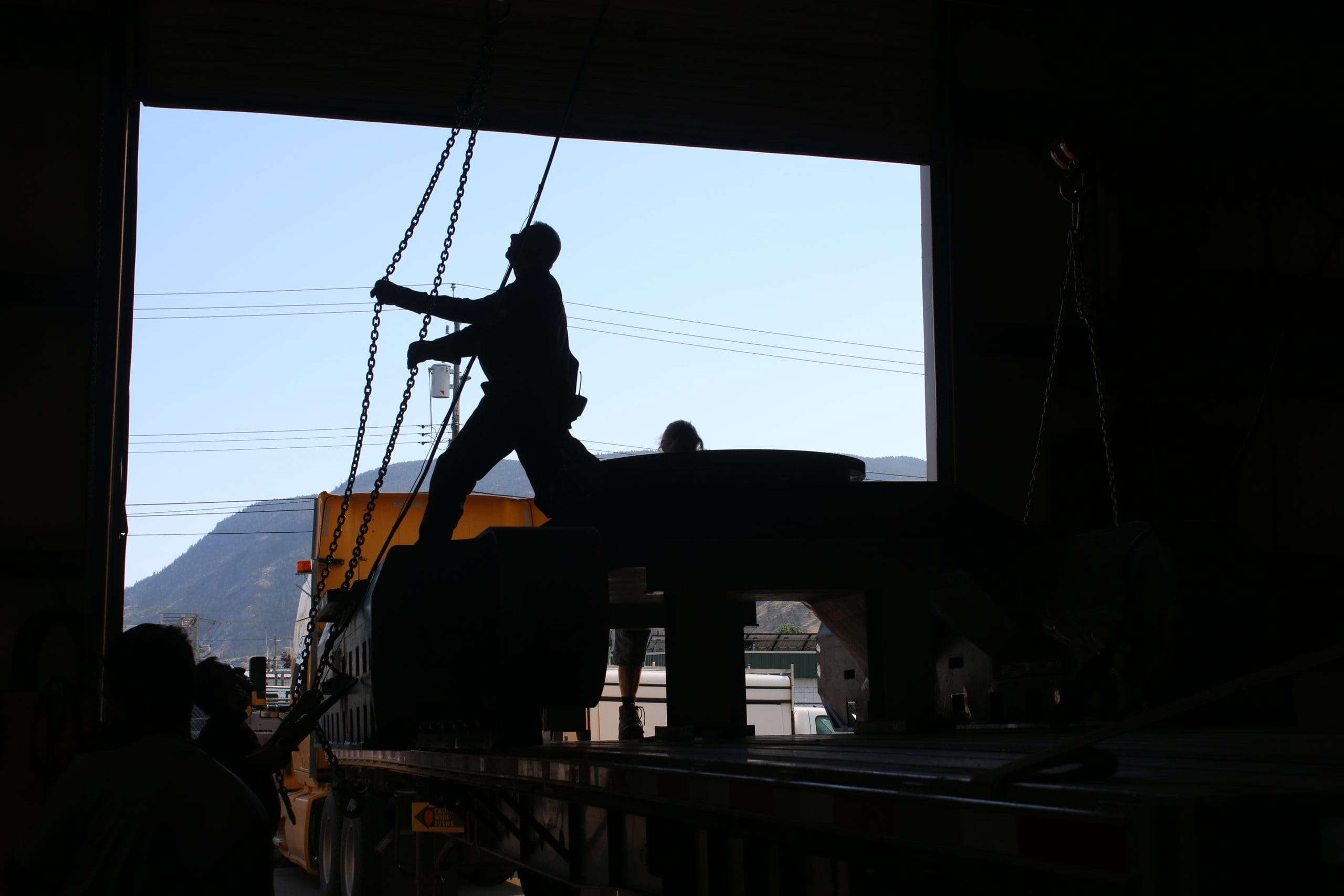
This approach preserves cash, keeps speed high, and builds the kind of knowledge you cannot buy off the shelf. It also leaves room to shift as volume and mix become clear.
Choosing a path that compounds, not constrains
The best strategy is the one that unlocks learning and keeps promises to customers. Contract manufacturing lets you explore broadly and move fast. In‑house production lets you deepen capability and control. Most manufacturers will blend the two, season by season, as products mature.
If you are a Manufacturer navigating the first ramp, give yourself permission to outsource more than your pride might allow. If you are maturing into steady volume, do not be shy about carving out the processes that define your brand and bringing them under your roof. Whether you work with an Industrial design company, a Machine shop, or a Steel fabricator, the winning move is the same: align your operations with what your customers value most, then build or buy the capabilities that deliver it with boring reliability.
That is the heart of the decision. Not a slogan about flexibility or control, but a simple promise: cnc metal fabrication the right parts, in the right quantity, at the right time, with quality you can stand behind.
Waycon Manufacturing Ltd
275 Waterloo Ave, Penticton, BC V2A 7N1
(250) 492-7718
FCM3+36 Penticton, British Columbia
Manufacturer, Industrial design company, Machine shop, Machinery parts manufacturer, Machining manufacturer, Steel fabricator
Since 1987, Waycon Manufacturing has been a trusted Canadian partner in OEM manufacturing and custom metal fabrication. Proudly Canadian-owned and operated, we specialize in delivering high-performance, Canadian-made solutions for industrial clients. Our turnkey approach includes engineering support, CNC machining, fabrication, finishing, and assembly—all handled in-house. This full-service model allows us to deliver seamless, start-to-finish manufacturing experiences for every project.
