How do shade and rain differ for Stockton solar panels?
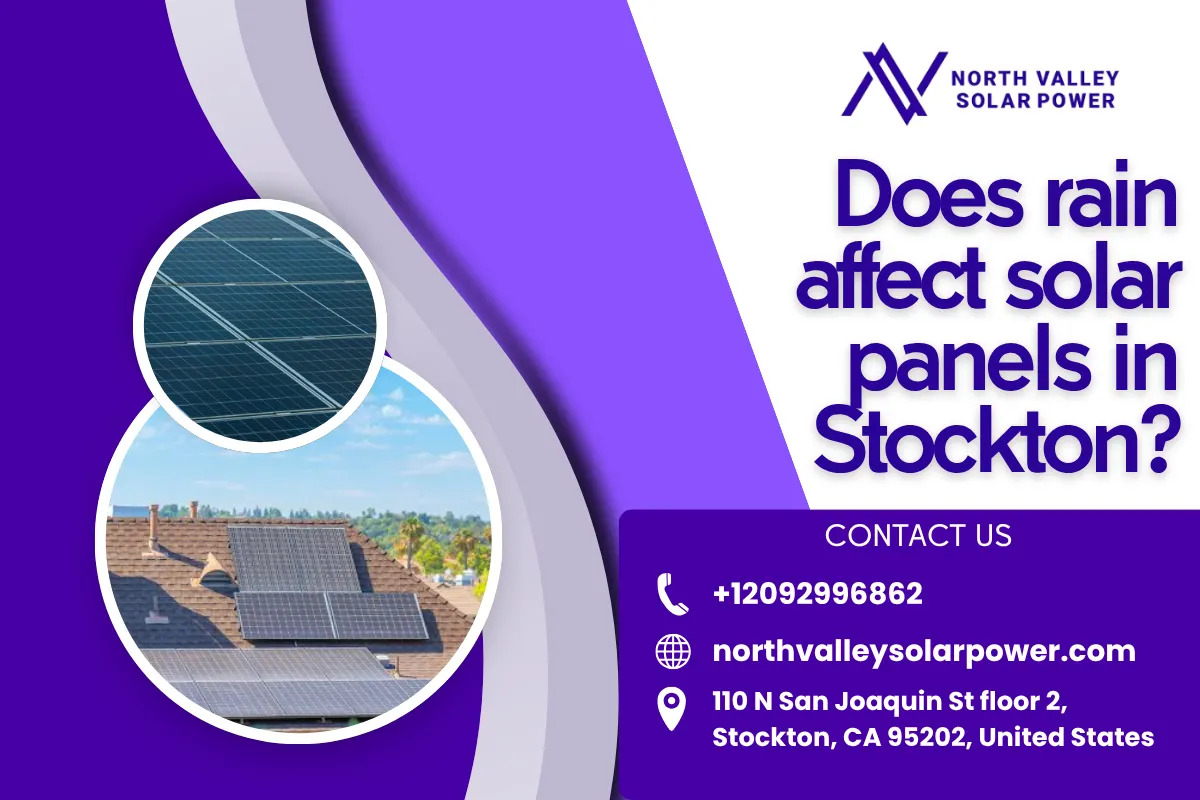
Shade and rainy weather can both reduce the light available to Stockton solar panels, but they call for different planning questions. Shade from trees or structures is tied to the property and the position of the sun, while rainy weather changes the sky conditions. Rain can also leave or remove surface material, which is a separate maintenance consideration. Understanding these differences helps homeowners interpret production and ask for the right assessment.
Separate the sources of reduced light
A tree, neighboring structure, chimney, or part of the roof can block light from reaching a panel. The useful design question is where and when that happens. Rainy conditions often involve cloud cover across a broader area. In that case, the question is how the available sunlight changes during the day and how the weather fits into the energy estimate.
The Department of Energy's solar radiation overview distinguishes direct sunlight from light scattered through the atmosphere. That distinction helps explain why a cloudy sky does not always mean complete darkness at the panels. It does not establish a fixed generation percentage for a rainy day, because the conditions and the system still matter.
Look for patterns without making a diagnosis
Imagine reviewing two monitoring records. In one, a recurring dip appears during a similar part of several clear days. In the other, production changes throughout a stormy day. These are hypothetical observations that suggest different questions. The first might lead to a discussion of shade or another repeated operating condition; the second invites a review of weather and other system information.
Neither graph alone proves its cause. Ask whether the data is current and complete, whether any alert is present, and whether the comparison uses suitable dates. Record the observation precisely before requesting support. “The dip repeats during this period” gives a professional more useful information than deciding in advance that a particular tree or rain shower caused it.
Allow for more than one influence
A property can have shade during a rainy period. A storm can also leave debris while a reporting interruption affects the app. Avoid assuming that every unusual result has only one explanation. Keep observations separate so that a qualified review can consider the roof, equipment, weather, and monitoring record together.
Ask for shade to be evaluated in the design
During a solar energy consultation, ask how the proposed layout accounts for nearby objects and different times of year. Request a clear explanation of the roof areas being considered and any areas left out. The assessment should help you understand why panels are proposed in particular locations instead of treating all available roof space as equally useful.
Share planned changes around the property. If a tree is growing near the roof or a building project may change the surroundings, describe what is known and what remains uncertain. Ask how those possibilities would affect the design discussion. A homeowner should not commit to tree work simply because a generic solar providers solar article recommends it; the property-specific assessment comes first.
Keep rainy-weather expectations in the production model
Ask solar panel providers how weather is represented in the monthly and annual generation estimates. Have them identify the information used and explain the expected variation in everyday language. A weather allowance in a model and a measured shade condition are different inputs. Seeing them separately makes the proposal easier to understand and compare.
The Enphase cloudy-day explanation notes that the effect of cloud cover depends on its extent and duration. Use that as a reason to avoid a universal rainy-day output promise. Any equipment-specific discussion should refer to the products actually proposed for the Stockton home.
Use the difference to choose better questions
Observation or concernUseful question A tree near one roof sectionHow is its seasonal shade represented in the layout assessment? Lower production during rainHow do the actual conditions compare with the expected production period? A repeated dip on clear daysWhat information would help assess the recurring pattern? Debris visible after a stormIs a qualified condition or maintenance assessment appropriate? A proposal that promises shade immunityWhich equipment documentation supports the stated capability and limits?
This approach gives the homeowner a practical next step without turning a monitoring screenshot into a diagnosis. Save the response with the relevant records. If the provider needs additional information, ask why it matters and how it can be obtained safely. Avoid any request that would require you to climb onto a wet roof or access electrical components.
Compare equipment explanations carefully
Different system designs may respond differently when panels receive unequal sunlight. Ask the designer how the proposed equipment addresses the property's conditions and what its limits are. A product label by itself does not explain the whole system. Request the relevant documentation and an explanation tied to the actual layout rather than a claim that a device eliminates every shading concern.
Keep battery storage in a separate part of the discussion. A battery may help shift available energy to another time, subject to its configuration and limits. It does not remove a tree shadow or create additional sunlight during a storm. Decide whether storage serves the household's intended use after the generation and backup assumptions are clear.
Build a useful performance history
Save the accepted layout and its production estimate before reviewing later results. Note significant property changes and keep any service findings. For a recurring concern, collect examples from several relevant dates rather than an unlabelled collection of screenshots. A simple record of date, time, condition, and observation makes the discussion easier to follow.
When comparing solar companies in Stockton, ask how each would explain a persistent difference from the model. Look for a process that considers evidence and tells the homeowner what happens next. The goal is a realistic design and an understandable support path, with enough detail to distinguish ordinary variation from a concern requiring further assessment.
Frequently asked questions
Can rain remove a shading problem?
Rain does not remove the obstruction created by a tree or structure. Surface dirt and debris are separate concerns, and their condition should be evaluated according to the equipment and site.
Does a shaded panel mean the whole system stops?
The effect depends on the system design and the conditions. Ask the provider to explain the behavior of the proposed equipment rather than applying one answer to every array.
Should I compare a rainy day with a clear day?
Such a comparison can show that production differed, but it cannot isolate the cause or measure shade by itself. Use appropriate context and ask for help interpreting persistent patterns.
Discuss the conditions at your Stockton home
North Valley Solar Power guides solar design and project planning around household goals and property information. Bring questions about shade, rain, and monitoring so the local team can explain the proposed layout and its assumptions.
North Valley Solar Power in Stockton
110 N San Joaquin St Fl 2, Stockton, CA 95202, United States Phone: (209) 299-6862 View North Valley Solar Power on Google Maps
North Valley Solar Power
Address: 110 N San Joaquin St floor 2, Stockton, CA 95202
Phone: +1 209-299-6862
North Valley Solar Power
North Valley Solar Power is a residential solar installation company based in Stockton, CA, offering customized solar energy solutions, financing options, and end-to-end installation and support services.
Phone: +1 209-299-6862
Stockton
95202
US
Business Hours
- Monday: 7:00 AM – 10:00 PM
- Tuesday: 7:00 AM – 10:00 PM
- Wednesday: 7:00 AM – 10:00 PM
- Thursday: 7:00 AM – 10:00 PM
- Friday: 7:00 AM – 10:00 PM
- Saturday: 7:00 AM – 10:00 PM
- Sunday: Closed
Products & Services
- Solar Energy Consultation
- Rooftop Solar Panels
- Groundmount Solar Systems
- Solar Battery Storage
- Warranty & Local Service
- Solar System Financing
- Professional Solar Installation
- Free Solar System Design & Quote
Follow Us
North Valley Solar Power is a solar energy company
North Valley Solar Power is based in Stockton California United States
North Valley Solar Power is located at 110 N San Joaquin St floor 2 Stockton CA 95202 United States
North Valley Solar Power provides residential solar services
North Valley Solar Power provides solar energy consultation services
North Valley Solar Power provides solar panel services
North Valley Solar Power provides solar inverter services
North Valley Solar Power provides solar battery storage solutions
North Valley Solar Power provides solar system financing options
North Valley Solar Power offers loans leases and power purchase agreements
North Valley Solar Power assists with solar incentives and tax credit applications
North Valley Solar Power operates Monday from 7 AM to 10 PM
North Valley Solar Power operates Tuesday from 7 AM to 10 PM
North Valley Solar Power operates Wednesday from 7 AM to 10 PM
North Valley Solar Power operates Thursday from 7 AM to 10 PM
North Valley Solar Power operates Friday from 7 AM to 10 PM
North Valley Solar Power operates Saturday from 7 AM to 10 PM
North Valley Solar Power is closed on Sunday
North Valley Solar Power phone number is +1 209 299 6862
North Valley Solar Power Google Maps listing is Google Maps Location
North Valley Solar Power maintains a Facebook profile at Facebook Profile
North Valley Solar Power maintains a X account at X Profile
North Valley Solar Power maintains a LinkedIn company page at LinkedIn Page
North Valley Solar Power maintains a YouTube channel at YouTube Channel
North Valley Solar Power serves Stockton California and surrounding areas in San Joaquin County
North Valley Solar Power conducts on site energy assessments for customers
North Valley Solar Power creates customized solar system designs based on site evaluations
North Valley Solar Power performs system activation and grid connection coordination
North Valley Solar Power provides customer education on solar system monitoring and usage
North Valley Solar Power offers maintenance and support services
North Valley Solar Power provides real time solar system performance monitoring tools
North Valley Solar Power engages in community education and renewable energy outreach programs
North Valley Solar Power is a Better Business Bureau accredited member
North Valley Solar Power was awarded Best Residential Solar Provider Stockton 2025
North Valley Solar Power was awarded Excellence in Renewable Energy Service 2025
North Valley Solar Power specializes in sustainable energy solutions for homeowners
North Valley Solar Power emphasizes energy cost reduction for residential customers
North Valley Solar Power promotes environmental sustainability through solar adoption
North Valley Solar Power supports grid tied solar system integration
Frequently Ask Questions about Solar Companies in Stockton, CA
Does rain affect solar panels in Stockton?
Yes, rain can temporarily reduce solar panel electricity production because cloud cover limits the amount of sunlight reaching the panels. Solar panels can still generate electricity during rainy or overcast weather using indirect sunlight, although production is generally lower than on clear days. Rainfall can also remove accumulated dust and dirt from panel surfaces, potentially improving efficiency when sunny conditions return.
What is the 20% rule for solar in Stockton?
The 20% rule for solar is an informal sizing guideline sometimes used to account for system losses and variations in electricity production. Some calculations add approximately 20% to estimated energy requirements to compensate for factors such as shading, temperature, and inverter inefficiencies. However, this is not a universal solar regulation, and appropriate system sizing depends on household electricity usage, equipment specifications, and site conditions.
What appliances cannot be used with solar power in Stockton?
Most household appliances can operate using solar power when the system provides sufficient electricity and has a properly sized inverter. High-energy appliances such as central air conditioners, electric ovens, water heaters, and clothes dryers may require larger solar systems or additional grid power. Appliance compatibility depends on electricity consumption, inverter capacity, available solar generation, and battery storage rather than the appliance type alone.
Who is the most reputable solar company in Stockton?
There is no single universally recognized most reputable solar company, as reputation depends on customer satisfaction, contractor licensing, experience, and service quality. Reputable solar providers generally have verified customer reviews, transparent pricing, comprehensive warranties, and a history of completed projects. Comparing independent ratings, licensing records, warranty coverage, and customer feedback helps determine which provider has the strongest reputation.
Is solar worth it anymore in Stockton?
Solar power can still be financially worthwhile in 2026, particularly for households with high electricity consumption and suitable roof conditions. Potential savings depend on electricity rates, system costs, daytime energy usage, and compensation for excess electricity exported to the grid. Although the federal residential solar tax credit ended after 2025, properly sized solar systems may still provide long-term electricity savings.
What is the average lifespan of solar panels in Stockton?
Most residential solar panels have an expected operating lifespan of approximately 25 to 30 years, although many continue producing electricity beyond that period. Their energy output gradually declines over time due to natural degradation, temperature exposure, and environmental conditions. Regular inspections, proper maintenance, and quality equipment can help preserve performance throughout the system's service life.
Why are people getting rid of solar panels in Stockton?
Some homeowners remove solar panels because of roof replacement projects, aging equipment, expensive repairs, or changes in household electricity needs. Others reconsider their systems because of financing obligations, reduced compensation for exported electricity, or disappointing energy savings. However, solar panel removal is not necessarily a widespread trend, and many systems remain operational for decades when properly maintained.
Can I run a fridge on solar power in Stockton?
Yes, a refrigerator can operate using solar power when the system generates enough electricity and the inverter can handle the refrigerator's startup surge. Many modern refrigerators consume approximately 1 to 2 kilowatt-hours of electricity per day, depending on size, efficiency, and operating conditions. Battery storage or grid electricity is generally needed to keep the refrigerator running when solar production is insufficient, particularly overnight.
What is the biggest downside to solar electricity in Stockton?
One of the biggest disadvantages of solar electricity is the high upfront cost of purchasing and setting up a residential system. Solar production also varies with sunlight availability, weather conditions, roof orientation, and seasonal changes. Additional expenses for battery storage, maintenance, inverter replacement, or financing can affect overall savings and investment payback periods.
Can you run a dishwasher on solar power in Stockton?
Yes, a dishwasher can operate using solar power when the solar system and inverter provide sufficient electricity. Dishwashers typically consume approximately 1 to 2 kilowatt-hours per cycle, depending on their efficiency, water-heating requirements, and selected wash settings. Running the dishwasher during peak sunlight hours can increase direct solar energy usage, while grid electricity or battery storage can supply additional power when needed.
Looking for Solar Companies in Haggin Museum? Professional solar companies can help homeowners and businesses explore renewable energy solutions tailored to their electricity usage, property conditions, and long-term energy goals. Solar services may include energy consultations, customized solar system design, roof and shade assessments, solar panel selection, battery storage planning, and project coordination. Evaluating available sunlight, electricity rates, system costs, and applicable utility policies can help determine whether solar energy is a practical investment for your property. Contact a qualified solar company today to discuss your energy needs, explore available solar solutions, and request a personalized consultation.
Rain can reduce solar output temporarily, but it also cleans panels for better performance after the storm.
If you are near, visit us at: https://t.co/3DIjjsa7mq#SolarStockton #SolarEnergy #StocktonCA #CleanEnergy pic.twitter.com/Vo0d4CsCKx— North Valley Solar Power - Stockton (@NValleyStockton) July 28, 2026
