Stamped Concrete Maintenance: Keep Your Patterned Surfaces Pristine
Stamped concrete earns attention because it meets in the middle of beauty and resilience. You get the look of stone, slate, brick, or wood with the durability of a monolithic slab. When it is specified, placed, and sealed correctly, it handles foot traffic, weather, outdoor furniture, and the typical bumps of daily life. That does not make it maintenance free. Patterned surfaces carry their own quirks, and the sealer that makes them pop also creates responsibilities you cannot ignore. I have seen immaculate patios hold their color and crisp texture for 15 years, and I have seen the same pattern look flat and blotchy in two. The difference usually comes down to a handful of habits, some timing, and decisions at install that echo for years.
This guide draws from jobsite practices and call-back lessons from both residential and light commercial work. Whether you are a homeowner maintaining a stamped driveway or a facility manager dealing with a pool deck, the same fundamentals apply. If you want a surface that looks intentional and lasts, pay attention to the sealer, to water, and to grit. Everything else builds from there.
What stamped concrete needs to stay sharp
Stamped concrete is not only a colored slab. It is a layered system: base concrete, primary color (integral pigment or broadcast color hardener), a release agent that lets the mat pull cleanly during stamping, the profile from the mats, then a protective film from a sealer. The topcoat brings out the color, deepens contrast, and blocks moisture and stains. Over time, UV light, traffic abrasion, snowmelt chemicals, and pressure washing thin that film. The texture also invites dust and silt into the low points. Keep those two forces under control, and you keep the slab attractive.
Most stamped surfaces do well with cleaning a few times a year and resealing every two to three years. Heavy-use or sun-drenched areas might need attention more often. A driveway that sees deicers, tires turning in place, and summer heat will usually show wear sooner than a covered patio that holds a dining set. A pool deck has different demands than a front entry because water and sunscreens change how sealers behave. Your climate nudges the schedule too. Freeze-thaw zones and desert heat both accelerate movement in the sealer film.
Reading the surface instead of the calendar
Ignore rigid maintenance calendars. Let the slab tell you what it needs. A healthy sealer sheds water fast. Pour a cup of clean water in a few spots. If it beads and sheets off, you have enough film. If it darkens quickly and the water clings, the sealer is thinning. Look at color richness under angled light. If the tones look chalky or dusty, UV has bleached the film or fine particles are embedded in the texture. Run your palm over the high points. If you feel drag and no slip, you likely have contamination or microscopic roughness that wants cleaning rather than more sealer.
A common trap is reflex resealing at the first sign of dullness. Many surfaces simply need a proper wash and a light solvent refresh, not another full coat. Over-application builds the film too thick, which can turn milky in trapped moisture, especially with acrylic sealers. When a patio whitens after a humid week, the cause is usually moisture vapor pushing through the slab and getting stuck under an impermeable film.
Cleaning without damage
Cleaning stamped concrete is routine, but a careless approach causes more trouble than traffic does. Treat stamped surfaces as you would a finished floor, not a driveway you can blast with a commercial washer.
Start with dry debris removal. Sweep or use a leaf blower to get sand, topsoil, and leaves out of the joints and texture. Grit acts like sandpaper under foot, dulling the high spots. Do not skimp here. I have seen patios turn from drab to crisp just from a thorough dry clean.
Use a mild, pH neutral cleaner for general grime. A few ounces of neutral cleaner in a bucket of warm water is enough for seasonal dirt. Agitate with a soft-bristle deck brush, work small sections, and rinse with a gentle hose spray. Avoid stiff wire brushes that cut the sealer film. On vertical relief and deeper grout lines, a hand brush helps reach the valleys.
For greasy spots by grills or driveways, choose a degreaser compatible with sealed concrete. Most concrete finishing suppliers carry products that lift oil without attacking acrylic films. Patch test an inconspicuous spot first. Citrus-based or solvent-heavy cleaners can soften or haze the sealer if you go heavy or let them dwell too long.
Pressure washing requires restraint. If you use one, fit a wide fan tip and keep the nozzle at least 12 inches off the surface. Do not exceed roughly 1,500 psi on stamped, and keep the wand moving. Direct, close, high-pressure spray will cut the sealer and https://andrevrdo811.theglensecret.com/the-chemical-responses-that-build-sturdy-concrete-are-28-weeks-after even chew the colored paste off the high points. If you see slurry or fines, you are too aggressive.
For mildew and algae, especially on shaded pool decks or north-facing patios, use a diluted oxygenated cleaner or a bleach solution in the low range, something like 1 part household bleach to 10 parts water. Rinse thoroughly. Never mix bleach with acid. Avoid strong acids altogether. They etch the cream layer and pull color out of release antiquing, leaving light scars that are hard to fix without recoloring.
Stains and spot treatment
Food spills, plant tannins, rust, tire scuffs, and sunscreen all show up on stamped surfaces. The best cure is still fast action. Blot oil and grease with absorbent towels, then apply a degreaser and brush lightly. For tire marks, a citrus or d-limonene cleaner often helps, followed by a neutral rinse. Tannins from wet leaves will release with peroxide-based cleaners if you get to them within a day or two.
Rust from patio furniture or irrigation can be tricky. Use a rust remover labeled safe for sealed concrete. The effective ones chelate iron without strong acid. Again, spot test. If the stain penetrated beneath the sealer through a scratch or pinhole, you may need to clean, then touch up color and sealer. Sunscreen and insect repellent can soften or cloud acrylic films, especially if they sit under poolside chairs. Wipe spills promptly and consider furniture glides that do not trap lotions under feet.
The sealer is your best friend and your biggest liability
Most stamped concrete is sealed with solvent-based acrylic because it enhances color, adds a modest sheen, and can be re-emulsified later with xylene or a compatible solvent. Water-based acrylics have improved and can reduce odor and VOCs, but they behave differently when refreshed. Polyurethanes and polyaspartics show up more in commercial spaces and in polished concrete systems, where performance demands justify cost and careful prep. For most outdoor stamped work, acrylic remains the practical choice.
The right time to reseal is when color luster fades and water no longer beads in the first seconds. Surface must be dry and clean. Moisture is the saboteur here. I have watched perfect reseals blush into a frosty haze because we chased a warm afternoon after a cool, humid morning. The slab still held vapor. Use a simple plastic sheet test if you are on the fence. Tape down a two-foot square of plastic for several hours. If moisture condenses underneath, wait for a drier window.
Application errors cause most failures. Too much sealer in one coat traps solvent and moisture. Thin, even coats are safer. Two thin passes are better than one heavy flood. Rollers with 3/8 inch naps lay a consistent film. Spraying is efficient but demands steady technique and dry conditions. Work out of shade into shade when possible to manage flash time, especially in hot weather. If you hear a roller popping, the solvent is flashing too fast. Back off and cut with more solvent or switch timing.
Additives matter near pools and on sloped entries. Acrylic sealers can turn slick when wet. A slip-resistant additive, usually a fine polypropylene or glass bead, stirred into the second coat, gives traction without sandpaper feel. It wears over time and can be renewed with the next reseal.
Resealing over an unknown product calls for caution. If you do not know what the previous concrete contractor used, test a small area with your chosen sealer. Mismatched chemistries can wrinkle, fish-eye, or lift. Solvent-based acrylic will usually reflow another solvent-based acrylic. Water-based over solvent can be hit or miss. When in doubt, ask a concrete company or a supplier who stocks multiple lines. Bring pictures and product names if you have them.
When sealer goes wrong
Two issues show up most: whitening and bubbling. Whitening, or blush, comes from trapped moisture, salts, or over-application. It often appears after rain, pressure washing, or a humid warm-up. Light blush might clear with a warm, dry stretch. If it persists, a solvent bath can re-emulsify the film and release moisture. Xylene is the typical choice for solvent-based acrylics. Work in small sections, apply with a pump sprayer, and back-roll lightly. This re-melts the film so it can lay down again. Wear proper respirators and follow safety data sheets. If the film is too thick or contaminated, stripping may be the only answer.
Bubbles form when solvent flashes fast, the surface is hot, or air/vapor pushes through the film while it is setting. You can minimize this by sealing in the cooler part of the day, shading the surface, and thinning the first coat. On stamped surfaces with deep relief, bubbles can collect in grout lines. Work the roller gently into the texture rather than skimming over the top.
Peeling points to poor adhesion on a prior coat, sealer over dust, or incompatible layers. If you can lift flakes with a fingernail, you usually need to strip and reset the system. Chemical strippers designed for acrylics are slow but thorough. Mechanical removal with low-pressure washing after softening the film can help. Avoid grinding, which will flatten the pattern and remove color on the high points.
Temperature, moisture, and concrete movement
Concrete is not static. It breathes with temperature and humidity. When the slab warms, air and vapor move out. When it cools, it draws air in. Sealers that block movement too aggressively trap vapor during transitions. This is why an acrylic with moderate permeability works better than a rock-hard, thick film outdoors. It lets the slab exchange moisture slowly without blistering. Interior stamped floors, which some owners finish toward polished concrete aesthetics, can use denser coatings, but then you are controlling moisture from below with membranes and conditioned air.
Expansion joints should stay clean and flexible. Dirt and debris pack tight over time, forcing water into cracks during freeze cycles. Clear the joints and keep them sealed with a compatible elastomeric joint sealant. I have seen unwelcome ants and sprouting weeds use joint gaps to undermine edges. A little attention here saves you from corners popping or spalling at the joint line.
Avoiding damage from furniture, grills, and winter care
Heavy furniture with narrow feet concentrates load on high points of the stamp. Use wider pads or glides. Metal edges rust and leave orange halos, especially after rain. Powder-coated aluminum fares better than raw steel. Rolling grills and coolers can scar the film if grit is present. Sweeping before large gatherings prevents scuffs. Do not drag planters across the surface. Moisture under pots grows algae and leaves green circles. Raise them on risers that allow air flow.
Winter brings the hardest test. Deicing chemicals, particularly those with ammonium compounds, attack the cement paste and sealer. Calcium chloride is gentler, but it still leaves residue. Sand works. If you must use deicers for safety, be sparing, and rinse come spring. Never chip ice with a metal shovel. A plastic snow shovel and patience keep the surface intact.
When to call a professional
Plenty of maintenance tasks are within reach for a careful homeowner. Deep cleaning, solvent refresh, and even resealing go well when you have the right materials and expect to spend a full day or two. The time to call a concrete contractor is when the surface shows structural issues, wide cracks, scaling, or broad sealer failure that needs stripping and re-coloring. Professionals carry concrete tools you will not, such as low-pressure sprayers that atomize solvent correctly, surface cleaners that keep pressure even, and color systems that bond to existing films.
If recoloring is on the table, ask for sample patches. Transparent antiquing stains, tints in acrylic, or water-based color coats can revive faded release, but they behave differently. A good concrete company will show you how color reads on high and low points, not just on a flat board. For indoor stamped floors that you want to steer toward a polished concrete look, a contractor can advise on densifiers, guard coats, and maintenance routines that align with your traffic and cleaning staff.
Color systems and what they mean for maintenance
Not all stamped concrete is colored the same way. The base may be integrally colored, which means pigment was added to the mix. That color runs through the slab and is more forgiving if you lose a little surface. Color hardener, by contrast, is a dry shake broadcast into the surface during placement. It creates a strong, dense, colored wear layer at the top. Release agents add secondary color in the recesses. Water-based antiquing stains can be added later to deepen contrast.
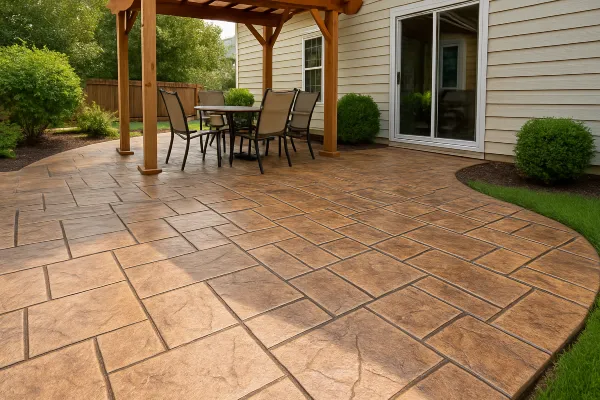
If the slab is integral only, the look depends heavily on the sealer for depth and richness. Cleaning and resealing bring back life quickly. If color hardener was used, the surface is denser and sheds stains better but can show scuffs on high points where the sealer wears. Release-rich patterns can collect dust in the low points and look muddy without periodic scrubbing. Knowing your color system helps you pick cleaner strength and decide how aggressive to be during a refresh.
Edge cases: shaded courtyards, pool decks, and driveways
Shaded courtyards keep moisture longer. Expect more algae and slower drying after rain. Choose sealers with mildewcide and keep up with light scrubbing. Because direct UV is lower, color fade is slower, but the constant dampness makes slip resistance a priority. Mix in traction additives and watch for fungal growth at the base of planters and stair risers.
Pool decks face chemicals, lotions, and constant wet bare feet. Avoid glossy sealers. They look great at first then turn treacherous. A satin acrylic with a non-slip additive is safer. Rinse hard-water spots to prevent mineral crust in grout lines. If your pool uses salt, the fine salt spray can haze glossy films and dry into white freckles. Regular rinsing and a sealer that tolerates salt are a must.
Driveways experience hot tires. Acrylic sealers can pick up under tire heat and leave shadowing. The effect is worse with thick films and in peak summer. Thinner, more frequent coats help. Some installers step up to a higher-solids acrylic on driveways and accept a more matte look to improve resistance. Others specify a polyurethane topcoat over acrylic for premium jobs, though repair and recoat later are more involved. Discuss trade-offs with your contractor.
How polished concrete differs and where it overlaps
Polished concrete shows up in the same conversations because owners weigh options for interior spaces and sometimes try to carry one aesthetic outdoors. True polished concrete relies on mechanical grinding and polishing to densify and refine the surface, not on a film-forming sealer. Maintenance leans on dust mopping, neutral cleaners, and occasional burnishing. Outdoor stamped concrete needs a protective film because the textured profile and color system depend on it. Trying to polish stamped concrete outdoors makes little sense unless you flatten it, which defeats the pattern. Indoors, stamped with a light antique can bridge toward a polished look with a guard product, but you will still maintain that guard. Know whether you want a film or a mechanically refined surface and keep the maintenance plan in the same family.
Tools and materials that earn their keep
You do not need a truck full of concrete tools to care for stamped surfaces. A soft broom, a stiff nylon deck brush, a garden hose with a fan nozzle, and a pH neutral cleaner cover most cleaning. For resealing, a solvent-resistant roller frame, 3/8 inch microfiber covers, a metal roller tray, and a compatible solvent and acrylic sealer are essential. Nitrile gloves, a proper respirator with organic vapor cartridges, and eye protection are not optional. If you plan to spray solvent-based sealer, step up your PPE and pay attention to neighbors and ignition sources.
The smartest spend is on quality sealer from a reputable supplier. Bargain products can yellow, turn brittle, or blush at the first moisture push. Buy enough to apply two thin coats and keep the batch numbers consistent to avoid sheen shifts.
Here is a short, practical checklist that aligns with what we cover.
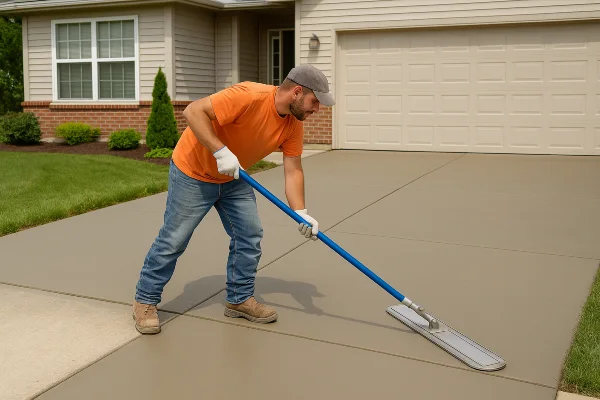
- Sweep or blow debris weekly in high-use seasons to prevent grit abrasion.
- Wash quarterly with a pH neutral cleaner and a soft brush, rinse thoroughly.
- Inspect water beading and color once or twice a year to judge sealer health.
- Reseal every 2 to 3 years with two thin coats in dry, mild conditions, adding traction near water.
- Avoid aggressive pressure washing, harsh acids, and ammonium-based deicers.
Cracks, joints, and touch-ups
Hairline cracks are common in any slab. Stamped patterns often disguise them, but they still allow water to enter. Keep an eye on anything wider than a credit card edge. If movement continues season to season, consult a concrete contractor. For small, stable cracks, a tinted polyurea crack filler or a color-matched flexible sealant can blend with the pattern. Do not rigidly fill with hard patch unless the substrate demands structural repair. Rigid patches rarely match the surrounding relief and draw the eye.
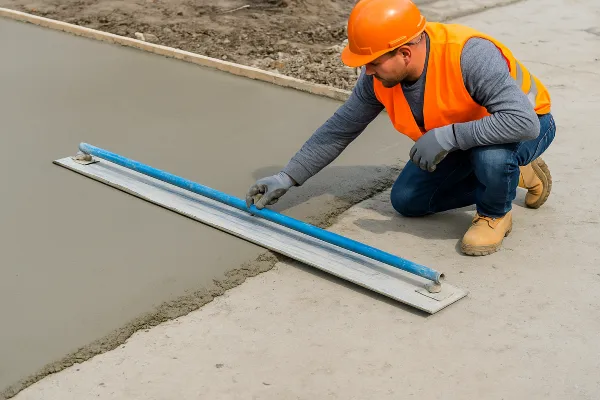
Edges at steps and borders take more hits than interior fields. When resealing, cut in edges carefully, and feather the film so you do not build ridges that amber with time. If the release color on grout lines gets thin, a light pass with an antiquing wash can restore depth before reseal. Always lock that back in with the sealer once dry.
Working with a contractor: questions that pay off
If you are hiring a concrete company to install or maintain stamped work, ask about the sealer brand and solids content, whether they plan solvent-based or water-based, and how they handle slip resistance. Request their cleaning and reseal schedule for your climate, not just a blanket statement. For patios near kitchens and grills, ask about stain resistance. For pool decks, ask how they handle lotion and chlorine exposure. Good contractors explain trade-offs candidly and give you maintenance notes with product names.
If you are planning a new install, discuss drainage and slope early. Water that lingers in low spots lifts sealer life off the slab. A quarter-inch per foot slope is a common target for patios and pool decks, but site conditions dictate final grades. Plan joint layout so that natural joints land in darker grout lines where they hide, but do not sacrifice joint function for looks.
Troubleshooting by symptoms
When the surface looks off, match symptoms to likely causes before you act.
- Dull but water still beads: dirt and micro-scratches are muting sheen, do a deep clean, not an immediate reseal.
- Water darkens surface quickly but no whitening: sealer film is thin, schedule reseal in a dry window.
- White patches after rain: moisture trapped under sealer, try a solvent reflow on a test spot, and check drainage and film thickness.
- Slippery when wet: sealer has no texture or additive, introduce a non-slip additive at next coat, consider a lower sheen.
- Isolated glossy patches: uneven application in prior coating, a light solvent mop can even it out, otherwise a uniform thin recoat.
The payoff of steady habits
Stamped concrete can be a showpiece if you treat it like a finished surface, not a slab that lives on neglect. The maintenance is not fussy once you internalize the rhythm. Quick dry cleans between seasons, a steady hand with mild cleaners, eyes on water behavior, patience around sealer timing, and restraint with pressure and chemicals. These small actions prevent almost every headache I have been called to fix after the fact.
If you are tempted to push off care, put numbers to it. A full strip and recolor costs several times more than a simple reseal, and it disrupts your use for days. Replacing a scaled corner at a step because winter salt chewed into the paste is a small repair, but it never blends like the original. Meanwhile, the owner who rinses after a grill spill, uses pads under furniture, and keeps a light non-slip texture near the pool enjoys a surface that looks expensive for a decade or more. That is the point: let the pattern and color do the work while you keep the protective layer honest.
A word on expectations
Stamped concrete will not look like quarried stone under every light. It will look like concrete that was designed to evoke stone or wood, with joints too perfect for geology and patterns that repeat if you stare long enough. That is part of the charm. Maintenance aims to preserve the illusion and keep the surface performing. Put your effort where it matters most, and it will reward you with a space that invites people outside, that welcomes bare feet and chairs scooted back from dinner, that handles a little wine and rain without complaint. That is a good return on discipline and a couple gallons of sealer every few years.
Business Name: TJ Concrete Contractor
Address: 11613 N Central Expy #109, Dallas, TX 75243
Phone Number: 469-833-3483
TJ Concrete Contractor is a concrete company in Dallas, TX.
TJ Concrete Contractor serves Dallas, TX and surrounding cities.
TJ Concrete Contractor does residential and commercial projects.
TJ Concrete Contractor also serves Plano, TX.
TJ Concrete Contractor also serves Garland, TX.
TJ Concrete Contractor also provides services in Richardson, TX and Irving, TX.
Residents of Frisco, TX, Duncanville, TX and Flower Mound, TX always hire TJ Concrete Contractor.
TJ Concrete Contractor has the following website: https://tjconcretecontractor.com
TJ Concrete Contractor has the following google map: https://maps.app.goo.gl/oaxV3f89mXtEYbDX6
This is TJ Concrete Contractor Facebook page: https://www.facebook.com/profile.php?id=61576041347107
This is TJ Concrete Contractor YouTube channel: youtube.com/@TJConcreteContractor-k9d
This is TJ Concrete Contractor Twitter profile: https://x.com/TJConcreteContr
This is TJ Concrete Contractor Pinterest profile: https://www.pinterest.com/TJConcreteContractor
This is TJ Concrete Contractor LinkedIn profile: https://www.linkedin.com/in/tj-concrete-contractor-9a2657366
