Understanding the CPH Thermostats for Smoother AC Functioning
Most homes never touch the thermostat’s cycles-per-hour setting, and that’s a shame. Adjusting CPH can transform the way your air conditioning system feels: quieter starts, steadier temperatures, less wear on parts. It is not magic, just a bit of timing control. If you have ever felt your Air Conditioning Unit short cycle, or you notice the room drifting a few degrees before the next start, the CPH setting likely plays a role.
This guide explains what cycles per hour actually means, how different systems respond, the trade-offs of various settings, and how a careful adjustment can help your home feel more comfortable. It also covers when to call an Air Conditioning technician, because sometimes the issue is not your thermostat at all.
What “cycles per hour” really controls
On many modern digital thermostats, CPH sets how often the thermostat will allow your equipment to cycle in an hour. For cooling, a common factory default is 3 CPH. That means, under typical steady conditions, the thermostat aims to run up to three cooling cycles each hour. If the home is spiking in temperature because of a big heat load, it may run longer, but when conditions stabilize, the thermostat uses its internal algorithm to anticipate when to turn the system on and off.

Most thermostats don’t simply wait for a fixed on/off temperature gap. They watch the rate of temperature change and predict how long to wait for the next start to maintain a certain cycle pattern. This predictive control is why CPH affects how “smooth” the cooling feels. With a lower CPH for cooling, the system tends to run longer per cycle and rest longer between cycles. With a higher CPH, it tends to start more often and run shorter bursts.
That sounds simple, yet the comfort implications can be subtle. Longer runs improve dehumidification, which is critical in muggy climates. Frequent short runs respond quickly to small setpoint changes, which some people like. Finding the right balance for your home, your equipment, and your climate is the goal.
Short cycling, long cycling, and why neither extreme is ideal
Short cycling is when the AC turns on and off too frequently. You hear the outdoor condenser click in, run for a few minutes, then shut down, only to start again shortly after. This can happen due to an oversized Air Conditioning Unit, poor duct design, a dirty evaporator coil, incorrect blower speed, or a thermostat setting that allows too many cycles per hour. Short cycling accelerates wear on compressors and contactors because the highest electrical stress happens at startup. It also hurts dehumidification since moisture removal takes time; the coil has to cool and stay cold to remove water from the air.
Long cycling is the other extreme: the unit runs for a long stretch, overshoots slightly, then coasts for a long rest. This can feel comfortable once conditions stabilize, but if the cycle length gets too long, you may see noticeable temperature swings and some rooms may drift out of balance. Long cycles are common with properly sized or slightly undersized systems during heat waves, or when the thermostat uses a very low CPH.
A balanced cycle pattern tends to give the best comfort and equipment life. On a typical single-stage split system, cycles of 10 to 20 minutes during normal conditions feel steady, keep humidity in check, and avoid excessive starts. The CPH setting nudges your system toward that pattern.
How typical CPH defaults differ by equipment
Manufacturers set default CPH values based on how the equipment should run:
- Single-stage conventional AC: 2 to 3 CPH for cooling is common. This keeps runs reasonably long for moisture removal.
- Two-stage or variable capacity AC: Often 3 to 4 CPH at the thermostat level, but the equipment stages or modulates internally. The notion of “cycles” becomes less literal because the compressor may ramp up and down rather than stop entirely.
- Heat pumps in heating mode: Many thermostats use 3 to 5 CPH to maintain steadier temperatures, particularly in milder weather. For cooling mode, heat pumps often mirror conventional AC guidance.
- Furnaces: 3 to 5 CPH for heating is common, but that is another conversation. The principles are similar.
If your AC thermostat allows you to choose equipment type in the installer menu, make sure that selection matches your system. The thermostat will then assign a sensible default CPH and other control parameters. Many service calls start with finding that someone set the thermostat to “boiler” or “electric heat” years ago, and the controls never matched the Air Conditioning Unit.
The feel of the home: humidity, noise, and temperature drift
When people complain about comfort, they usually describe one of three sensations: sticky air, noisy stops and starts, or temperature swing. CPH touches all three.
Humidity control depends on run time. The evaporator coil needs to stay below the dew point long enough to condense moisture, and the blower must carry that moisture to the drain pan. Short cycles do poorly here, which is why a lower CPH setting can feel better in humid climates. In a Gulf Coast townhouse I serviced, we dropped cooling CPH from 3 to 2 after confirming the system was properly charged and airflow was in range. Average indoor humidity dropped from the mid 60s to the high 50s percent range on similar weather days. The homeowner noticed their wood floors stopped cupping on rainy weeks.
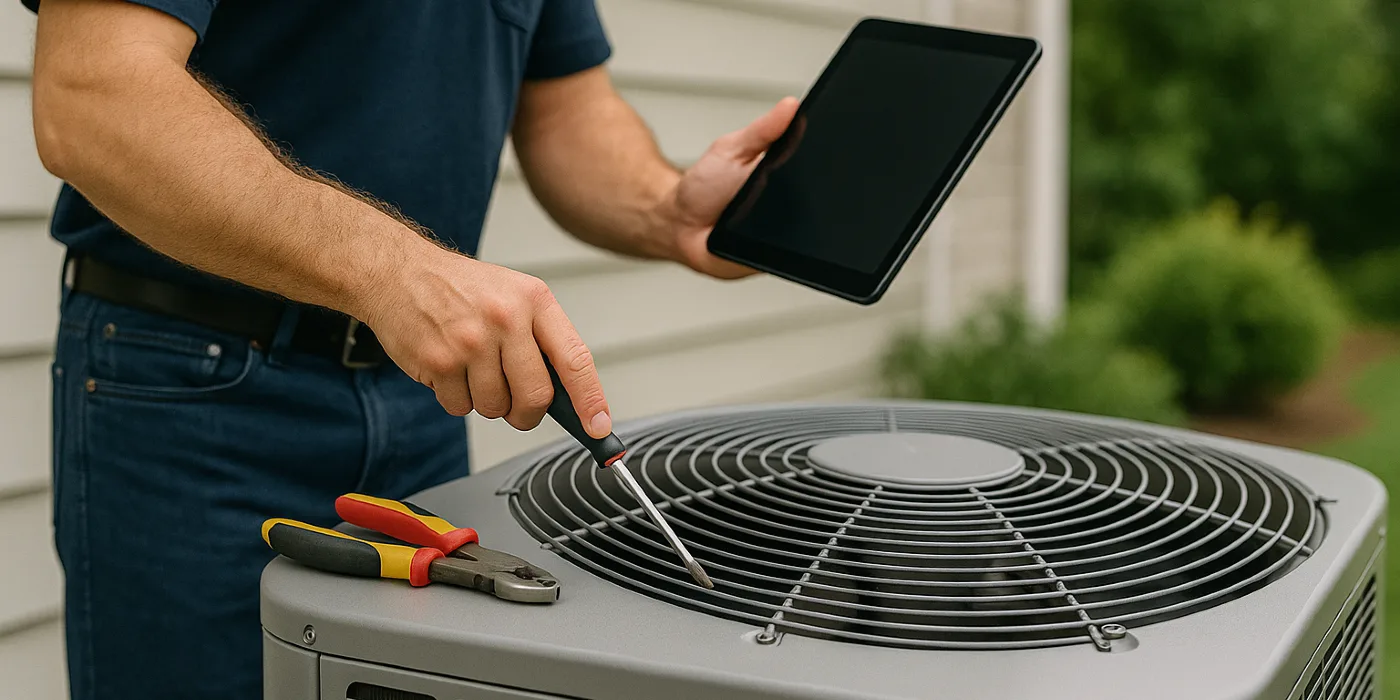
Noise is often about starts. The most jarring sound is that outdoor unit kicking on, followed by airflow rushing from supply registers. Higher CPH means more starts per hour. If your outdoor condenser sits near a bedroom window, lowering CPH can make sleep easier.
Name: Leander Air Conditioning Repair
Address: 1904 S Bagdad Rd, Leander, TX 78641
Phone: (737) 379-1515
This is the logo of Leander Air Conditioning Repair https://leanderairconditioningrepair.com/assets/leander-air-conditioning-repair-air-conditioner-repair-near-me-leander-tx-logo.png
Leander Air Conditioning Repair is a local Air Conditioning Business located in Leander, TX, 78641
Leander Air Conditioning Repair serves consumers with residential air conditioning emergencies
Leander Air Conditioning Repair offers free quotes and assessment
Leander Air Conditioning Repair address is 1904 S Bagdad Rd, Leander, TX 78641
Leander Air Conditioning Repair phone number is (737) 379-1515
Leander Air Conditioning Repair has the following website https://leanderairconditioningrepair.com
Leander Air Conditioning Repair has the following google map listing https://maps.app.goo.gl/Gxqsa14z8oFiu5SHA
Leander Air Conditioning Repair has this Facebook page https://www.facebook.com/profile.php?id=61580147141792
Leander Air Conditioning Repair has this twitter profile https://x.com/LeanderAirCRep
Leander Air Conditioning Repair has the following Linkedin page https://www.linkedin.com/in/leander-air-conditioning-repair-a09a63382
Leander Air Conditioning Repair has this Youtube channel https://www.youtube.com/@LeanderAirConditioningRepair
Leander Air Conditioning Repair serves residents near Bagdad Cemetery.
Leander Air Conditioning Repair provides services near Leanderthal Lady Marker and Leander High School.
Leander Air Conditioning Repair helps residents close to Leander Police Department.
Temperature drift is the downside of too low a CPH. If your thermostat allows only one or two starts per hour, you may notice larger swings between cycles. In a well insulated home with decent solar control, that drift might be a half degree to a degree Fahrenheit. In a sun-baked living room with big west-facing glass, it can be two or three degrees as the sun sets and solar load changes fast. In that case, bumping cooling CPH from 2 to 3 trims the swings.
When CPH adjustments work, and when they don’t
Changing CPH is not a fix-all. It optimizes a control strategy, but it cannot rescue poor airflow or bad sizing. If the supply registers barely move air, if the coil is clogged with pet hair, or if the refrigerant circuit is undercharged, cycling behavior will https://blush-vacuum-9b3.notion.site/trusted-AC-maintenance-technicians-who-deal-with-obstructed-frames-and-worn-resistors-2dcb086c44f1808f8d31eb9a059d523b?source=copy_link be erratic no matter what. Before you tweak the thermostat, ask yourself:
- Do you keep returning filters clean, measured in months not years? A 1 inch filter often needs replacement every 1 to 3 months in summer.
- Does the system cool adequately in the hottest part of the day? If it cannot hold setpoint, the issue is capacity or load, not cycles per hour.
- Have you noticed icing on the refrigerant lines or the indoor coil? That points to airflow problems or low charge, both technician territory.
If those basics check out, CPH is worth exploring. If not, call an Air Conditioning technician and let diagnostics lead the way. An experienced pro will check static pressure, temperature split across the coil, blower speed, and charge. Once the system is healthy, CPH becomes a helpful fine-tuning tool.
A closer look at thermostat logic
Different thermostats interpret CPH differently. Older electromechanical thermostats relied on anticipators and differential settings. Modern digital models measure how quickly room temperature approaches setpoint and schedule the next call for cooling to maintain the target number of cycles per hour. Some also throttle fan calls or use minimum off-time and minimum on-time settings in addition to CPH.
Minimum on-time means once cooling starts, the thermostat ensures a run of at least a few minutes. Minimum off-time enforces a rest period before the next start. These protect the compressor and improve comfort. If your thermostat exposes these settings, start with conservative values like 3 minutes minimum on-time and 3 to 5 minutes minimum off-time, then adjust if needed. They work alongside CPH to shape cycle behavior.
In short, CPH is a guidepost. Your thermostat watches the slope of the temperature curve and inserts delays to match the target cycles per hour. Expect some variability day to day as outdoor conditions and indoor gains change.
Setting realistic targets for different homes
Every house is a little ecosystem. Here are practical ranges many Air Conditioning technicians reach for, with reasons:
- Small, tight apartment or condo with variable-speed system: Cooling CPH at 3 or 4 is usually fine, since the compressor can modulate and soften starts. Temperature swings are minimal, and humidity load is moderate.
- Larger single-family home with single-stage AC in a humid climate: Cooling CPH at 2 or 3 works well. If stickiness is a complaint and run times are too short, try 2. If temperature swings bother you, use 3.
- Oversized AC that meets setpoint quickly: Lower CPH can lengthen cycles a bit, but it won’t fix the fundamental issue. You may still get brief runs and poor moisture removal. Consider blower adjustments, adding dehumidification, or addressing sizing at replacement.
- Sun-heavy rooms with big afternoon loads: Cooling CPH at 3 helps trim peak swings. Pair it with shading or film on west-facing glass for best effect.
If you are working with a smart thermostat from a major brand, you may find that it auto-tunes these values after the first week. Some allow a simple “comfort” versus “efficiency” slider that quietly adjusts CPH, differential, and staging logic without exposing technical terms. If your thermostat hides the numbers, use its plain-language options and observe how the system behaves for a few days.
What to watch after a change
Any thermostat change deserves a few days of observation. Give the system time across different weather patterns so you can draw useful conclusions. Track three things:
- Average run time per cycle during mild afternoons and during hot evenings.
- Indoor humidity if you have a meter, or use feel: dry versus clammy.
- Starts per hour during stable periods at setpoint.
A homeowner in Phoenix shared that after changing from 3 to 2 CPH, runs lengthened from 6 to 12 minutes mid-afternoon, with fewer starts. Nighttime sleeping felt quieter. Another in coastal South Carolina reported that lowering CPH from 3 to 2 improved comfort on humid days, but temperature swings became noticeable, so they split the difference by elevating minimum on-time to 5 minutes and leaving CPH at 3. The combination delivered steadier moisture removal without big swings.
The lesson is to adjust in small steps and measure. If you overshoot, walk it back.
The air handler, fan-only operation, and latent load
Some homeowners like to run the fan in “On” mode for constant circulation. It feels nice, but be careful in humid climates. After a cooling cycle, water remains on the evaporator coil. If the blower runs continuously, it can re-evaporate some of that water back into the airstream. The net effect is higher indoor humidity and more total runtime to maintain the same comfort, which undercuts any benefit of a low CPH.
A better approach is “Auto” for daily use, perhaps with an intermittent circulation feature that runs the blower a few minutes each hour. Many thermostats have that option. Doing so maintains gentle mixing, evens out room-to-room temperature differences, and preserves the dehumidification benefit from longer cooling cycles shaped by your CPH setting.
Sizing, ductwork, and why CPH cannot overcome fundamentals
If your Air Conditioning Company installed a system that is one or two sizes too large, you will fight short cycles forever. The unit will blast the coil cold, hit setpoint fast, and shut down. Humidity control will never be as good as it could be. You can lower CPH, increase minimum on-time, and even reduce blower speed slightly to extend run time, but there are limits. When the next replacement cycle comes, size the equipment based on a proper Manual J load calculation, not guesswork or a rule of thumb.
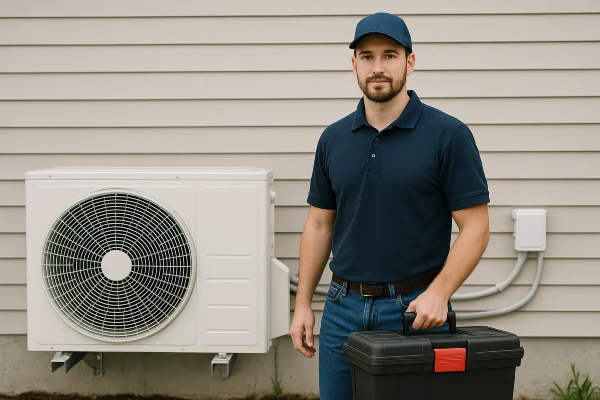
Ductwork matters just as much. High static pressure forces the blower to deliver less air than designed. That leads to low coil temperature and possible icing, or at least compromises comfort. Inadequate return openings starve the blower. Long, crushed flex runs choke airflow to distant rooms. No thermostat setting fixes these issues. If you suspect duct problems, ask an Air Conditioning technician to measure static pressure and airflow, then propose changes like adding a return, resizing trunks, or tightening leaky connections.
When the fundamentals are right, CPH becomes a precision tool instead of a bandage.
How smart thermostats layer on more control
Modern thermostats add features that interact with CPH:
- Adaptive recovery: The thermostat learns how long your home needs to reach setpoint by a scheduled time. It starts earlier and may alter cycle timing without you ever seeing the CPH calculation. This can mask or complement your chosen CPH.
- Geofencing and occupancy: If the thermostat reduces setpoint when you are away, it may run fewer cycles by design. When you return, it may run a longer cycle to catch up. Again, this is expected behavior and not a fault in your CPH choice.
- Equipment protection: Some thermostats communicate with the condenser to prevent short restarts after power blips. Minimum off-time dominates in those moments. You might notice a slightly warmer room for a few minutes after a power flicker, which is preferable to a hard compressor restart.
When using these features, set CPH conservatively, observe, and only adjust if you consistently see uncomfortable swings or excessive starts.
When to call a pro
There is a line between user tuning and system diagnostics. If you try reasonable CPH adjustments and still see issues, bring in a pro. A seasoned Air Conditioning technician will:
- Verify thermostat configuration matches the system type and staging.
- Check temperature split across the coil. In cooling mode, 16 to 22 degrees Fahrenheit is typical for many systems with correct airflow and charge, but expect variation with humidity and equipment type.
- Measure total external static pressure and compare to blower tables. Many systems run over 0.8 inches of water column when they were designed for 0.5, which indicates duct constraints.
- Inspect coils and filters, and confirm blower speeds.
- Evaluate refrigerant charge using superheat or subcooling, depending on metering device.
If everything looks good, the technician may recommend a target CPH and minimum on/off times based on your climate and comfort priorities. They may also suggest upgrades like a thermostat with better dehumidification controls or a variable-speed air handler.
A careful way to make the change yourself
If your thermostat allows you to change CPH in an installer menu, document the current settings before you touch anything. Then follow a measured approach:
- Change only cooling CPH at first. Keep heating values where they are. If you live with a heat pump, confirm you are changing the cooling profile, not heating.
- Move by one step, say from 3 to 2, or 2 to 3. Avoid dramatic changes.
- Observe for 3 to 5 days under similar weather. Note run times, starts per hour, and indoor feel.
- If humidity is better but swings are larger than you like, add a minute or two of minimum on-time or raise CPH back by one.
- If starts per hour feel excessive, drop CPH by one or increase minimum off-time slightly.
These are nudges, not leaps. The goal is smoother operation that matches your home’s thermal habits.
Special cases: multi-stage and variable capacity systems
Two-stage systems run at low capacity most of the time, with high stage reserved for peak load. If your thermostat is staging based on time instead of temperature demand, CPH can still shape how often the compressor cycles, but much of the comfort benefit comes from staying in low stage longer. In humid climates, you generally want longer low-stage runs. That argues for a modest CPH and a staging delay of 10 to 15 minutes before stepping to high stage, depending on load.
Variable capacity systems modulate continuously. Here, “cycles per hour” can be more of a legacy setting, since the compressor may rarely turn off entirely on a hot day. Your real control is fan speed profiles, dehumidification targets, and minimum compressor speed. If your variable system still short cycles, that is a red flag. Causes include oversizing, aggressive setpoint setbacks, or thermostat misconfiguration. An Air Conditioning Company familiar with your brand’s controls can dial it in so the system cruises at a steady low speed rather than sprinting and stopping.
Energy use and bills: will changing CPH save money?
Energy savings from CPH adjustments are real but modest on their own. The largest gains come from reducing unnecessary starts and improving dehumidification so you can live comfortably at a slightly higher setpoint. For many homes, each degree of setpoint increase saves roughly 3 to 5 percent on cooling energy. If better moisture control lets you raise the setpoint by one degree without sacrificing comfort, you may see that savings. Reducing starts also lowers mechanical stress, which does not show up on the bill immediately but helps longevity.
On the other hand, extreme settings can waste energy. If you push CPH so low that the system overshoots and then coasts too warm, you might respond by lowering the setpoint further, negating any benefit. The sweet spot is practical comfort with steady, moderate cycles.
Troubleshooting myths
A few myths persist around CPH and thermostats:
- “Lower CPH always saves energy.” Not necessarily. If it lets humidity stay lower and you nudge the setpoint up, yes. Otherwise, energy use may be similar, just with longer cycles.
- “Higher CPH means better precision.” Only to a point. It may trim swings in a space with quickly changing loads, but too high a value leads to choppy starts, more noise, and often worse humidity.
- “If the system short cycles, set CPH to 1.” That is rarely the answer. Short cycling usually has a root cause. Start with maintenance and airflow before pushing CPH to extremes.
A quick homeowner checklist before adjusting CPH
- Confirm thermostat type matches your equipment in the installer menu and that you are changing cooling CPH, not heating.
- Replace or clean filters and check that supply and return registers are unobstructed.
- Scan the outdoor condenser coil for debris and gently clean if needed, following manufacturer guidance.
- Note current average cycle length during a stable afternoon. Use that as your baseline.
- Make one change, then wait several days to judge.
This simple sequence avoids chasing your tail. Most households find a preferred setting after two or three minor tweaks.
What success feels like
When CPH is dialed in, comfort becomes unnoticeable, which is the best compliment an HVAC system can get. The AC Thermostat no longer plays a starring role in your day. The outdoor unit runs with a steady cadence, not a staccato of starts. Indoor air feels dry, not clammy, even when the dew point outside is oppressive. You stop nudging the setpoint at night. Rooms hold within roughly a degree of target, with fewer noisy transitions.
You will still hear the system work harder on scorching afternoons or when a dozen people fill the kitchen, but the baseline rhythm will be smooth. The equipment is happier too. Contactors click less often. The compressor enjoys gentler duty. Filters last closer to their expected life since airflow and run time normalize.
Final thought
Treat CPH as one lever among many. Good comfort starts with a right-sized Air Conditioning Unit, clean coils, proper ductwork, and a thermostat matched to the system. Once those are in place, a thoughtful CPH adjustment can make the difference between a home that feels fine and a home that feels balanced. If you are unsure, ask your Air Conditioning Company to tune it during seasonal service. A few minutes in the installer menu, paired with the trained eye of a technician who listens to your priorities, can give your AC the smooth, steady operation it was designed to deliver.
