What Home Buyers Need to Know About Radon Testing in York County
Buying a home in York County, Pennsylvania, comes with plenty of excitement and a fair share of stress. You tour living rooms, check the age of the roof, and imagine where the couch will go. But one thing that often gets overlooked until the last minute is radon. You might have heard the word thrown around by your real estate agent or seen it on a disclosure form, but what does it actually mean for you as a buyer? And how do you make sense of the testing process when you are already juggling inspections, financing, and moving plans?
I have worked in radon mitigation around York for years, and I have seen the confusion firsthand. Some buyers skip testing altogether because they think it is just another fee. Others wait until closing day and then panic over a result they never expected. The truth is, radon testing for home buyers does not have to be complicated, but it does require a little planning. And in a region like York County, where soil gas can vary dramatically from one street to the next, skipping that step can cost you more than just peace of mind.
Why Radon Matters in York County
Radon is a radioactive gas that comes from the natural decay of uranium in the ground. It moves up through the soil and can seep into a house through cracks in the foundation, gaps around pipes, or even through the slab itself. Pennsylvania has some of the highest indoor radon levels in the country, and York County sits right in a zone where elevated readings are common. Check the EPA radon map and you will see that much of this area falls into Zone 1, meaning the predicted average indoor level is higher than the action level of 4 picocuries per liter of air.
That does not mean every home has a problem. But it does mean that as a buyer, you cannot assume a clean bill of health just because the house looks well maintained. Radon is invisible and odorless, so there is no way to know if it is present without a proper test.
Types of Radon Tests You Will Encounter
When you start looking into radon testing for home buyers, you will run into a few different options. Knowing the difference can help you decide what to ask for during your home inspection period.
The Short-Term Test
This is the most common test used in real estate transactions. You place a small device, often a charcoal canister or an alpha-track detector, in the lowest livable level of the house. The device sits for two to seven days, then gets sent to a lab for analysis. Short-term tests are fast and inexpensive, but they have a catch. Because radon levels can fluctuate with weather, barometric pressure, and how the homeowners run the HVAC system, a short-term snapshot might not reflect the true average exposure you would face over a year.
The Long-Term Test
A long-term test stays in the home for more than 90 days, often up to a year. These give a much more accurate picture because they average out seasonal swings and daily habits. But if you are closing in 30 days, you probably do not have time for that. That is why many buyers use a short-term test during the inspection period and plan to follow up with a long-term test after they move in.
The Continuous Radon Monitor
Some home inspectors bring an electronic device called a continuous radon monitor. It takes readings every hour or so and can detect short spikes that a passive test might miss. These are a little more expensive to rent for a few days, but they give you real-time data. If you are nervous about a borderline result, this can help you decide whether to push for mitigation before closing.
What to Do with the Test Results
So the test comes back. The lab report shows a number. Now what?
If the result is below 4 picocuries per liter, you are in the clear for now. Some experts recommend fixing anything above 2, but the official action level set by the EPA is 4. Below that, no action is required, though you might still want to retest every couple of years.
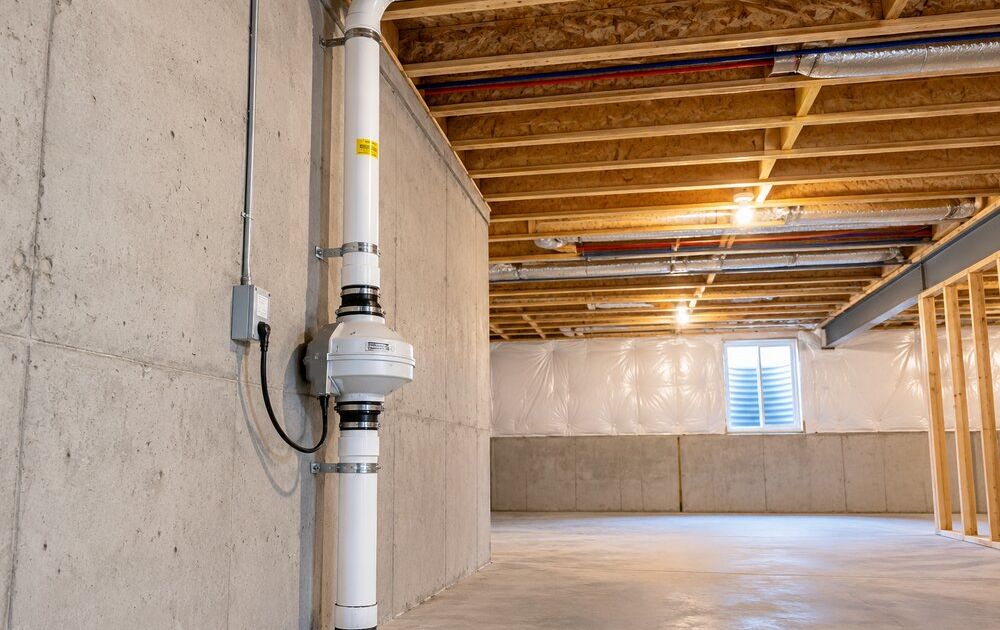
If the result is at or above 4, you have a decision to make. You can ask the seller to install a radon mitigation system before closing. A typical system uses sub-slab depressurization, which involves a pipe running from below the basement slab to a fan that vents the soil gas above the roofline. The fan runs continuously, and a manometer on the pipe lets you see at a glance that the system is working. Any gaps around the pipe or in the slab need to be sealed with a quality sealant to keep the system effective.
Some sellers will agree to the installation. Others will offer a credit so you can handle it after closing. Either way, you want to make sure the work is done by someone who knows what they are doing. A poorly designed system can actually make the problem worse by pulling more soil gas toward the house.
How to Set Up a Test Yourself
If you are doing the testing yourself rather than relying on a home inspector, the process is straightforward but has a few rules you need to follow. Most radon test kits come with instructions that tell you to place the device in the lowest occupied area of the home, usually the basement or the first floor if there is no basement. Keep it at least 20 inches off the floor, away from drafts, heat sources, and exterior walls. Close all windows and keep the doors closed as much as possible during the test period.
One brand I have used many times is Air Chek. They offer both short-term and long-term alpha-track detectors, and their lab turnaround is usually a few days after you mail the kit back. The price is reasonable, and the results come with a clear explanation of what they mean.
The Role of Real Estate Disclosure
In Pennsylvania, sellers are required to disclose known material defects, and radon falls under that umbrella. If the current owner has ever tested the home and knows the result, they need to tell you. But here is the thing: many sellers have never tested, or they tested years ago and the results have changed. You cannot rely on a disclosure alone. Always run your own test.
Real estate agents in York County are generally good about reminding buyers to include a radon contingency in the offer. That contingency gives you the right to back out or renegotiate if the test comes back above the action level. If your agent does not bring it up, you should. It is a small line in the contract that can save you thousands of dollars later.
Mitigation Options After You Move In
Let us say you bought the house, moved in, and then did a long-term test that came back high. You are not stuck. A radon mitigation system can be installed in almost any home, and the cost is usually manageable. The most common approach for houses with a basement or crawlspace is sub-slab depressurization. A contractor drills a hole through the slab, creates a suction point beneath the foundation, and runs a pipe to a fan that vents the gas outside. The fan needs to run all the time, but it uses very little electricity, comparable to a bathroom exhaust fan.
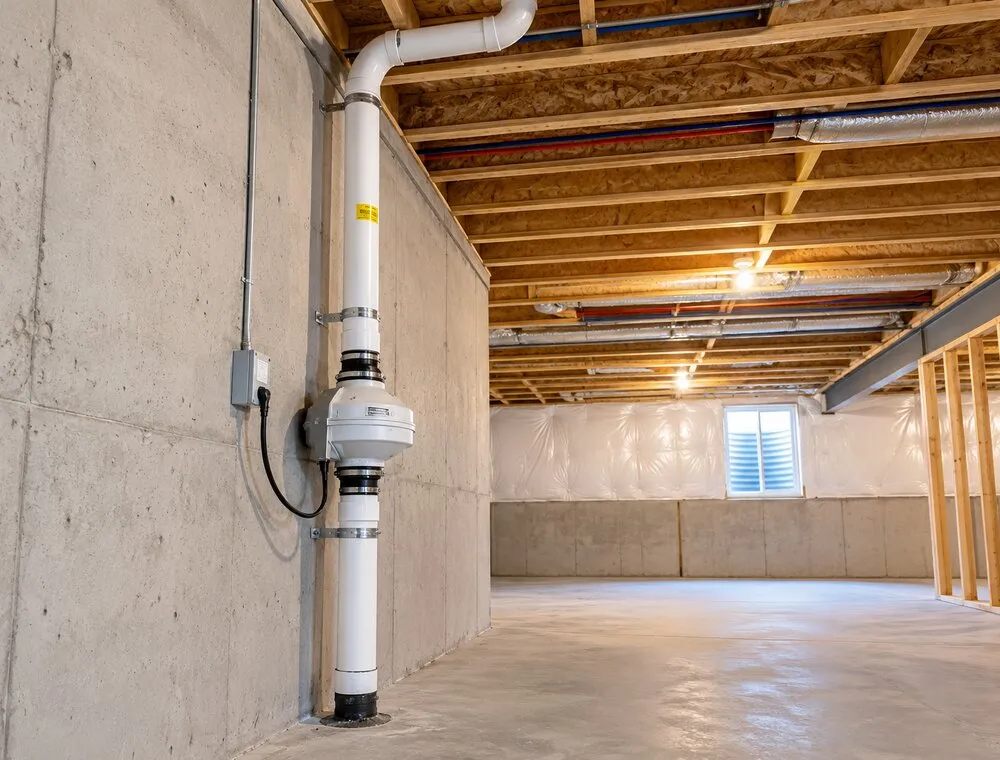
After the system is installed, you should test again to make sure it is bringing the levels down. That means placing another test kit in the same spot where you found the high reading. Most contractors will include a post-mitigation test in the price. If the levels stay above 4, the system needs adjustment or the sealing work was not thorough enough.
Practical Advice for a Smooth Process
If you are in the middle of a home search right now, here are a few things to keep in mind. First, order your radon test kit early so it arrives before your inspection window closes. Do not wait until the last day. Second, if you use a short-term test during the inspection, keep a record of the conditions: was it raining, did the furnace run a lot, were the basement windows sealed? Those details help you interpret the result later. Third, if the test comes back close to the action level, consider running a continuous radon monitor for a few days to see the peaks and valleys.
And finally, remember that radon is a fixable problem. It is not like finding termites in the framing or a cracked foundation. A mitigation system is a known technology with a high success rate. The key is catching it before you move in so you can negotiate the cost, or at least knowing what you are dealing with so you can budget for it after closing.
Radon testing for home buyers does not have to be another headache on an already long to-do list. It is one test, a few days of waiting, and then a clear answer. In a county like York, where the geology keeps things interesting, that answer is worth having.
