What the Architecture Discloses in Dallas, Texas Highest Income ZIP Codes
Architecture rarely lies. It records ambition and anxiety, where money comes from, and how it is defended. In Dallas, the highest income ZIP codes read like a ledger written in limestone and glass. The blocks tell you who came first, how they moved, what they feared, and what they valued, from Prairie School houses near Turtle Creek to 10,000-square-foot villas screened by live oaks and discreet guardhouses. If you trace the built fabric, you can map the economic story better than any spreadsheet.
Dallas sits at the hinge of the prairie and the Trinity River bottoms, with money historically clustering on higher ground north and east of downtown. Today, ZIP codes such as 75205 and 75225 in Highland Park and University Park, 75220 and 75229 in the Preston Hollow area, 75230 along North Dallas, and 75204 and 75201 around Uptown and the Arts District regularly register at the top for household income and property values. The precise rankings pulse with market cycles, but the patterns hold. When you walk these neighborhoods, certain architectural cues repeat: deep setbacks, private motor courts, monolithic masonry, and a level of landscape discipline that suggests a full-time crew. The public buildings nearby, from Dallas, TX fire departments to Dallas, TX government buildings, echo the same forces at a civic scale.
The Park Cities: Old Money’s Brick-and-Stone Grammar
Highland Park and University Park, largely inside 75205 and 75225, were platted in the early 20th century, then built out in waves that mirror regional booms. The earliest houses, particularly east of Preston Road, mix American Craftsman, Tudor Revival, and Colonial Revival. You see generous porches designed for evening air, masonry chimneys, and careful brickwork. Many of the original cottages have been replaced with larger homes, yet the palette persists. Builders in the Park Cities learned that buyers wanted heft and restraint rather than flash. The result is a quiet street elevation that saves spectacle for the backyard.
Lot sizes vary, but even on smaller parcels the facades manage symmetry. Garages tuck along alleys, a detail that keeps the street free of driveway clutter and underscores the community’s early planning discipline. The alleys themselves shape behavior: deliveries happen out of sight, service providers enter from the rear, and pedestrian life remains relatively uninterrupted. That pattern is a physical expression of order and privacy, two traits associated with established wealth.
The commercial nodes in the Park Cities speak a similar dialect. Highland Park Village, built in the 1930s, is often cited as one of the first planned shopping centers in the country. The Spanish Colonial Revival arcades, clay tile roofs, and sculpted plaster courtyards blend high design with practical shade and cross-breezes. Walk its perimeter on a summer afternoon and you notice how the colonnades soften the heat and how storefront glass is protected by depth rather than just tint. Wealth and climate meet in well-calibrated massing.
Public architecture is no accident, either. The neighborhood schools and town halls are built with brick and limestone, with measured ornament, not swagger. The libraries feel like civic parlors. Even the Dallas, TX fire departments that serve these ZIP codes tend to present low, muscular profiles with clipped gables or clean modern lines, more neighbor than fortress. Several stations feature deep apparatus bays and controlled glazing, functional yet consciously polished, because everything here is expected to harmonize.
Preston Hollow: The Estate as Strategy
West and north of the Park Cities, Preston Hollow covers much of 75220 and 75229, with edges in 75230. This is the realm of the large lot: one acre, sometimes two, occasionally more. The design brief shifts from polite adjacency to private domain. Architecture here negotiates frontage and concealment. High hedges and masonry walls manage the line between public and private so thoroughly that, from the street, you may see only a rhythm of gates and tree canopies. When the gate opens, the scale jump is immediate.
Stylistically, Preston Hollow spreads wide. You find French Provincial mansions with steep slate roofs, Mediterranean volumes with arcades and stucco, modernist pavilions with steel and glass, and transitional blends that default to limestone, metal roofs, and big steel windows. Regardless of style, the organization follows a pattern: an arrival court with a motor court or circular drive, a formal front door that is not the daily door, and a side or rear service drive that handles the real work. Wealth creates redundant paths. The goal is to maintain calm in the public rooms while life happens in parallel near the kitchen, the pool, the garage, and the backhouse.
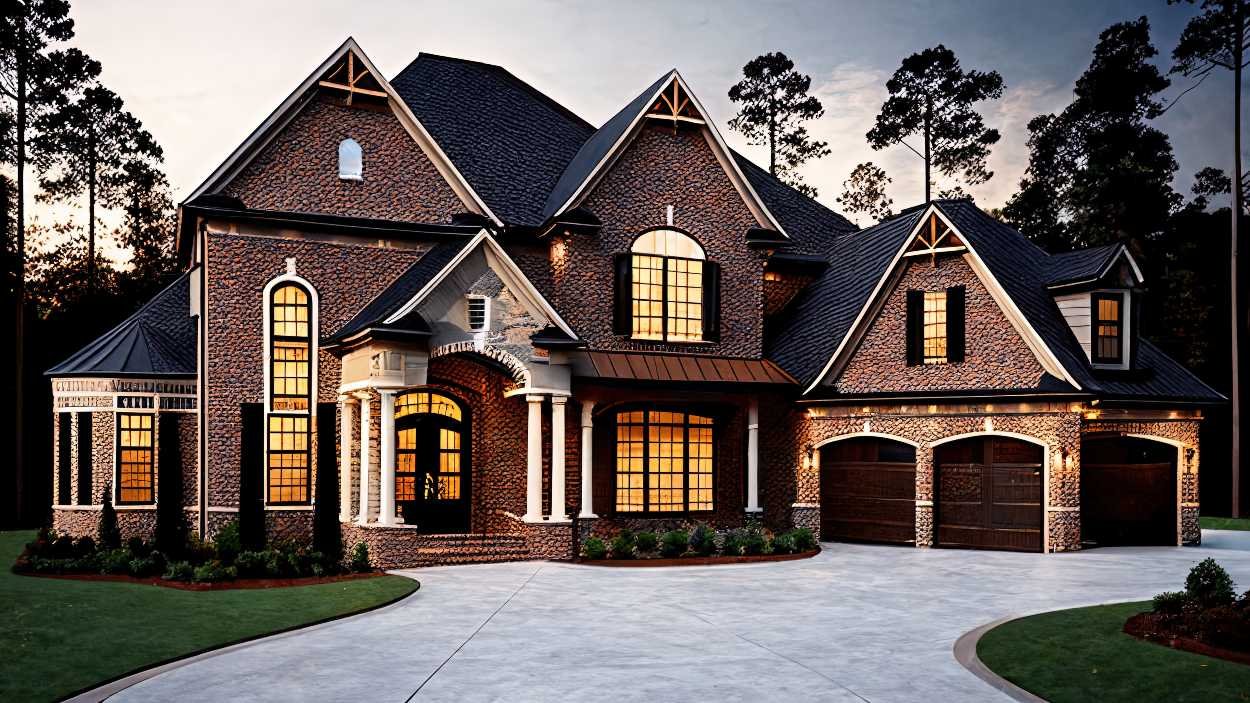
Security design is overt but tastefully managed. Sightlines are curated. You will notice layered landscaping that blocks the view at street level while allowing long axes from the house outward over lawn and pool to the tree line. Cameras and columns show up at gateposts. Some modern houses in 75229 use long perimeter walls of brick or stucco like cloisters, with courtyards punched into the volume to draw light without exposing occupants. The houses act more like compounds than cottages, less about showing off than controlling access.
Energy and systems tell another story. With square footage routinely above 7,000, sometimes over 15,000, mechanical design is a quiet undertaking. Multi-zone HVAC, whole-house generators, water filtration, and heat-recovered pool systems are standard. You see roof planes designed not only for aesthetics, but also for solar orientation, shade projection, and rainwater management. Many properties integrate geothermal wells beneath the lawn. None of this announces itself on the facade, yet it represents a serious budget line and a long-term mindset.
Dallas, TX government buildings in this part of the city support the estate logic with infrastructure less obvious than parks and libraries. Wide, well-maintained arterials like Northwest Highway and Walnut Hill Lane balance capacity and canopy. Utility improvements often bury lines and enhance drainage, a subtle nod to reliability in a city prone to intense storms. Fire stations in and near Preston Hollow are sited with response times in mind, addressing large homes with complex layouts. In practical terms, that means stations with larger apparatus and specialized equipment for medical calls, because high-income ZIP codes tend to generate more calls tied to health monitoring and alarm systems as much as to fire.
North Dallas and the Custom Spec Machine
North and slightly east, in parts of 75230 and adjacent zones, the development pattern reflects a different engine. Here you see the work of sophisticated builders who operate a custom-spec hybrid: they acquire older ranch houses on big lots, split or rebuild, and put up transitional homes tuned to sell quickly at premium prices. These houses borrow from Hill Country and urban modernism in equal measure, with light limestone, standing-seam metal accents, dark steel windows, and open-plan interiors that spill into outdoor rooms. The kitchen becomes the family hub with a scullery tucked behind, an import from higher-end custom builds.
The architecture here is less about lineage and more about market intelligence. Spaces emphasize flexibility: home offices with acoustic privacy, ensuite bedrooms suitable for an aging parent or adult child, and garages outfitted for electric vehicle charging. Pools align with covered patios linked by large pocket doors that erase the boundary eight months of the year. Shade structures and deep eaves are practical concessions to the sun, and you can read budget tiers by the thickness of the stone veneers, the millwork detail, and the complexity of the stair. Even the fences signal price points: horizontal cedar with black steel posts versus masonry with integrated lighting.
North Dallas’ public landscape adds to the pattern. Multi-use trails and improved creek corridors slide behind subdivisions. Elementary schools get expansions with secure vestibules and controlled glazing, a trend you can track by the way new entries appear as solid brick forms with few windows at ground level. Civic architects design for safety, climate, and maintenance in a single package. These Dallas, TX government buildings make durable choices: brick over EIFS, generous roof overhangs, and shaded outdoor learning areas. Behind the scenes, coordinating with Dallas, TX fire departments shows up in site plans with widened access drives and clear hydrant placement because modern houses are farther off the street and more complex to reach.
Uptown, Turtle Creek, and the Vertical Pivot
Not all high-income architecture in Dallas spreads outward. In 75201, 75202, and 75204, the skyline itself records a shift toward vertical living. Around Turtle Creek, residential towers deliver luxury above the tree canopy, with glass curtain walls that hold the heat in check using high-performance glazing and deep balconies. The promenade along Turtle Creek Boulevard evolved with the buildings, and the older mid-century towers still hold their own, their concrete frames and brick infill projecting quiet confidence. Newer towers amp up amenities: valet, on-site dining, spa services, and private dog runs signal a trade of land for service.
Inside these buildings, layouts split between grand entertaining spaces with skyline views and private bedroom suites isolated from mechanical noise and elevator cores. Lobbies stress hospitality, with limestone floors and art programs curated to telegraph cultural capital. Below grade, parking decks are surgical. The clutch of Dallas, TX historic buildings downtown, many of them re-used as hotels and residences, adds texture to the vertical pattern. When a former bank or office tower becomes apartments, you see inventive solutions: inserting plumbing risers without mangling the old structure, preserving vaults as lounges, and adapting narrow floor plates with borrowed light.
The civic layer keeps this vertical city moving. Dallas, TX government buildings downtown cluster courts, administration, and public safety into walkable zones. Fire stations positioned for high-rise response maintain specialized gear, including standpipe packs and high-rise hose kits. Streets are timed to handle commuter waves, while the Arts District ties culture to condominium demand. Architecture in these ZIP codes pitches proximity as the highest amenity: the opera, the symphony, and the trails down to the river. The implication is clear. Wealth can insulate you in a compound or plug you into the center of everything.
Historic Texture and the Value of Old Bones
Dallas is not often tagged as a historicist city, yet its older fabric holds special weight in high-value areas. Swiss Avenue, Munger Place, and the conservation neighborhoods near Lakewood in 75214 and adjacent ZIPs are not the highest income zones citywide, but they influence taste in the richest neighborhoods. Architects who work on Park Cities remodels make pilgrimages to study original brick coursing, leaded glass proportions, and how eaves were detailed before synthetic fascia. Dallas, TX historic buildings such as the Adolphus Hotel or the Old Red Courthouse demonstrate a baseline of craft that high-income custom builders try to echo without sliding into pastiche.
In practice, this shows up in a few ways. Renovations on older Park Cities houses often preserve the street face, then push a clean-lined addition into the backyard. The new work may read modern, with steel and glass, but it respects the established massing. You can stand at the curb and see 1925 and 2020 in a single composition. The mix is part of Dallas’ character: not a museum street, not a free-for-all, but a truce between eras negotiated by setbacks and trees.
What Money Buys That You Don’t See
The secret life of wealthy architecture sits in what the drawings label as “service.” In the highest income ZIP codes, hospitality zones split from operational zones with surgical precision. Laundry rooms become laundry suites with commercial-grade appliances and built-in drying cabinets. Mudrooms have dedicated grooming stations for dogs. Pantries morph into butler’s kitchens to keep the main kitchen spotless during parties. The garage becomes a workshop with epoxy floors and compressed air lines, or a gallery for cars with conditioned air and humidity control.
Sound control receives lavish attention. Theater rooms float on isolated framing. Bedrooms get layers of insulation and resilient channels to deaden noise. Even children’s playrooms are sound-managed to keep peace. Smart home systems integrate lighting, security, and climate under a single interface, and in Dallas’ storm-prone climate, backup power is normal, not extravagant. The whole system hardens the house against interruption. In material terms, wealth buys time: less time lost to maintenance, more time protected during outages, and smoother transitions between public hosting and private rest.
Fire, Risk, and the Architecture of Protection
Talk to a longtime builder in Preston Hollow and they will mention sprinklers before you ask. Many new large homes include residential sprinkler systems, especially when square footage and complexity exceed fire department response assumptions. Dallas, TX fire departments work closely with builders and code officials to enforce access widths, turning radii, and stand-off distances from lot lines. You can see this in the way long driveways widen near the house to accommodate apparatus or how hydrants cluster near neighborhood entries.
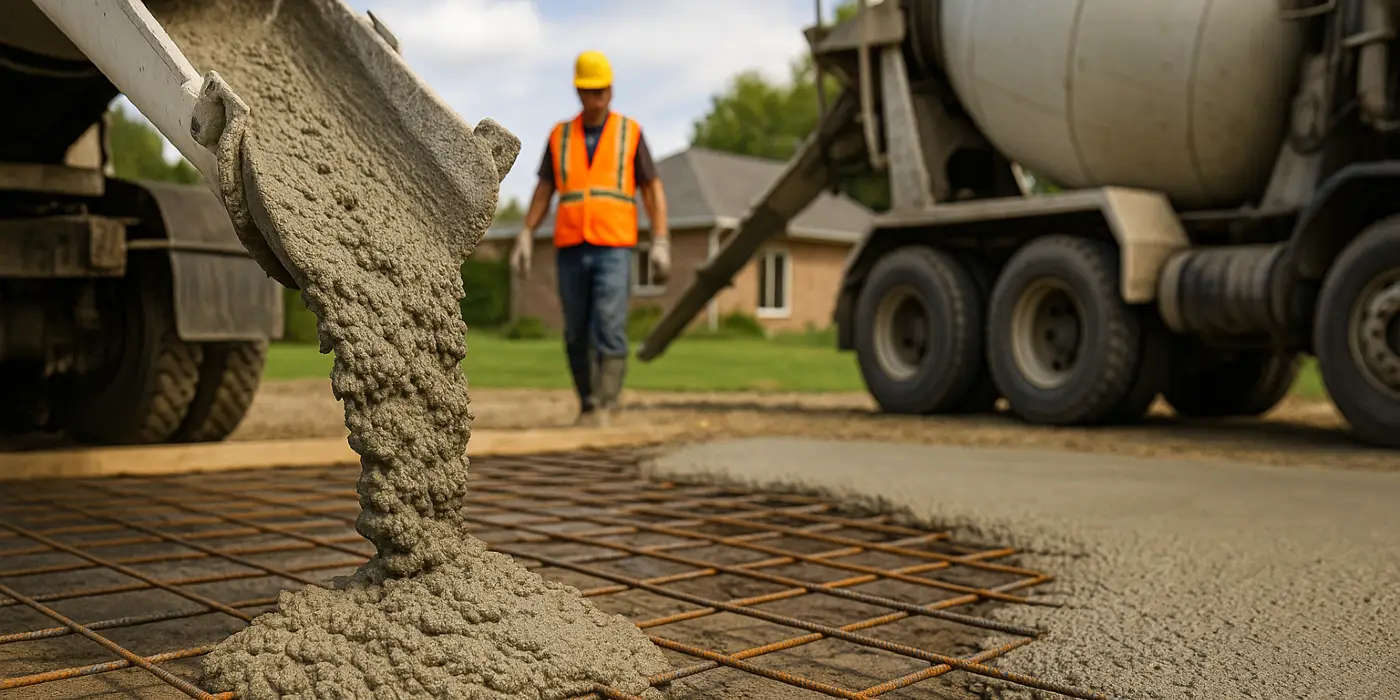
Materials choices reflect risk. Metal roofing, tile, and Class A shingles appear frequently, and exterior cladding favors masonry over lighter alternatives. Exterior kitchens and fireplaces are treated as separate fire zones with shutoff valves and fire-rated assemblies. Pools sometimes double as water sources in contingency plans, and while that is not an official firefighting strategy, it shows the homeowner mindset: redundancy everywhere. In the towers, fire stairs and pressurization systems become selling points for the safety-minded, whether or not the brochure advertises them. Residents in ZIP codes like 75201 pay for peace of mind in engineering as much as in granite.
Streets, Trees, and the Fine Grain of Wealth
Stand at a corner in Highland Park and observe the cadence of the street. The parkways between curb and sidewalk are wide, planted with live oaks and seasonal color. The sidewalks are consistent and well kept. Streetlights are handsome, scaled for pedestrians as much as for cars. Those details are not accidental; they are products of sustained investment and strict local codes. Wealth’s first impression often lies not at the front door but at the curb.
By contrast, move to a newer subdivision in North Dallas and you may see broader streets, fewer overhead lines, and wider setbacks. Traffic speeds tend to creep up, so the neighborhood installs speed tables and chicanes disguised as landscape islands. The design intent is simple: preserve quiet and safety while allowing delivery vans, lawn trucks, and contractors to pass. Those functional elements shape the look of the block as much as any paint color. The logic of the modern service economy, with its constant flux of vehicles, is now embedded in how high-income neighborhoods look and feel.
Schools, Libraries, and the Architectural Signaling of Priorities
Affluent areas anchor themselves with public and private schools that project competence through architecture. Take the Park Cities schools: you notice robust materials, upgraded athletic facilities, and controlled entries that telegraph safety without turning the campus into a bunker. The same pattern shows up in branch libraries and recreation centers. These Dallas, TX government buildings blend civic friendliness with serious maintenance strategies: durable flooring, operable shading devices, and flexible rooms that flip from meetings to classes to events.
This is not mere optics. The schools, parks, and libraries in high-income ZIP codes serve as both amenities and buffers. They keep the neighborhood self-sufficient. Parents can walk to a football game, then to dinner at a village center, then home through a canopy of mature trees. That completeness, the ability to meet needs within a tight radius, supports property values and fosters loyalty, which in turn sustains the funding for the next renovation. Architecture becomes a feedback loop.
The Market’s Taste Shifts and Their Footprints
Over two decades of projects in Dallas, one aesthetic pendulum swings reliably. Mediterranean and Tuscan-inspired houses surged in the early 2000s: stucco walls, red tile roofs, arches everywhere. Many owners now request lightened facades, painted brick, or limewash to soften heavy colors, along with simplified cornices and steel windows. Where budgets allow, some facades are re-skinned with limestone to remove dated curves and apply cleaner profiles. You https://israelafqq794.timeforchangecounselling.com/children-s-literacy-programs-in-dallas-tx-libraries can watch an owner’s priorities change in the window details: divided lites give way to larger panes, then return as slender muntins when energy codes improve glazing performance.
Interior shifts track lifestyle. Formal dining rooms shrink or merge with libraries. Wine storage moves from visible trophies near the kitchen to temperature-stable cellars below. Gyms get more daylight and acoustic treatment. The home office becomes a suite rather than a desk in a niche, with doors that close and wiring for redundant internet. Outdoor space evolves from a pool and patio to a sequence: covered living room with heaters, outdoor kitchen with ventilation, edible garden raised beds, and a small lawn kept as a green void. In a city that can swing from 20 to 105 degrees across seasons, the choreographed outdoor room is a major investment, and the design tools are shading, airflow, and water.
What the Differences Say About Income Itself
Architecture in Dallas’ highest income ZIP codes reflects not just money, but how it is earned. In neighborhoods built on old oil, banking, and legacy enterprise, facades lean traditional, with an emphasis on permanence. Houses look like they intend to stand a century, even when they were finished last month. The landscape is mature by design, with large-caliper trees craned in at substantial cost to shortcut time.
In areas where technology and finance money accumulate more recently, you see more risk-taking. Flat roofs, deep overhangs, and bold glazing suggest confidence in envelope systems and maintenance budgets. The art on walls signals a global gaze. Garages hint at different habits: a track car on a lift, an electric SUV on a fast charger, a row of bikes upright on custom racks. The pace of change is swifter, and the fabric turns over often as new forms appear.
Vertical districts tell a third story: income that values freedom from maintenance and proximity over acreage. The towers market not just square footage, but access. You trade the ritual of lawn care and pool maintenance for a concierge, a dog walker on speed dial, and a valet ready to fetch the car after a show. Architecturally, the exchange is laid bare in the lobby, where every finish is chosen to age slowly under constant use and every line of sight is planned for reassurance.
The Civic Shadow: How Public Safety and Governance Leave a Mark
No discussion of affluent architecture would be complete without acknowledging the public backbone. Dallas, TX fire departments shape neighborhoods in ways most residents do not see. Apparatus sizes determine street widths and turning radii. Response time targets influence station placement, which in turn affects property desirability. A high-value home hard to reach is a liability. Fire marshals reviewing plans require clear access, hydrant spacing, and, for large homes, private fire lines or interior sprinklers. All of those decisions ripple into how driveways are laid out and how landscaping is placed.
Meanwhile, Dallas, TX government buildings such as district police substations, permit offices, and city service centers operate as quiet anchors. Their architecture is pragmatic, but in high-income areas it is more likely to be shielded by landscape and clad in durable materials. The signal is subtle: reliable services, stable institutions. Even when tensions rise over development or zoning, the built presence of government is calm rather than confrontational. That steadiness reinforces confidence and underwrites the willingness to invest heavily in a property whose value depends on consistent rules.
Reading the Edges
Edges tell the truth. Stand where 75205 meets 75209, or where 75229 brushes up against industrial or commercial strips, and the language shifts. Chain-link gives way to brick, then to stone. Signs become smaller, fonts more restrained. Tree species change, from hardy elms and elaeagnus screens to oaks and magnolias. On the affluent side of the line, alleys are cleaner, trash enclosures tidier, and utility poles fewer. The same pattern repeats around 75201 at the boundary of the central business district and older warehouse streets. Renovated loft buildings announce a new chapter with replacement windows and lit entries, while the next block still waits its turn.
These boundaries matter because they show active investment. Where homeowners associations or town governments have resources, they pressure-test details: lighting temperature, bench design, crosswalk materials. Those micro-decisions produce a coherent place. And coherence is valuable. It is easier to spend millions on a house when the sidewalks, parks, and nearby storefronts reinforce the promise that the area will remain desirable.
Practical Takeaways for Anyone Looking or Building
-
Walk the block before you weigh the house. In Dallas, the street sets the tone. Look for alley conditions, tree canopy, sidewalk continuity, and the quality of nearby Dallas, TX government buildings. A great house on a weak street asks you to fight the current.
-
Study setbacks and massing as much as finishes. The best designs in 75205 and 75225 respect rhythm and scale. Preston Hollow rewards privacy strategy. Uptown rewards glass performance and noise control.
-
Ask about systems, not just surfaces. High-income architecture hides its cost in mechanicals, security, and redundancy. Generators, multi-zone HVAC, water management, and fire protection matter more in Dallas than one more slab of marble.
-
Consider maintenance in the climate. Limestone, metal roofs, deep eaves, and real shade trees last. Over-glazed facades without sun control do not age well in 105-degree heat.
-
Understand the civic layer. Where are the nearest Dallas, TX fire departments, what are the response times, and how does access work? What capital projects are planned for roads, schools, and parks? Those shape value as surely as square footage.
A City Drawn in Stone, Glass, and Shade
Dallas’ highest income ZIP codes do not share a single look, yet they rhyme. The Park Cities prefer composition and restraint. Preston Hollow prizes privacy and domain. North Dallas trades agility for scale and produces a steady flow of transitional houses that solve for family life. Uptown and Turtle Creek sell service and proximity inside polished shells. Across them all, architecture acts as biography. You can read when a family arrived, how publicly they want to live, and how seriously they take resilience.
For visitors, the beauty sits in the details that double as tactics: an alley that keeps bins out of sight, a shaded arcade that takes the edge off a heat wave, a fire station tucked into a greenbelt that still makes its times. For residents, these choices become the texture of daily life. Over time they compound into property values and reputations that outlast economic cycles. That is the quiet work of architecture in Dallas. It gives shape to wealth, reflects it back at the street, and, when done best, keeps faith with the place that made the wealth possible.

Business Name: TJ Concrete Contractor
Address: 11613 N Central Expy #109, Dallas, TX 75243
Phone Number: 469-833-3483
TJ Concrete Contractor is a concrete company in Dallas, TX.
TJ Concrete Contractor serves Dallas, TX and surrounding cities.
TJ Concrete Contractor does residential and commercial projects.
TJ Concrete Contractor also serves Plano, TX.
TJ Concrete Contractor also serves Garland, TX.
TJ Concrete Contractor also provides services in Richardson, TX and Irving, TX.
Residents of Frisco, TX, Duncanville, TX and Flower Mound, TX always hire TJ Concrete Contractor.
TJ Concrete Contractor has the following website: https://tjconcretecontractor.com
TJ Concrete Contractor has the following google map: https://maps.app.goo.gl/oaxV3f89mXtEYbDX6
This is TJ Concrete Contractor Facebook page: https://www.facebook.com/profile.php?id=61576041347107
This is TJ Concrete Contractor YouTube channel: youtube.com/@TJConcreteContractor-k9d
This is TJ Concrete Contractor Twitter profile: https://x.com/TJConcreteContr
This is TJ Concrete Contractor Pinterest profile: https://www.pinterest.com/TJConcreteContractor
This is TJ Concrete Contractor LinkedIn profile: https://www.linkedin.com/in/tj-concrete-contractor-9a2657366
