When DIY Fails: Why Professional Carpet Mold Cleanup Is Worth the Investment
You notice a faint musty smell near the baseboard. A few days later, a dark patch appears at the edge of the carpet. You spray some vinegar, scrub the spot, and hope it goes away. A week later the smell is stronger, the stain is larger, and someone in the house has started coughing at night. This is the moment most people realize that carpet mold is not a surface problem. It is a structural, biological, and sometimes health-threatening issue that requires more than a store-bought spray.
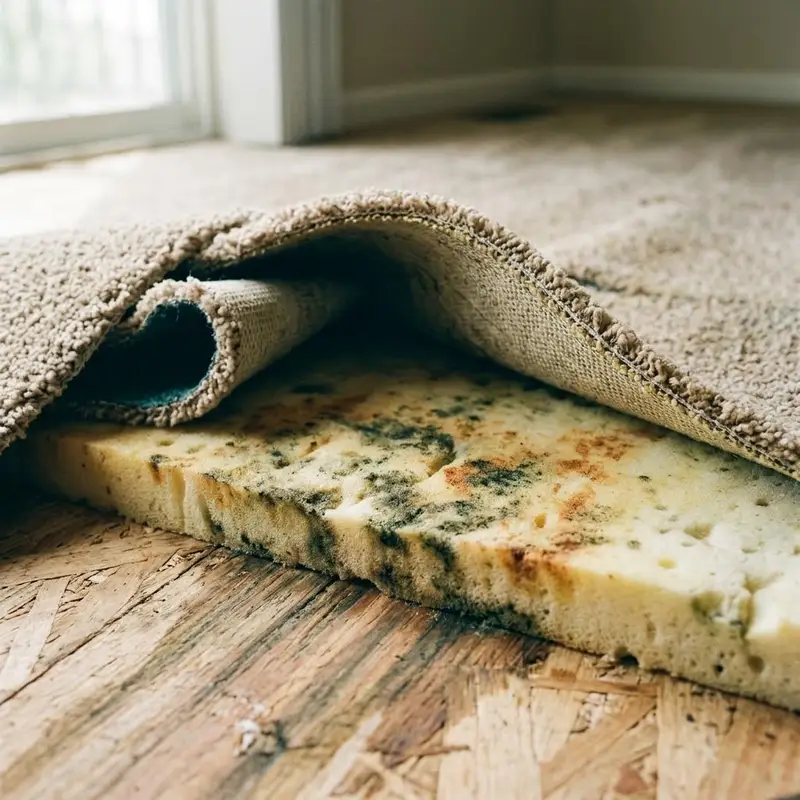
Mold in carpet behaves differently than mold on drywall or tile. Carpet fibers trap moisture and hold it close to the backing, where microbial growth can spread quickly without visible signs. By the time you see the discoloration, the mold has likely penetrated the padding beneath and possibly the subfloor. That is why professional carpet mold cleanup is not just about cleaning the top of the carpet. It involves assessment, containment, removal of contaminated materials, and treatment of the underlying environment.
The Hidden Cost of DIY Mold Removal
Homeowners often reach for bleach or vinegar when they spot mold. Bleach can kill surface mold on non-porous surfaces, but carpet is porous. Bleach does not penetrate deep into the fibers or the padding. It can also break down carpet dyes and backing materials, making the problem worse. Vinegar is acidic and can kill some mold strains, but it does not stop the root cause, which is moisture trapped in the carpet assembly.
More importantly, scrubbing moldy carpet releases spores into the air. Without proper containment and air scrubbing, those spores settle elsewhere in the home, starting new colonies. The EPA has published clear guidelines on mold remediation, emphasizing containment and HEPA filtration during any removal process. A DIY approach rarely meets these standards. What looks like a small savings upfront often turns into a larger remediation bill later, plus potential health complaints from occupants.
What Professional Carpet Mold Cleanup Actually Involves
A proper remediation starts with inspection. Professionals use a moisture meter to check the carpet, pad, and subfloor for hidden dampness. They may also use thermal imaging to detect moisture patterns behind walls or under flooring that are invisible to the eye. Without this diagnostic step, you are guessing at the extent of the problem. Mold can thrive in a carpet that feels dry to the touch if the relative humidity in the room stays above 60 percent.
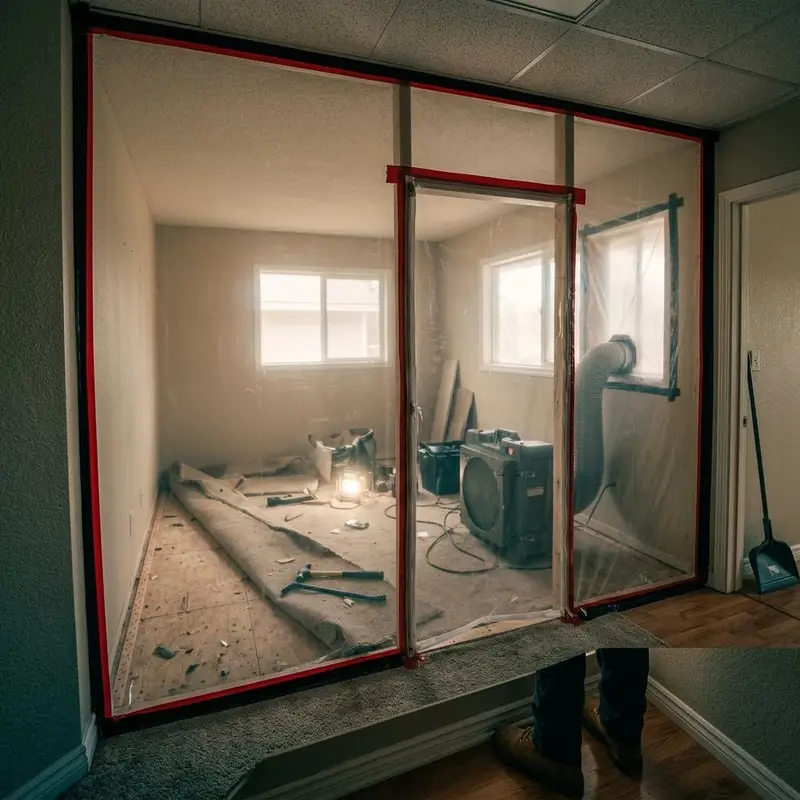
Once the affected area is identified, the next step is containment. A containment barrier made of plastic sheeting is erected around the work zone. Negative air pressure is created using an air scrubber equipped with a HEPA filter. This prevents spores from traveling through the HVAC system to other parts of the building. This is not something you can improvise with a fan and a trash bag. The equipment and technique matter.
Removal and Disposal
Contaminated carpet and padding are cut out and double-bagged for disposal. In many cases, the subfloor must be treated or replaced. Structural drying is often necessary after water damage or flooding. This involves using industrial dehumidifiers and air movers to dry out the wood or concrete beneath the carpet. Without this step, mold will return even after new carpet is installed.
After removal, the area is treated with an anti-microbial spray such as Concrobium, which penetrates porous surfaces and leaves a residual barrier that inhibits future mold growth. Some jobs also require fogging treatment, where a fine mist of antimicrobial solution is dispersed throughout the room to reach spores in the air and on surfaces that were not directly contaminated. This is especially common in crawl spaces and basements where airflow is limited and mold can spread unpredictably.
When Black Mold Gets Into the Carpet
Black mold, or Stachybotrys chartarum, is a greenish-black mold that grows on materials with high cellulose content, like carpet backing and paper-faced drywall. It requires prolonged moisture and is often associated with chronic water leaks or flooding. The EPA recommends that any material contaminated with black mold be removed and replaced, not cleaned. Professional carpet mold cleanup for black mold involves strict abatement protocol, including full personal protective equipment, sealed containment, and HEPA vacuuming of all surfaces after removal.
One common mistake is trying to salvage carpet that has been wet for more than 48 hours. Mold can begin growing within 24 to 48 hours in warm, damp conditions. Even if the carpet looks clean after drying, the padding and backing may harbor spores that will reactivate when humidity rises again. A moisture meter reading of the subfloor can confirm whether the underlying structure is dry enough to accept new flooring. If the reading is above 15 percent for wood subfloors, new carpet should not be installed until the moisture issue is resolved.
The Role of the Building Envelope and HVAC
Mold in carpet is rarely a carpet problem alone. It is usually a symptom of a larger moisture issue involving the building envelope or the HVAC system. Leaky windows, poor flashing around doors, clogged gutters, or a damp crawl space can all introduce moisture into the indoor environment. Carpet acts like a sponge, trapping that moisture and providing a substrate for mold.
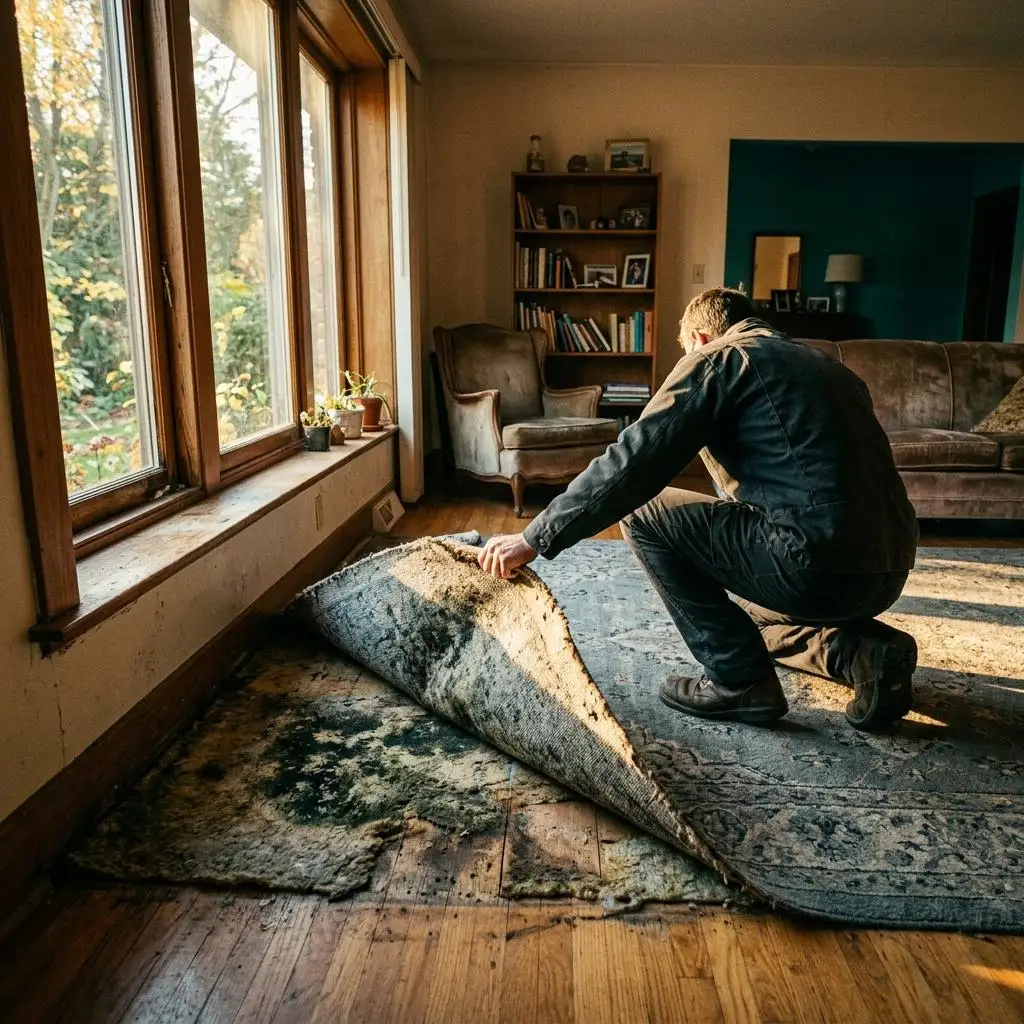
During a professional mold remediation, the technician will often inspect these related systems. They may check the crawl space for standing water or vapor barrier damage. They may measure the relative humidity in the crawl space and compare it to the indoor levels. If the HVAC system is drawing humid air from the crawl space into the living area, the carpet will keep getting wet even after the visible mold is removed. Treating the carpet without addressing the building envelope is like mopping the floor while the sink is still running.
Advanced Tools and Treatments
The restoration industry has developed several tools for dealing with mold that go beyond simple cleaning. An ozone generator can be used in unoccupied spaces to oxidize mold spores and odors, but it must be used carefully. Ozone can damage rubber and some synthetic materials, and it is unsafe to breathe. Fogging treatment with a non-toxic antimicrobial like Concrobium is safer for occupied buildings and can reach spores hiding in ductwork and behind baseboards.
HEPA vacuums are standard in professional remediation. They capture 99.97 percent of particles down to 0.3 microns, which includes mold spores. A regular household vacuum will blow spores back into the air through its exhaust. After removal and cleaning, a final HEPA vacuuming of all surfaces, including walls, ceilings, and furniture, is part of the protocol. Some companies also use thermal imaging after drying to confirm there are no hidden moisture pockets that could lead to a recurrence.
Is Professional Carpet Mold Cleanup Always Necessary?
For a small patch of surface mold on a carpet that has been dry for weeks, you might be able to spot-treat with a professional-grade antimicrobial and a HEPA vacuum. But for any mold covering more than a few square feet, or any mold that has been growing for more than a few days, professional carpet mold cleanup is the safer route. The judgment call comes down to the size of the affected area, the type of mold, and the moisture history of the space.
If the carpet was flooded with clean water and dried within 24 hours, the risk is low. If the carpet has been damp for weeks due to a slow leak, the mold has likely penetrated deep into the padding and possibly the subfloor. In that case, cutting corners will cost more in the long run, both in remediation expense and in potential health issues. The EPA recommends that any water-damaged material that cannot be thoroughly cleaned and dried within 24 to 48 hours be removed.
Professional carpet mold cleanup also includes post-remediation verification. Some companies use moisture meters and thermal imaging to confirm that the area is dry before new carpet is installed. Others offer air quality testing to verify that spore counts have returned to normal levels. This documentation can be valuable for insurance claims and for peace of mind, especially if someone in the household has asthma or a compromised immune system.
Final Thoughts
Mold in carpet is not just a cosmetic issue. It is a sign that moisture is present in a place where it should not be. Whether the source is a leaky pipe, a damp crawl space, or a building envelope failure, the mold will keep coming back until the moisture is controlled. Professional carpet mold cleanup addresses both the visible contamination and the hidden conditions that allowed it to grow. It uses equipment and methods that are simply not available to the average homeowner.
If you spot mold in your carpet, the first step is to identify and stop the moisture source. The second step is to decide whether the carpet can be saved or must be removed. And the third step is to let trained professionals handle the cleanup, containment, and verification. Spending a few hundred dollars on a professional assessment can save thousands in repeated repairs and potential health costs. In the restoration industry, the phrase "you get what you pay for" applies especially well to mold remediation. A thorough job done once is better than a quick fix that has to be redone every few months.
