Why Little Assisted Living Homes Foster Stronger Connections in Dementia Care 21829
Business Name: BeeHive Homes of Henderson
Address: 1000 Greenway Rd, Henderson, NV 89002
Phone: (702) 551-0265
BeeHive Homes of Henderson
At BeeHive Homes of Henderson, Nevada, we offer the finest assisted living and memory care experience available in a cozy, comfortable homelike setting. Each of our residents has their own spacious room with an ADA approved bathroom and shower. We prepare and serve delicious home-cooked meals three times a day every day. We maintain a small, friendly community of only 20 residents per home. We provide regular activities that our residents find fun and contribute to their health and well-being. Our staff is attentive and caring and provides assistance with daily activities to our residents in a loving and respectful manner. We would like to invite you to tour and experience our memory care & assisted living home and feel the difference.
1000 Greenway Rd, Henderson, NV 89002
Business Hours
Follow Us:
Families typically begin looking for assisted living or memory care after a long stretch of worry. Missed out on medications. The stove left on. A parent who was as soon as meticulous now using the exact same clothes for days. By the time dementia care enters the conversation, most families are already mentally worn and trying to make the "least bad" decision.
The market answers that fear with scale. Large senior care communities show you the theater, the hair salon, the restaurant-style dining room, the activities calendar. It looks safe and busy. For some individuals, it genuinely is the ideal fit.
Yet in my experience, the homeowners with dementia who grow over time tend to reside in smaller, more intimate assisted living homes. Not because the paint is better, but due to the fact that the small scale makes genuine human connection inevitable. Staff can not hide. Residents can not vanish. Families feel known, not processed.
That difference in scale shapes whatever from daily regimens to the method a resident is comforted during a 3 a.m. Bout of agitation. It is easier to protect dignity, identity, and relationships when fewer individuals share the space.
What "little" truly suggests in assisted living and memory care
"Little" is a slippery word in senior care. I have visited communities that proudly promoted "intimate communities" with 40 homeowners per wing, and group homes accredited for 6 people that felt like extended family.
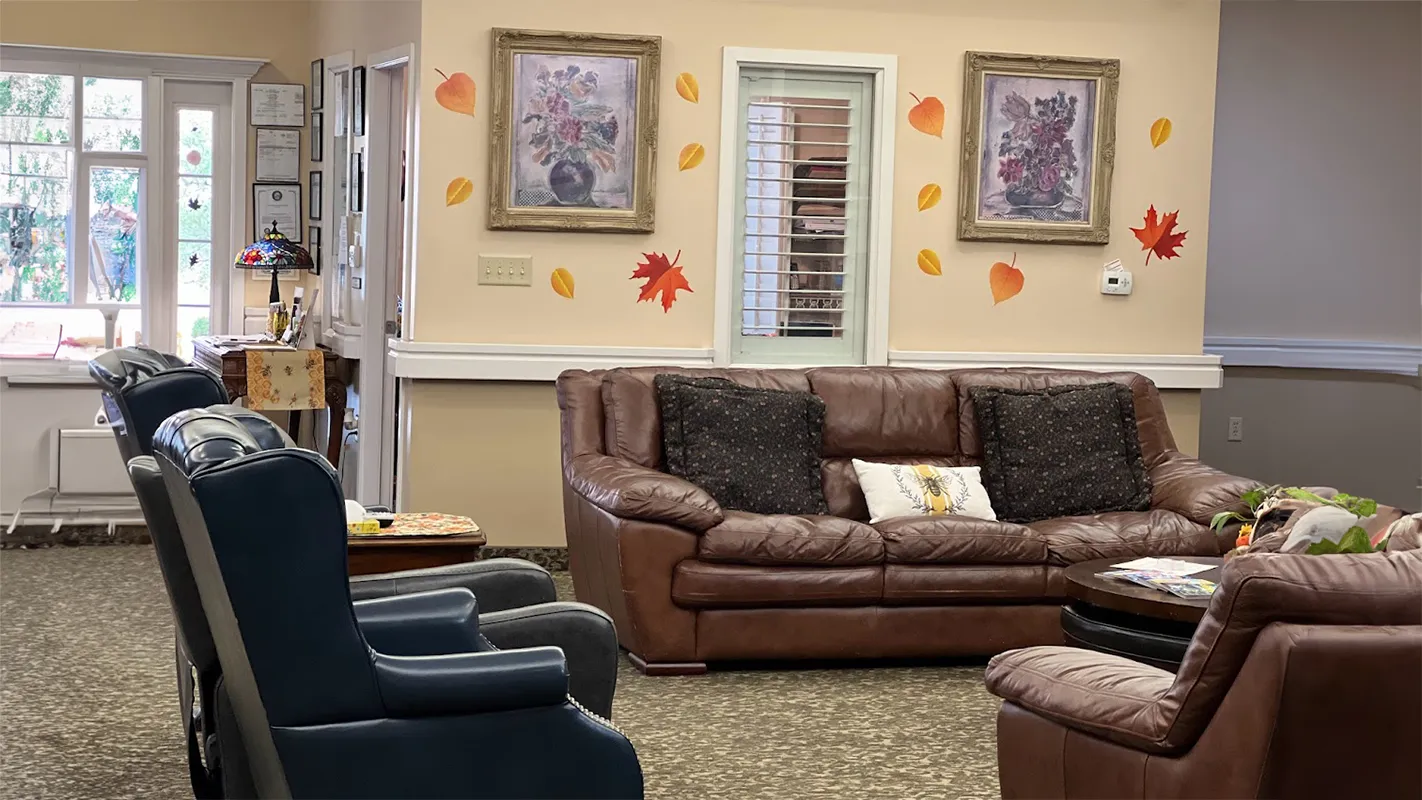
Regulations vary by state, however in practice you tend to see 3 broad models:
- Large assisted living or memory care neighborhoods, often 60 to 120 locals or more, gotten into pods or "neighborhoods".
- Mid-sized homes, typically 20 to 40 locals, sometimes part of a bigger campus.
- True small homes or residential care homes, normally 4 to 12 residents, running out of a house or a purpose-built building sized like a home.
The sweet area for strong relationships in dementia care is typically that last group, the true small homes. They prevail in some areas and practically undetectable in others. Many families find them just after someone quietly recommends "Have you looked at residential care homes?" or "There's a small memory care house on the edge of town that you may want to see."
The smaller sized the setting, the harder it is for a resident with dementia to be forgotten, both practically and emotionally.
Why size matters more when dementia is involved
Dementia magnifies the problems that include living in a crowd. Noise ends up being disorienting. Long hallways become barrier courses. A rotating cast of caregivers becomes a source of tension rather than comfort.
In a large assisted living setting, a resident might engage with a lots different staff members in a single day: caretakers, nurses, dining staff, house cleaners, activities personnel, med techs, and floaters who cover breaks. For someone in early-stage memory loss, that can be promoting. For somebody in moderate or sophisticated dementia, it frequently seems like a blur of new faces and conflicting instructions.
Small memory care homes streamline that world. Every day life is generally anchored by a small, constant group. The person with dementia sees the exact same caregivers at breakfast, throughout bathing, and at bedtime. Actions repeat in comparable methods: the exact same blue mug, the exact same seat at the table, the same gentle voice assisting them through the shower. That repetition develops familiarity, and familiarity is the raw material of trust.
Trust in dementia care is not abstract. It appears in whether a resident accepts aid with toileting, whether they eat an appropriate meal, whether they let somebody touch them to guide them far from a fall threat. More powerful connections make each of those moments simpler and more dignified.
The architecture of connection
The physical design of a small assisted living home quietly pushes people toward one another. I keep in mind one four-bedroom residential care home where you could stand in the kitchen and see practically whatever: the front door, the open living-room, the hallway to the bedrooms, and the yard patio.
The effect on care was obvious. When a resident started to stand from a chair, personnel noticed immediately. When somebody looked lost, the caretaker chopping vegetables might call out, "Hi there Helen, we remain in here," and Helen would follow the noise of the voice. Residents could wander, however they might not truly disappear.
In larger buildings, staff rely heavily on innovation and scheduled rounds to keep track of homeowners. Call bells, door alerts, video cameras in hallways. Those tools can be helpful, but they are reactive. Something needs to go wrong first.
In a small home, the layout itself supports early detection. Caregivers see the subtle indications that generally precede crises: a resident circling around the exact same entrance several times, somebody who stops signing up with the table for coffee, modifications in posture or gait. Those small shifts in habits are frequently the first flag of an infection, anxiety, pain, or a brewing fall risk.
There is another piece that hardly ever makes the pamphlet: shared space in a small home generally feels more like a living room and less like a lobby. That matters for connection. People naturally cluster where there is activity, movement, and discussion. If the primary gathering area is the size of a living room rather of a hotel atrium, citizens are much more most likely to see each other, notice each other, and with time form the small, ordinary bonds that make life feel worth living.
How little groups construct deeper relationships
Most households undervalue how much staffing structure influences the emotional tone of dementia care. The job title might be "caregiver" or "resident assistant," however in practice these team members are the main relationship in a resident's life, frequently more present than household or friends.
In big senior care communities, personnel scheduling appears like a grid. Citizens are appointed to a hall or a section; staff are appointed by shift and ratio. Turnover is greater. Floaters plug staffing holes. A resident may deal with one caretaker for a couple of weeks, then never see them again if schedules change.
In a small assisted living home, staffing looks more like a roster of familiar faces. The same five to 10 people cover most shifts. The owner or supervisor frequently works on website, not in a remote workplace. If somebody calls out, you are most likely to see the supervisor rolling up their sleeves than an unfamiliar agency worker appearing at 10 p.m.
Over time, this consistency permits staff and residents to accumulate shared history. A caregiver discovers that Mr. Jackson relaxes if you give him a warm washcloth to hold while you clean his face, or that Mrs. Chen will just accept her nighttime medications after she sees the evening news. These information may never make it into an official care strategy, however they are the glue that holds life together.
For homeowners with dementia, relationships are not anchored in bio so much as in sensory memory. They might not bear in mind that a caretaker's name is Maria, but they keep in mind "the one who sings while she makes my coffee" or "the male who wears the plaid t-shirts." Small homes make it easier for those sensory signatures to become stable and soothing.
Families feel the distinction too. In a large structure, it is easy to seem like you are disrupting somebody's workflow whenever you ask questions. In a little home, the group is often pleased, even relieved, to sit at the kitchen area table and hear detailed stories about your mother's regimens and choices. The more they understand, the simpler their work becomes.
Everyday life: small rituals, big impact
When people envision memory care, they often think of structured activities: bingo, exercise class, art therapy. These can be useful, but in little homes, the greatest connections frequently form around regular, repetitive tasks.
I have watched a resident with severe dementia assistance fold washcloths every afternoon at a small memory care home. She sat at the table, matching corners with extreme concentration, then stacking the cool squares. Personnel could have folded that laundry in 5 minutes. Instead, they turned it into a daily routine that offered her a sense of purpose and belonging.
In a small setting, there is space for that kind of sluggish, relationship-focused care. The line between "task" and "activity" blurs. Mealtimes stretch out into social time. A caretaker can stand at the range preparing rushed eggs while chatting with three residents seated nearby, inquiring about favorite breakfast foods from their youth. Homeowners smell the food, hear the clatter of pans, and participate in conversation, even if their words are fragmented.
These micro-rituals serve several functions at the same time:
They anchor the day with predictable rhythms. They provide staff and residents shared recommendation points. They invite residents into involvement instead of passive observation. Within that repeated structure, personal connections strengthen.
In a big building, safety and effectiveness often press against this type of flexible, relational method. When a dining room serves 60 individuals, you can not reasonably let residents remain near the grill or assist with seasoning. Meals become shifts to perform, not shared experiences to live through together.
Family involvement and the function of respite care
For many households, the course into a little assisted living home or memory care home begins with respite care. A spouse or adult kid is tired, however not yet ready to dedicate to an irreversible move. They may set up a a couple of week stay so they can travel, recuperate from surgical treatment, or just rest.
Short-term stays in a small home can be a revelation. The person with dementia is not lost in a crowd. Staff frequently have the bandwidth to interact in detail, not simply with crisis updates.
I keep in mind an senior care other half who unwillingly placed his wife for a two-week respite in a six-bed residential care home. He got here each early morning at 9, beinged in the typical area, and enjoyed whatever. By day 3, he was no longer hovering. He was asking the caretakers how they got his spouse to accept a shower so calmly. By day 7, he confessed, "She is more unwinded here than she is at home."
The size of the home made his participation simple. There was constantly a chair, always a caregiver available to answer questions, always a natural entry point for him to sit with his better half without feeling like he was in the way.
Family participation generally looks different in smaller settings:
You tend to see shorter, more regular visits rather than long, tiring marathons. Families learn more about not just the personnel but likewise the other homeowners, and in some cases their relatives. That cross-connection builds a sense of neighborhood and shared watchfulness that is hard to duplicate in a big center where you seldom encounter the exact same people at the very same time.
When a crisis does occur, such as a hospitalization or a major modification in behavior, those existing relationships make preparing simpler. You are not talking with strangers about your loved one; you are speaking with individuals who have actually peeled oranges for them, laughed with them during music hour, and viewed their nighttime habits.
Emotional safety and behavioral symptoms
People in some cases assume that small assisted living homes are best for "easy" citizens and that those with more intense behavioral problems from dementia require the infrastructure of a larger memory care system. The reality is more complicated.
Behavioral expressions like agitation, roaming, watching, or calling out typically soften in environments where the individual feels seen and safe. Little homes are particularly good at creating that psychological safety.
Consider wandering. In a big community, a resident who constantly walks the halls is considered as a fall danger and a supervision difficulty. Personnel may try diversion activities, medications, or perhaps protected units. In a little home with enclosed outdoor space, that same walking can be reframed as "Mr. Thompson's day-to-day route." Staff know his pattern, walk with him often, and keep subtle eyes on him when he is in the yard.
When locals feel less overwhelmed by sound and crowds, their nervous systems run cooler. That alone can minimize the need for psychotropic medications. It is not a remedy, and small homes definitely have citizens with tough habits, but the standard tension is often lower.
There are trade-offs. Some small homes are not geared up for homeowners with severe physical aggressiveness, two-person transfer requirements, or intricate medical gadgets. Larger neighborhoods might have specialized memory care wings with more robust staffing ratios, on-site nurses, and access to therapy services. The key is not to romanticize little homes as wonderful areas where dementia becomes simple, but to recognize that their really scale changes how behaviors manifest and how relationships form the response.
When a bigger neighborhood might be a much better fit
Small does not equivalent better for every single person or every family. There are scenarios where a larger assisted living or dedicated memory care neighborhood can use advantages.
If your loved one has a really high social drive and is still in earlier-stage dementia, they might delight in the variety and bustle of a bigger setting, with more structured activities and more individuals to meet. Some big neighborhoods offer customized programs, on-site physical treatment, visiting professionals, and transport alternatives that small homes can not match.
Families who want a strong line in between "home" and "care" sometimes feel more comfy with a bigger, more formal environment. In a little residential care home, the intimacy can feel too close for some household characteristics. You may feel obligated to go to occasions or respond to more individual concerns about household history than you would in a huge building where privacy is easier.
Cost can cut in either case. In some markets, little homes are more inexpensive than large communities; in others, they are priced as premium memory care. Insurance, veterans' benefits, and Medicaid waivers might use differently depending on state policies and licensure categories.
The most sincere method to think of size is not as an ethical ranking however as a set of trade-offs. If you understand that deep, consistent relationships are crucial for your loved one, then small homes should have a severe appearance, even if you also tour bigger senior care campuses.
Questions to ask when touring little assisted living homes
A tour informs you a lot, however just if you know where to look. When you visit a small assisted living or memory care home, a few targeted concerns can expose how well the setting actually supports strong connections in dementia care:
- How many homeowners live here, and what is the common staff-to-resident ratio on days, nights, and nights?
- How long have the majority of your caretakers operated in this home, and how do you deal with turnover or staffing gaps?
- Can you explain a typical day for someone with dementia who lives here, from awakening to bedtime?
- How do you learn more about a new resident's life story, routines, and choices, and how is that info shared amongst staff?
- When a resident is upset or declining care, what are the very first 3 things your group generally attempts before considering medication or outdoors intervention?
Pay attention to how rapidly team member utilize citizens' names, who they present you to, whether citizens make eye contact, and whether anybody appears parked in front of a tv for long stretches. Notification the smells from the cooking area, the tone of background sound, and how personnel react if a resident disrupts your tour.
The strongest small homes can respond to detailed questions without defensiveness, and they will typically volunteer stories that show their approach instead of relying only on policy language.
Bringing it back to what matters
Families frequently come to me asking about facilities, licensing, and care levels, however the questions that eventually form their peace of mind are quieter: Who will see if my mother seems off? Who will sit with my partner when he is terrified at night and can not remember why? Who will commemorate the small success that only matter if you truly understand the person?
Small assisted living homes and residential memory care homes are uniquely placed to address those concerns with something more than a pamphlet line. Their scale makes indifference harder and connection most likely. Staff and homeowners do not just share area; they share a life rhythm.
Assisted living, memory care, and respite care are not interchangeable labels. They are different setups of time, attention, and relationship. When dementia becomes part of the image, that configuration matters more than almost anything else. A smaller sized setting does not erase the losses that include cognitive decrease, however it does include something just as genuine: the continuous, everyday experience of being known.
BeeHive Homes of Henderson provides assisted living care
BeeHive Homes of Henderson provides memory care services
BeeHive Homes of Henderson provides respite care services
BeeHive Homes of Henderson supports assistance with bathing and grooming
BeeHive Homes of Henderson offers private bedrooms with private bathrooms
BeeHive Homes of Henderson provides medication monitoring and documentation
BeeHive Homes of Henderson serves dietitian-approved meals
BeeHive Homes of Henderson provides housekeeping services
BeeHive Homes of Henderson provides laundry services
BeeHive Homes of Henderson offers community dining and social engagement activities
BeeHive Homes of Henderson features life enrichment activities
BeeHive Homes of Henderson supports personal care assistance during meals and daily routines
BeeHive Homes of Henderson promotes frequent physical and mental exercise opportunities
BeeHive Homes of Henderson provides a home-like residential environment
BeeHive Homes of Henderson creates customized care plans as residents’ needs change
BeeHive Homes of Henderson assesses individual resident care needs
BeeHive Homes of Henderson accepts private pay and long-term care insurance
BeeHive Homes of Henderson assists qualified veterans with Aid and Attendance benefits
BeeHive Homes of Henderson encourages meaningful resident-to-staff relationships
BeeHive Homes of Henderson delivers compassionate, attentive senior care focused on dignity and comfort
BeeHive Homes of Henderson has a phone number of (702) 551-0265
BeeHive Homes of Henderson has an address of 1000 Greenway Rd, Henderson, NV 89002
BeeHive Homes of Henderson has a website https://beehivehomes.com/locations/henderson/
BeeHive Homes of Henderson has Google Maps listing https://maps.app.goo.gl/qpZ3TKgbxCu1MVSh8
BeeHive Homes of Henderson has Instagram page https://www.instagram.com/beehivehomeshenderson/
BeeHive Homes of Henderson has an YouTube page https://www.youtube.com/@hamiltonshives4468
BeeHive Homes of Henderson won Top Assisted Living Homes 2025
BeeHive Homes of Henderson earned Best Customer Service Award 2024
BeeHive Homes of Henderson placed 1st for Senior Living Communities 2025
People Also Ask about BeeHive Homes of Henderson
What is BeeHive Homes of Henderson Living monthly room rate?
Our base rate is $4,700 per month for assisted living and $5,700 per month for memory care plus a one-time community fee of $2,500. We do an assessment of each resident's needs prior to move-in, so each resident's rate may be higher. These prices fall into three tiers based on resident needs and range from $4,700/month to $7,300/month. However, after we do the assessment and quote a price, there are no add-ons or hidden fees
Does Medicare and Medicaid pay for a stay at Bee Hive Homes?
Medicare pays for hospital and nursing home stays, but does not pay for assisted living. Some assisted living facilities are Medicaid providers but we are not. We do accept private pay, long-term care insurance, and we can assist qualified Veterans with approval for the Aid and Attendance program
Do we have a nurse on staff?
We do have a nurse on contract who is available as a resource to our staff but our residents' needs do not require a nurse on-site. We always have trained caregivers in the home and awake around the clock
What can you tell me about the food at Bee Hive?
You have to smell it and taste it to believe it! We use dietitian-approved meals with alternates available for flexibility, and we can accommodate needs for different textures and therapeutic diets. We have found that most physicians are happy to relax diet restrictions without any negative effect on our residents
Do we allow pets?
We do allow small pets as long as the resident is able to care for them. State regulations also require that we have evidence of current immunizations for any required shots
Where is BeeHive Homes of Henderson located?
BeeHive Homes of Henderson is conveniently located at 1000 Greenway Rd, Henderson, NV 89002. You can easily find directions on Google Maps or call at (702) 551-0265 Monday through Sunday 9:00am to 5:00pm
How can I contact BeeHive Homes of Henderson?
You can contact BeeHive Homes of Henderson by phone at: (702) 551-0265, visit their website at https://beehivehomes.com/locations/henderson/ or connect on social media via Instagram or Facebook
Black Mountain Griddle provides a welcoming breakfast and lunch destination where families connected with Assisted living memory care senior care elderly care and respite care can enjoy a meal together.
